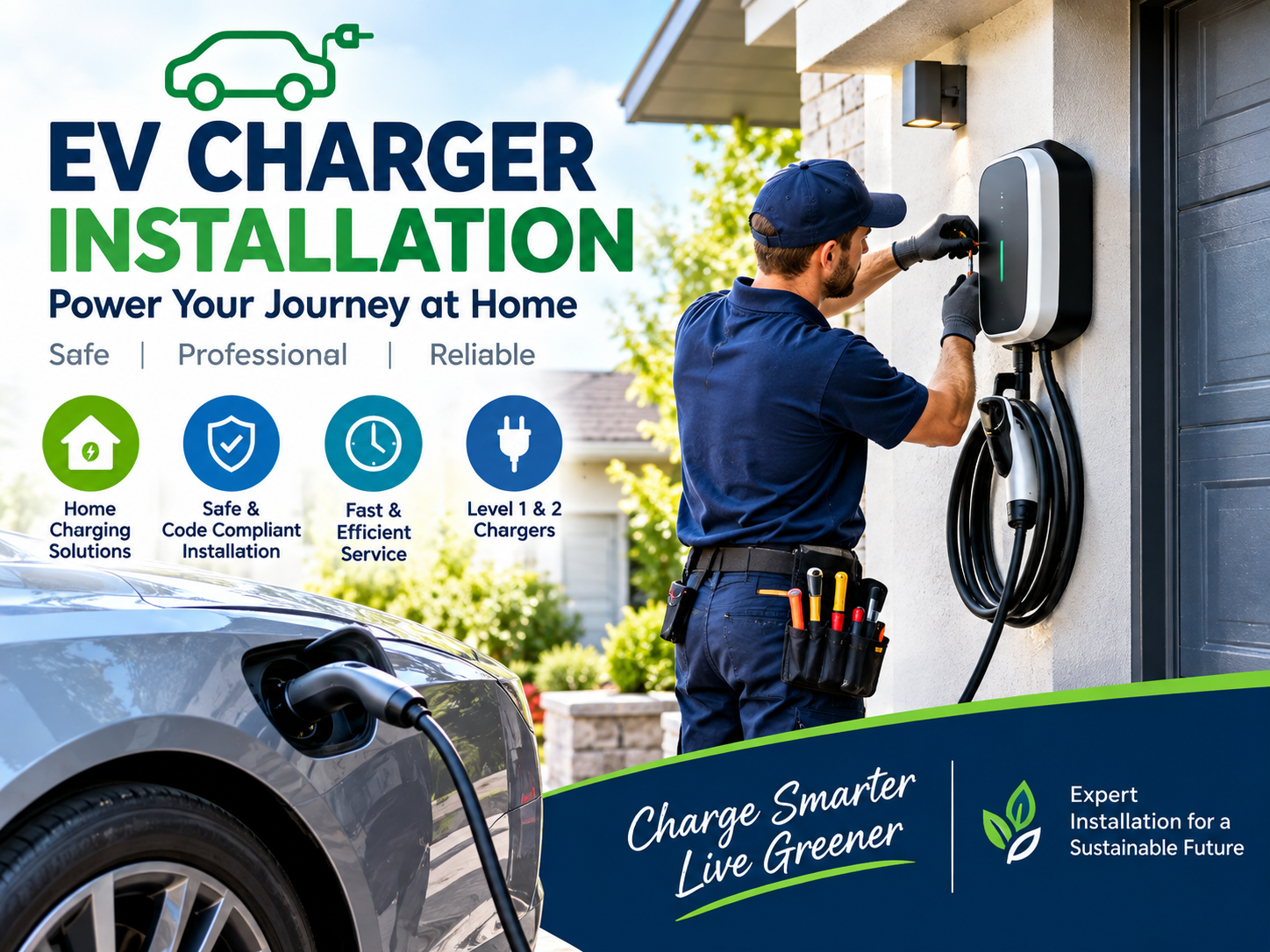
Owning an electric vehicle can make everyday driving more convenient, especially when you can charge your car at home. Instead of making regular trips to a public charging station, you can plug in at the end of the day and start the next morning with a charged vehicle. However, installing a home charging station is more than simply mounting a charger on the wall and connecting a cable.
A properly planned installation should take your home’s electrical system, charger requirements, available capacity, installation location, and applicable electrical rules into account. That is why many homeowners begin their search for an Electrician Near Me when they are ready to install an EV charger.
A qualified electrician can evaluate the existing electrical system and determine whether it can safely support the additional load. The U.S. Department of Energy notes that a site assessment and load calculation may be necessary, particularly when an electrical service upgrade could be required.
Why Home EV Charging Is Becoming More Popular
Home charging offers a level of convenience that public charging cannot always provide. You do not have to plan your schedule around a charging station, wait for an available charger, or make a separate trip simply to recharge your vehicle.
For many homeowners, a Level 2 charger is an attractive option because it provides substantially faster charging than basic Level 1 charging. The Department of Energy explains that residential AC Level 2 charging typically uses 240-volt service and can provide enough charging for overnight use in many situations.
The actual charging speed depends on several factors, including the vehicle, charger, circuit capacity, battery size, and charging settings. Therefore, choosing a charger based only on its advertised power rating may not be the best approach.
The installation should begin with the needs of your vehicle and the capabilities of your home.
What an Electrician Checks Before Installation
Before installing a charger, an electrician should look at the electrical system rather than assuming that an existing panel automatically has enough capacity.
Several factors may need to be considered.
Electrical Panel Capacity
Your electrical panel supplies power to everything in the house. Adding an EV charger creates another significant electrical load, so the available capacity needs to be evaluated.
Having an empty breaker space does not necessarily mean that the electrical service can handle the additional demand. The National Renewable Energy Laboratory specifically notes that an open slot in a panel is not proof of adequate electrical capacity.
Existing Electrical Loads
Your home may already have substantial electrical demands from appliances such as an electric range, water heater, heating equipment, dryer, air-conditioning system, or other large loads.
An electrician can consider these existing demands when determining whether the proposed charger is appropriate for the property.
Wiring and Circuit Requirements
EV charging can involve a sustained electrical load. Depending on the charger and local requirements, the installation may need a dedicated circuit and appropriate protective equipment.
For example, the Department of Energy states that many residential Level 2 charging installations use dedicated circuits.
Installation Location
The distance between the electrical panel and charging location can affect the installation. The electrician may need to determine the best route for wiring while considering walls, ceilings, garages, outdoor areas, and other structural features.
The charger should also be positioned so that the cable can reach the vehicle comfortably without creating unnecessary trip hazards.
Understanding Level 1 and Level 2 Charging
Not every EV owner needs the same charging setup.
Level 1 Charging
Level 1 charging generally uses a standard household outlet and has a lower charging rate. It can be suitable for certain drivers who travel relatively short distances and have plenty of time available for charging.
However, charging an EV places a sustained load on an electrical circuit. Electrical Safety First advises against routinely relying on ordinary household sockets without ensuring that the wiring is suitable for the demand.
Level 2 Charging
Level 2 charging provides a higher charging rate and is commonly used for residential installations.
It typically requires higher-voltage electrical service and appropriate circuit protection. Because of these requirements, professional installation is important.
The Department of Energy identifies Level 2 equipment as a common choice for residential charging and explains that it can provide substantially faster charging than Level 1 equipment.
Why Professional EV Charger Installation Matters
EV chargers are connected to a home’s electrical infrastructure, so installation should not be treated like a simple DIY project.
A professional EV Charger Installation can involve electrical calculations, circuit installation, protective devices, wiring, equipment mounting, testing, and compliance with applicable requirements.
Electrical Safety First recommends that home charging points be installed by a registered and competent electrician who is appropriately qualified for EV charge-point installation.
Professional installation can also help identify problems that may not be obvious to a homeowner. An older electrical system, insufficient service capacity, damaged wiring, or an unsuitable installation location could require attention before a charger is connected.
When an Electrical Upgrade May Be Necessary
Some homes can accommodate an EV charger without major changes. Others may require an upgrade.
An upgrade might be considered when the existing electrical service does not have enough capacity for the charger and the home’s other electrical loads.
This does not necessarily mean the project cannot be completed. An electrician may be able to recommend a different charger configuration, load-management approach, circuit arrangement, or service upgrade depending on the property.
The important point is that the decision should be based on an assessment rather than guesswork.
The Department of Energy’s EV charging guidance emphasizes evaluating electrical capacity and existing loads when planning charging infrastructure.
Choosing the Right Charger for Your Home
The most powerful charger is not automatically the right charger.
Before purchasing equipment, consider:
- Your vehicle’s maximum charging capability
- Your typical daily driving distance
- How long the vehicle is parked at home
- Your home’s electrical capacity
- Indoor or outdoor installation requirements
- Cable length and charger location
- Available smart-charging features
- Manufacturer installation requirements
- Local electrical regulations
A charger that matches your actual needs may provide a more practical solution than simply choosing the highest-rated unit.
It is also important to purchase equipment from a reputable manufacturer or retailer. Electrical Safety First recommends using dedicated EV charging equipment from reputable sources and avoiding questionable second-hand charging equipment.
Indoor vs. Outdoor Charger Installation
Many homeowners install chargers inside a garage, but outdoor installation may also be possible when the selected equipment and installation meet applicable requirements.
Outdoor installations require attention to environmental exposure, equipment ratings, cable management, and the physical location of the charger.
Your electrician can help determine the most suitable location based on the property and the charging equipment.
Regardless of location, the charging cable should be kept in good condition. If a cable shows visible damage, it should not continue to be used.
How to Find the Right Electrician
When searching for an Electrician Near Me, look beyond proximity.
Experience with EV charging installations is particularly useful because the electrician should understand the electrical demands and installation requirements associated with charging equipment.
Before hiring someone, consider asking:
- Do you have experience installing EV chargers?
- Will you inspect my electrical panel first?
- Will you perform a load calculation?
- Is a dedicated circuit required?
- Will my existing electrical service support the charger?
- Are permits or inspections required in my area?
- What equipment do you recommend?
- What is included in the installation price?
- Will the installation be tested before completion?
- Are there any additional electrical upgrades I should expect?
Getting clear answers before work begins can help prevent surprises later.
Signs You May Need an Electrical Inspection
If your home has older wiring, frequent breaker trips, flickering lights, overheating outlets, or other electrical problems, it is sensible to address those issues before adding a significant new load.
An EV charger should not be used as a reason to ignore an existing electrical problem.
Electrical Safety First advises homeowners to use competent professionals for electrical work and highlights the importance of properly installed and maintained electrical systems.
Safety Tips for Home EV Charging
Once the charger has been installed, basic safety habits still matter.
Inspect the charging cable periodically and stop using it if it becomes damaged. Avoid using inappropriate extension leads or makeshift connections. Keep the charging area organized and make sure cables do not create unnecessary trip hazards.
Electrical Safety First recommends a dedicated EV charge point as the safest approach for regular home charging and advises using a qualified electrician for installation.
If your charger has smart features, follow the manufacturer’s instructions for scheduling, monitoring, and software updates.
What Does EV Charger Installation Cost?
The total price can vary significantly from one property to another.
Factors that may affect the cost include:
- Charger model
- Charger power rating
- Distance from the panel
- Wiring requirements
- Installation location
- Panel capacity
- Required electrical upgrades
- Permits and inspections
- Trenching or other construction work
- Additional protective equipment
For this reason, a fixed online price may not accurately represent the final cost for every home.
A site assessment and written estimate can provide a more realistic picture of the project.
Benefits of Hiring an Experienced Electrician
Working with an experienced professional can make the installation process more straightforward.
A knowledgeable electrician can assess the electrical system, recommend an appropriate charging setup, install the necessary wiring and protective equipment, and test the completed installation.
Professional work also gives homeowners an opportunity to ask questions about operating the charger safely and efficiently.
For a major electrical addition such as an EV charging point, experience and proper qualifications are important considerations.
Final Thoughts
A home EV charger can make electric vehicle ownership considerably more convenient, but the installation deserves careful planning. The right charger needs to work with both your vehicle and your home’s electrical system.
If you are searching for an Electrician Near Me, prioritize experience with EV charging, proper electrical assessment, transparent pricing, and safe installation practices rather than choosing a provider based solely on distance.
With the right preparation and professional installation, your home charging setup can become a practical part of your everyday routine while helping you charge your vehicle safely and efficiently.
Frequently Asked Questions
Can I install an EV charger myself?
It depends on the equipment and local rules, but EV charger installation can involve significant electrical work. Professional installation is recommended for systems requiring new circuits or electrical modifications.
Do I need a dedicated circuit for an EV charger?
Many Level 2 residential charging installations use a dedicated circuit. The exact requirement depends on the charger, electrical system, and applicable electrical code.
Can my existing electrical panel handle an EV charger?
It may, but this should be determined through an electrical assessment. An available breaker space alone does not prove that the home’s electrical service has sufficient capacity.
How long does home charger installation take?
The timeframe depends on the complexity of the installation. A straightforward installation may be relatively quick, while projects requiring new wiring, panel work, trenching, or service upgrades can take longer.
Is Level 2 charging better than Level 1?
They serve different needs. Level 2 generally provides faster charging, while Level 1 may be sufficient for drivers with lower daily mileage and longer charging periods.
Can an EV charger be installed outside?
Many chargers are designed for outdoor use, but the equipment must be suitable for the environment and installed according to applicable requirements. Your electrician can determine whether the proposed location is appropriate.
Should I buy the charger before hiring an electrician?
It is often useful to discuss the charger with your electrician before purchasing it. They can help determine whether the equipment is compatible with your vehicle and electrical system.
What should I look for in an EV charger installer?
Look for appropriate qualifications, relevant EV installation experience, clear pricing, good communication, and a willingness to assess your electrical system before recommending equipment.