Retail ERP vs Standalone POS: Which One Does Your Store Need?
Today technology has become an integral part of retail. Retailers use software to keep their day-to-day operations going from processing purchases to handling inventory to monitoring business performance.
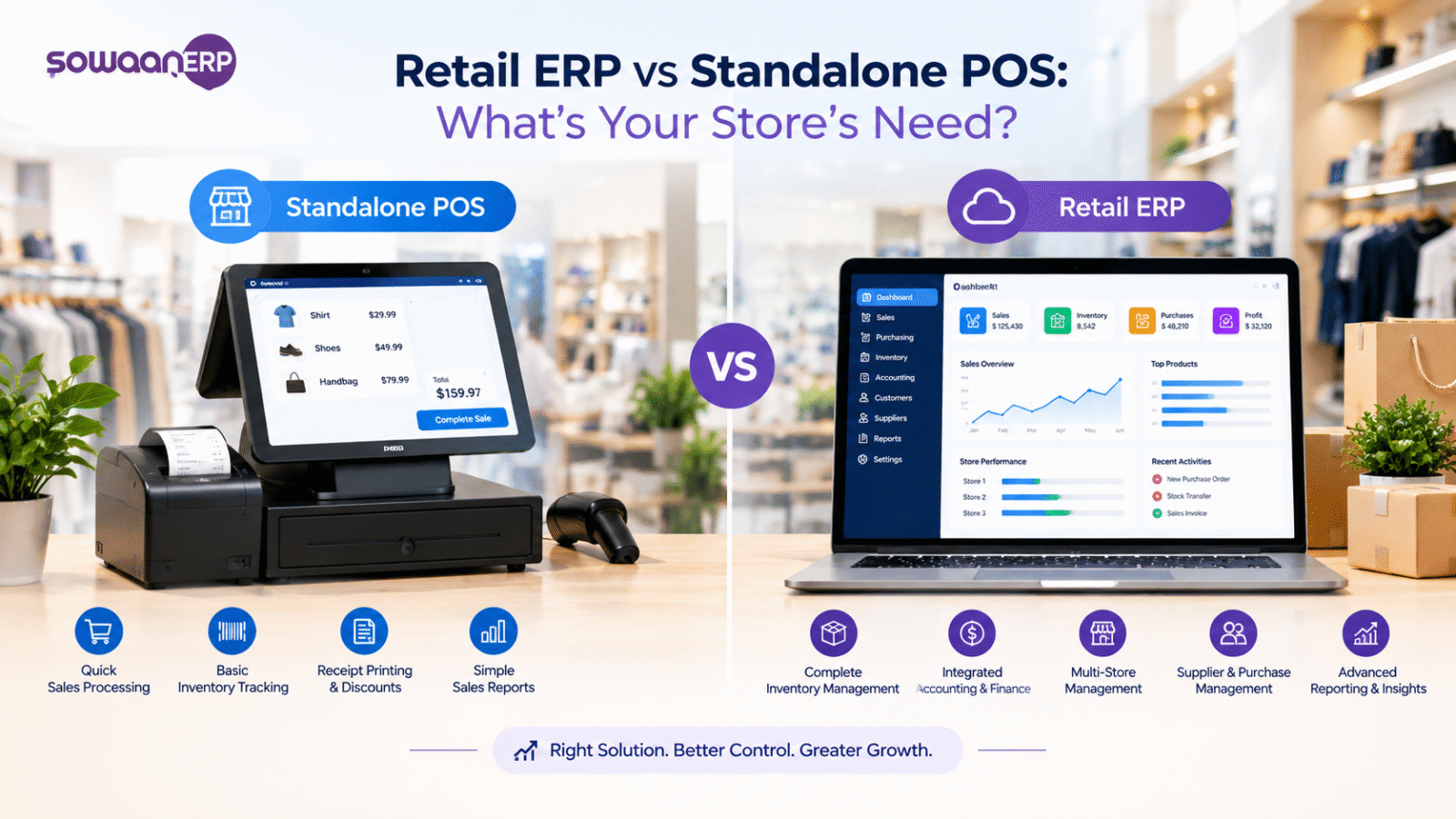
There are two types of options that are common: a standalone Point of Sale (POS) system or an entire Enterprise Resource Planning (ERP) solution. Both can be used for retail operations; however, they are intended for different levels of retail business complexity.
The distinction could assist Pakistani retailers in picking the solution that is appropriate for them.
Understanding a standalone point of sale system:
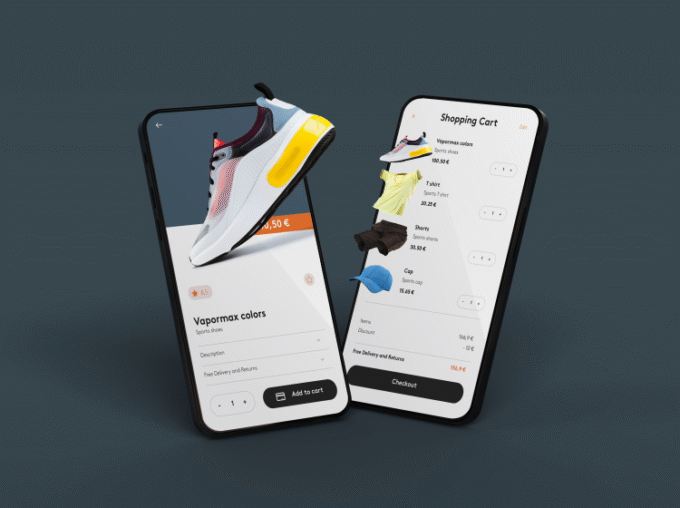
The main function of a POS system is to deal with a sale. When a customer buys something, the system will log the sale, print a receipt and update the sales data.
There are also basic inventory tracking, product management, discounts and sales reports included in many POS systems.
POS software in Pakistan, such as in Karachi, can offer the necessary features for a small store with simple products and streamlined operations.
What Is a Retail ERP System?:
Retail ERP software is more than just sales transactions. It links various departments of a business on a single platform.
An ERP solution can handle sales, purchasing, inventory, accounting, customer information, suppliers, warehouses, employees and reporting depending on the solution.
ERP is especially valuable for retailers with multiple retail sites or more intricate requirements.
Inventory Management:
One of the significant differences between a basic point-of-sale (POS) and an ERP system is inventory.
A standalone POS is typically able to update inventory when a sale is made. But more advanced inventory management might be needed for larger retailers.
Retail ERP Software in Pakistan can offer a wider view of all the warehouses, branches, buying processes, transfers of stock, and the movement of products.
It can assist retailers in having a tighter grip on their stocks when conducting their business.
Accounting & Financial Management:
A standalone POS terminal might offer sales reports and other simple financial details, but it is not necessarily capable of handling full accounting needs.
An ERP can integrate sales transactions to the larger financial procedure. The businesses can handle all the accounting tasks including invoice, expenses, accounts receivable, accounts payable, etc. in a single system.
This decreases the need to manually move information from one platform to another.
Managing Multiple Stores:
For a small retail outlet, a stand alone PO system might be enough. But if you have multiple branches, there are more complexities involved.
Retailers should be aware of what products are available at each store, the performance of each individual store, and the movement of stock in and out between stores.
This data can be consolidated with an ERP and a single system can be used to manage several stores.
Buyer and supplier relationships:
Retailers require to control suppliers and purchasing processes too.
An ERP system can integrate with inventory and sales data, and thus purchasing. For instance, management can examine what products are selling rapidly, and base their future purchases on the information.
Records of suppliers, purchase orders, receipts and financial information can also be stored in one environment.
Reporting and Business Insights:
Reports are available from both ERP and POS systems, and ERP tends to offer a wider range of insights into the business.
Retail managers might wish to check on branch performance, find profitable products, track inventory turnover, audit customer sales, and measure expenses.
These datasets are linked together and it is easier to produce more meaningful business reports.
The right choice for your store:
For small businesses that have basic needs, a stand alone is a viable option. For businesses that primarily need to process sales and record basic inventory and sales information, a POS system might be sufficient.
But, if retailers operate more than one branch, warehouses, suppliers, increased stock or complex financial processes, they may be better suited to an ERP solution.
The right choice will depend on the size of the business, and how the business is going to grow.
Consider Future Growth:
A common error that businesses make is choosing software for their existing needs.
One store could grow to have multiple stores. Likewise, a limited number of products can expand a great deal with time.
By selecting a scalable solution, the business can avoid significant changes to the software as the company grows.
Final Thoughts:
POS and ERP are not the same. A POS is more focused on handling transactions, whereas an ERP integrates sales into the broader business workflow and financial processes.
Retailers can benefit from POS software in Karachi and other markets, as it is a more efficient option for handling day-to-day transactions. Retail ERP software in Pakistan can offer increased control and visibility for businesses with more complex operations.
The most important consideration is the one that works best for the retailer at the time and offers flexibility to meet future needs.