


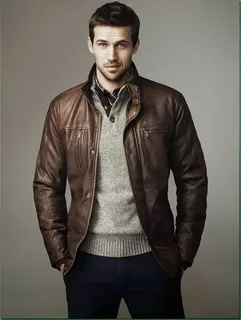
The men’s leather jacket is more than just a piece of outerwear—it is a timeless symbol of rugged masculinity, rebellion, and refined style. From its origins in military aviation and motorcycle culture to its current status as a global fashion staple, this iconic garment has transcended generations and trends. Unlike synthetic jackets that deteriorate quickly, a genuine leather jacket ages gracefully, developing a unique patina that tells your personal story. This comprehensive guide will help you understand the different styles, leather qualities, fit considerations, and proper care techniques to ensure your investment lasts a lifetime.
The Essential Styles of Men’s Leather Jackets
Choosing the right silhouette is the first step toward finding your perfect jacket. Each style carries its own history and character.
The Biker Jacket (Double Rider)
The biker jacket is defined by its asymmetrical front zipper, wide snap-down lapels, and often a belted waist. Originally designed for motorcycle riders, the angled zipper blocks wind at high speeds while the snug fit reduces drag. This style exudes confidence and edge. It pairs best with dark denim, sturdy boots, and simple crewneck t-shirts. The biker jacket is a bold statement piece for those who want to project attitude.
The Bomber Jacket
Originally created for military pilots flying in unpressurized cockpits, the bomber jacket features a straight front zipper, ribbed knit cuffs, and a ribbed knit hem. This design traps body heat effectively, making it ideal for cool weather. The bomber offers a more relaxed fit than the biker, allowing for easy layering over hoodies or sweaters. It is widely considered the most versatile men’s leather jacket for daily wear, working equally well with jeans, chinos, or casual trousers.
The Racer Jacket (Café Racer)
The racer jacket is the minimalist’s dream. It features a straight center zipper, a clean back panel with no seams or gussets, and a simple standing collar that often secures with a small snap button. Free of epaulets, belts, and excess hardware, this silhouette is sleek and tailored. It can be dressed up more easily than other styles, pairing surprisingly well with turtlenecks, merino wool sweaters, and even tailored wool trousers.
The Flight Jacket (A-2 or G-1)
Distinct from the standard bomber, the classic flight jacket (such as the A-2) features a shirt-style leather collar, shoulder epaulets, and a wind flap behind the front zipper. The Navy’s G-1 variant adds a fur collar. These jackets offer a vintage military aesthetic and are typically made from softer, more supple hides like goatskin or horsehide. They exude an adventurous, timeless spirit and work well with both casual and semi-casual outfits.
Understanding Leather Quality
Not all leather is created equal. The grade of leather determines durability, appearance, and longevity. Understanding these distinctions will protect you from inferior products.
| Leather Grade | Characteristics | Durability | Patina Development |
|---|---|---|---|
| Full-Grain | Unsanded surface; retains natural marks and scars | Highest | Excellent; becomes richer with age |
| Top-Grain | Lightly sanded to remove imperfections | High | Moderate; less character than full-grain |
| Genuine (Split) | Fibrous inner layer; often embossed with artificial grain | Low | None; tends to crack over time |
Lamb vs. Cowhide: Lamb leather is exceptionally soft, lightweight, and supple, offering a sleek drape. However, it is less abrasion-resistant and suits fashion-focused wearers. Cowhide is heavier, stiffer, and offers maximum protection and longevity. For a true investment piece, full-grain cowhide or goatskin is highly recommended.
How a Men’s Leather Jacket Should Fit
Fit is the most critical factor in how a leather jacket looks and feels. Because leather stretches slightly with body heat and regular wear, you generally want a snug fit initially—not tight, but certainly not baggy.
-
Shoulders: The shoulder seams must sit precisely at the edge of your shoulder bone. If the seam droops down your arm, the jacket is too large. This is the most common and costly fit mistake.
-
Sleeves: With your arms resting at your sides, the sleeve should end at your wrist bone. When you extend your arms forward, the sleeve should not ride up past your watch.
-
Torso: You should be able to zip the jacket comfortably without straining the chest. However, there should be minimal excess fabric around the waist. The hem should sit just below your belt line.
Proper Care and Maintenance
To ensure your jacket lasts for decades, regular care is essential. Leather is a natural material that requires hydration.
-
Conditioning: Apply a leather conditioner (containing lanolin or natural oils) every six to twelve months. This prevents the leather from drying out, cracking, or becoming brittle. Avoid products containing silicone.
-
Cleaning: Never use household soap. Wipe the jacket with a damp microfiber cloth to remove surface dust. For deep stains, use a specialized pH-balanced leather cleaner only.
-
Drying: If the jacket gets wet, let it air dry naturally at room temperature. Never place a leather jacket on a radiator or in a dryer, as direct heat will shrink and warp the hide permanently.
-
Storage: Always hang your leather jacket on a wide, padded hanger. Do not use thin wire hangers, which distort the shoulder shape. Store in a cool, dry place away from direct sunlight. Use a breathable cotton garment bag, never plastic.
Styling Your Leather Jacket for Modern Wear
The versatility of the men’s leather jacket is unmatched. For a classic heritage look, pair a brown bomber jacket with raw denim and work boots. For a modern streetwear edge, layer a black biker jacket over a white t-shirt and tapered joggers. Even formal elements can work surprisingly well: wear a sleek black racer jacket over a cashmere turtleneck and wool trousers. The golden rule is to keep the rest of your outfit simple and monochromatic, allowing the texture of the leather to take center stage.
Frequently Asked Questions (FAQs)
1. Is a men’s leather jacket worth the investment?
Yes. Unlike fast-fashion outerwear that degrades after one season, high-quality leather improves with age. The cost-per-wear over a decade or more makes it one of the smartest investments in a man’s wardrobe.
2. How can I tell real leather from fake leather?
Real leather has an uneven, natural grain and feels warm to the touch. Press your finger into the surface; real leather will wrinkle slightly. Fake leather (PU or PVC) has a perfectly uniform plastic texture, smells like chemicals, and will not wrinkle. Real leather also absorbs a drop of water, while fake leather repels it.
3. Can I wear my leather jacket in the rain?
Light rain is generally fine for quality full-grain leather. However, heavy downpours may leave water stains. Always let the jacket dry naturally away from heat. Regular conditioning helps maintain natural water resistance.
4. What is the break-in period for a new leather jacket?
Lamb leather requires almost no break-in and feels soft immediately. Cowhide, particularly full-grain, may take several weeks or months of regular wear to soften and conform to your body. Wearing it around the house helps accelerate the process.
5. Black or brown: which color should I choose?
Black is the most versatile, pairing with everything from all-black outfits to blue jeans and grey t-shirts. Brown offers a vintage, rugged warmth and pairs exceptionally well with earth tones, olive greens, and raw denim. If you only own one jacket, black is typically the safest starting point.
6. How do I remove wrinkles from my leather jacket?
Never iron leather directly. Hang the jacket in a steamy bathroom while you shower; the humidity will naturally relax the fibers. For stubborn wrinkles, place a cotton cloth over the leather and use an iron on the lowest setting, ensuring the iron never touches the hide directly.
7. Can a leather jacket be tailored?
Yes, but only by a specialist who works with leather. Standard tailors lack the heavy-duty needles and thread required. Common alterations include sleeve shortening and taking in the side seams. Always consult a leather specialist, as mistakes are permanent.
8. How often should I condition my leather jacket?
Every six to twelve months, depending on how frequently you wear it and your climate. If the leather feels dry or looks dull, it is time to condition. Dry or desert climates may require more frequent conditioning.













Leave a comment