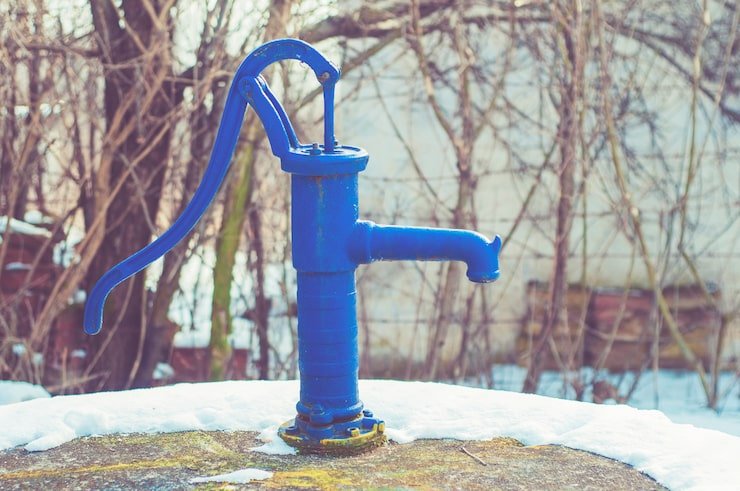
The United Kingdom’s water infrastructure is entering a period of sustained modernization as utilities address aging assets, water-security concerns, environmental requirements, and the effects of changing climate conditions. Water pumps are essential across supply networks, wastewater treatment, drainage, flood management, agriculture, buildings, and industrial facilities. As infrastructure operators focus on reliability and efficiency, pumping equipment is increasingly becoming part of broader asset-modernization programs.
According to the UK water pump market study, the sector was valued at around USD 1.54 billion in 2025 and is projected to reach USD 2.11 billion by 2032, expanding at a CAGR of 3.97% during 2026–2032. Water and wastewater represented 24.10% of the sector in 2025, while HVAC is projected to record the fastest growth among end-user segments, with a CAGR of 4.76% through 2032.
Infrastructure Renewal Creates Replacement Opportunities
Aging water infrastructure is one of the central factors influencing demand for pumping equipment. Water companies operate extensive networks containing treatment facilities, pumping stations, reservoirs, pipelines, and drainage assets. Maintaining these systems requires regular equipment replacement and upgrades to improve reliability and operating efficiency.
The scale of planned investment reinforces this requirement. Ofwat’s regulatory determination for 2025–2030 includes substantial investment across the water sector, covering improvements to water supply resilience, environmental performance, infrastructure capacity, and service quality. Such investment creates opportunities for modern pumping systems designed around energy efficiency, reliability, monitoring, and lifecycle performance.
Infrastructure investment is also increasingly connected with long-term economic resilience. Ofwat’s research on water supply infrastructure investment highlights the broader economic importance of developing resilient water infrastructure and major supply projects. This reinforces the role of pumping equipment within wider national infrastructure planning.
Water and Wastewater Remain Core Applications
Water and wastewater accounted for 24.10% of the UK sector in 2025, making it the leading end-user category. Pumping systems are required throughout municipal water networks, including raw-water abstraction, treatment, distribution, sewage transfer, sludge handling, and treated-water movement.
Wastewater infrastructure is also facing increased pressure as environmental standards become more demanding. Modern treatment facilities require reliable pumping equipment to maintain consistent flows through different treatment stages. Replacement projects can additionally provide opportunities to introduce higher-efficiency motors, variable-speed drives, automated controls, and remote-monitoring capabilities.
The importance of water infrastructure is becoming more pronounced as the country evaluates future supply requirements. The National Framework for Water Resources 2025 estimates that, without continued action, public water supplies could face a deficit of up to 5 billion litres per day by 2055. Population growth, climate change, environmental requirements, and drought resilience are among the factors contributing to this pressure.
Centrifugal Pumps Continue to Lead
Centrifugal pumps maintain a leading position in the UK water pump sector because of their broad suitability for water transfer, municipal distribution, wastewater treatment, HVAC systems, industrial processes, and other applications. Their ability to handle continuous fluid movement makes them suitable for infrastructure requiring consistent flow.
Different centrifugal configurations can address varying operating requirements. End-suction pumps are commonly suited to general water movement, while split-case and vertical designs can support larger installations. Submersible configurations are particularly relevant to drainage, sewage, groundwater, and flood-management applications.
Pump selection is increasingly influenced by more than initial capacity. Operators are considering energy consumption, maintenance requirements, equipment reliability, control flexibility, and compatibility with existing infrastructure when evaluating replacement systems.
Water Security Strengthens Long-Term Demand
Climate change and population growth are creating additional challenges for the UK’s water-resource system. The latest national framework notes that England could have up to 5 billion litres per day of additional public water-supply needs by 2055 under a do-nothing scenario. The framework also identifies climate change, environmental requirements, population growth, and drought resilience as important contributors to future supply pressures.
These conditions can support investment in water-transfer infrastructure, treatment capacity, storage systems, and distribution networks. Pumps are required at multiple stages of these systems, from source abstraction through treatment and transmission to final distribution.
Water-resource planning is also moving toward more coordinated approaches. The government framework emphasizes integrated planning across water companies, regional groups, environmental authorities, and other water users. This approach can influence how pumping capacity is designed and deployed across future infrastructure projects.
Energy Efficiency Gains Importance
Energy efficiency is becoming an important consideration for pump operators because pumping can represent a significant portion of the energy used by water and wastewater facilities. Higher-efficiency motors, variable-frequency drives, improved hydraulic designs, and automated controls can help equipment operate more efficiently under changing demand conditions.
Variable-speed pumping can adjust output according to real-time requirements rather than continuously operating at maximum capacity. This can be useful in municipal networks where flow requirements change throughout the day.
Digital monitoring is also becoming more relevant. Sensors can track parameters such as pressure, temperature, vibration, flow, and energy consumption. When integrated with maintenance systems, this information can help operators identify abnormal equipment behavior and plan maintenance before a failure disrupts service.
Flood Management Adds Another Demand Area
The UK’s exposure to intense rainfall and surface-water flooding creates additional requirements for pumping infrastructure. Drainage systems, flood-control facilities, tunnels, underground infrastructure, and low-lying areas may require high-capacity pumping systems during extreme weather events.
Flood-management equipment can differ from conventional municipal pumps because it may need to operate intermittently, handle debris or sediment, and respond quickly to changing water levels. Automated controls and remote monitoring can help operators manage these systems without requiring continuous on-site intervention.
The increasing emphasis on resilience means that flood-management pumping systems are being considered alongside broader drainage and water-resource planning rather than as isolated emergency assets.
HVAC Creates a Growing Application Base
HVAC is projected to be the fastest-growing end-user category in the UK water pump sector, with a 4.76% CAGR through 2032. Pumps are used in heating and cooling systems to circulate water and other fluids across commercial, residential, industrial, and institutional buildings.
Energy-efficiency requirements are encouraging building owners and facility operators to examine the performance of HVAC components more closely. Efficient circulation pumps, variable-speed controls, and intelligent building-management systems can contribute to improved energy performance.
Building refurbishment can also create replacement opportunities as older HVAC equipment is upgraded to meet changing efficiency requirements and operational expectations.
Smart Pumping Supports Modern Asset Management
The UK’s water pump sector is gradually shifting from conventional equipment replacement toward more connected and efficiency-focused systems. Smart pumps can provide operating data, support remote diagnostics, and integrate with wider infrastructure-management platforms.
This development is particularly relevant to large utilities managing geographically distributed pumping stations. Real-time information can improve visibility into equipment performance and help maintenance teams prioritize assets requiring intervention.
The combination of infrastructure renewal, water-security pressures, environmental requirements, and digitalization is therefore creating a more sophisticated demand environment for pumping technologies.
A More Resilient Water Infrastructure Landscape
The UK water pump sector is closely connected with the country’s broader efforts to modernize water infrastructure and strengthen long-term resource resilience. Water and wastewater remain the largest application area, while HVAC provides a faster-growing demand channel. Centrifugal pumps continue to serve a broad range of infrastructure and commercial requirements.
Future demand is likely to be influenced by infrastructure investment, water-resource planning, energy-efficiency objectives, flood resilience, and the adoption of digitally monitored equipment. As these priorities converge, pumping systems are increasingly being evaluated as strategic infrastructure assets whose reliability and efficiency can influence the performance of wider water and building systems.