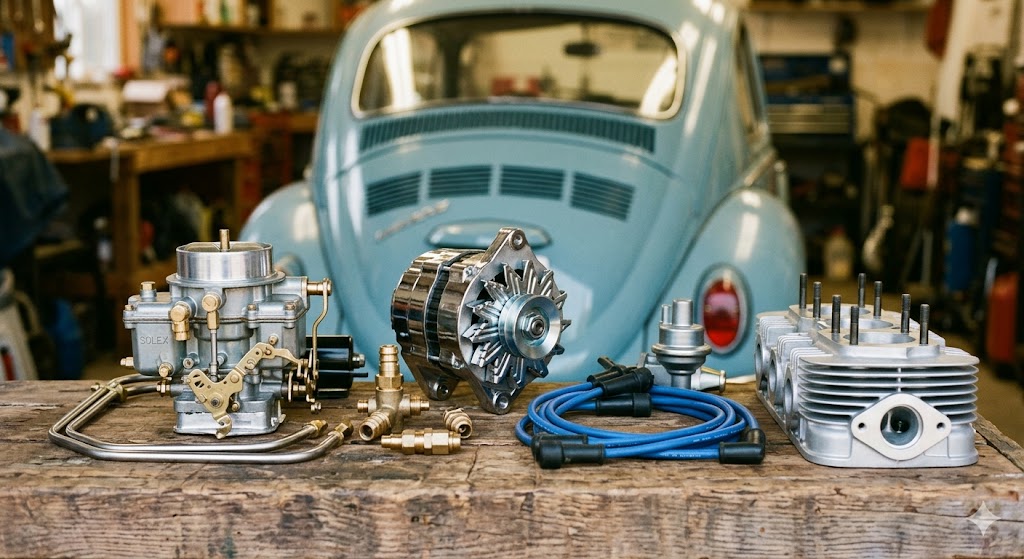
If you own a classic Volkswagen Beetle, you already know the joy — and the occasional headache — that comes with keeping one roadworthy decade after decade. Whether someone is restoring a ’67 Bug from the ground up or simply trying to make their daily driver safer and more predictable, one of the most impactful projects they can tackle is a full suspension and brake overhaul. Before diving into the work, though, it helps to understand exactly which air cooled VW parts are involved and why each one matters — because this isn’t the kind of job where cutting corners pays off.
Why Suspension and Brakes Deserve Attention Together
The suspension and braking systems on an air-cooled Volkswagen Beetle are deeply interconnected. When one is worn, it places additional stress on the other. A car with soft, deteriorated suspension bushings will handle unpredictably, and that unpredictability makes braking distances longer and less consistent. Upgrading both systems at the same time isn’t just convenient — it’s the smarter, safer approach.
For anyone serious about doing this job correctly, sourcing quality air cooled VW parts from a reputable supplier is the foundation everything else is built on. Cheap, poorly made components may fit but fail early, undoing all the time and money invested in the restoration.
Front Suspension: The Key Components
The front suspension on a Beetle uses a torsion bar setup that’s quite different from modern vehicles. Here’s what typically needs attention during a full upgrade:
Ball Joints Ball joints connect the steering knuckles to the control arms and allow the wheels to pivot during steering. On older Bugs, these wear out and develop excessive play, leading to vague, wandering steering. Replacing them restores precision and control.
Torsion Bar Bushings The front torsion bars run through the front beam and are cushioned by rubber bushings. Over decades of use, these bushings crack and compress, dropping ride height and reducing handling responsiveness. New polyurethane or rubber bushings bring the geometry back into spec.
Tie Rod Ends and Drag Link These components are part of the steering linkage. Worn tie rod ends are a common cause of shaking and uneven tire wear. Replacing them as part of a suspension overhaul ensures the steering responds accurately to driver input.
Beam Adjusters Many restorers also install beam adjusters to fine-tune ride height. These allow for a degree of customization that the factory setup didn’t offer and are especially useful for lowered or stance-oriented builds.
Rear Suspension: Often Overlooked, Always Important
The rear suspension on an air-cooled Beetle is a swing-axle or IRS (Independent Rear Suspension) setup depending on the year. Either way, there are several parts that commonly need replacement:
Rear Torsion Bar Bushings Just like the front, the rear torsion bars rely on bushings to maintain geometry. Worn bushings cause the rear end to squat and wallow under load or braking.
Shock Absorbers OEM-style replacement shocks or performance upgrades dramatically improve body control. A Bug with shot shocks bounces and sways in ways that put unnecessary strain on every other suspension component.
Spring Plates Spring plates connect the torsion bars to the trailing arms. Cracked or bent spring plates compromise ride height consistency and alignment. Replacing them is often skipped during budget restorations, but it makes a noticeable difference.
The Brake System: Drum to Disc and Everything In Between
Early Beetles used four-wheel drum brakes. While functional when maintained, drums require more pedal effort and fade faster under repeated hard stops than disc brakes. Many owners choose to upgrade the front axle to disc brakes for improved stopping power and feel.
Front Disc Brake Conversion A disc brake conversion kit for the front of a Beetle typically includes new spindles, calipers, rotors, and brake lines. The results are immediately noticeable — shorter stopping distances and more consistent pedal feel.
Master Cylinder The master cylinder is the heart of the hydraulic brake system. An old, pitted, or leaking master cylinder leads to a spongy pedal and inconsistent braking. Replacing it is non-negotiable during a full brake overhaul.
Wheel Cylinders (Rear) If retaining rear drums, the wheel cylinders should be replaced or rebuilt. These small components expand when hydraulic pressure is applied, pushing the brake shoes against the drum. Leaking or seized wheel cylinders drastically reduce rear braking effectiveness.
Brake Lines and Hoses Old rubber brake hoses can swell internally, creating a one-way valve effect that keeps brakes partially applied. Braided stainless lines are a popular upgrade for both reliability and appearance. Hard lines should be inspected for corrosion and replaced where necessary.
Brake Shoes and Drums Even if keeping the rear drum setup, worn shoes and scored drums need to be addressed. Properly adjusted drums with fresh shoes provide surprisingly good stopping power for everyday driving.
Where to Source Quality Parts
Not all replacement components are created equal. For an air-cooled Volkswagen, it pays to work with a supplier who specializes in the platform and understands the nuances between model years, production runs, and aftermarket fitment variations.
Aircooled Vintageworks is one such resource. They focus specifically on the air-cooled VW community and carry a wide selection of components for suspension and brake projects. Working with a specialist rather than a generic auto parts chain reduces the risk of fitment problems and ensures that someone knowledgeable is available when questions arise — because they always do.
Planning the Job: Tips Before Getting Started
Work in stages if needed. A full suspension and brake overhaul doesn’t have to happen in a single weekend. Front suspension and brakes can be addressed first, followed by the rear.
Document everything. Before removing any component, take photographs. Air-cooled Volkswagens have enough model-year variation that having visual references helps during reassembly.
Don’t skip alignment. After replacing suspension components, a four-wheel alignment is mandatory. Even small deviations in camber or toe cause rapid tire wear and affect handling.
Bleed the brakes thoroughly. After any brake system work, a proper bleed — ideally with a pressure bleeder — ensures no air remains in the lines.
Final Thoughts
A Bug that handles confidently and stops predictably is a joy to drive and a much safer car on modern roads. The suspension and brake systems are where that confidence begins. By sourcing quality air cooled VW parts and taking the time to do the job right, owners can transform an aging Beetle into something that genuinely performs as well as it looks.
For those looking to source components from a dedicated specialist, Aircooled Vintageworks offers the kind of focused inventory and community knowledge that makes these projects far less daunting. Visit aircooledvintageworks.com to explore their catalog before starting the next build.