The Bronx has one of the most varied building landscapes in New York City — pre-war multi-family apartment buildings, single-family homes, mixed-use commercial blocks, and industrial structures all exist within a few miles of each other. That variety means roofing problems in the Bronx don’t follow one predictable pattern. A homeowner in a detached house deals with very different risks than a landlord managing a six-unit walk-up or a business owner with a flat-roofed warehouse. Understanding how roof repair, inspection, and residential roofing decisions connect can make the difference between a manageable fix and an expensive emergency.
Why Roofing Problems Show Up Differently Across the Bronx
Much of the Bronx’s housing stock was built decades ago, and many buildings have gone through multiple ownership changes, renovations, and roofing repairs over the years. That layered history matters. A roof that’s been patched repeatedly over 30–40 years often has hidden weak points that aren’t visible during a quick visual check — old flashing left in place, inconsistent materials layered on top of each other, or drainage systems that were never updated to match changes in the building.
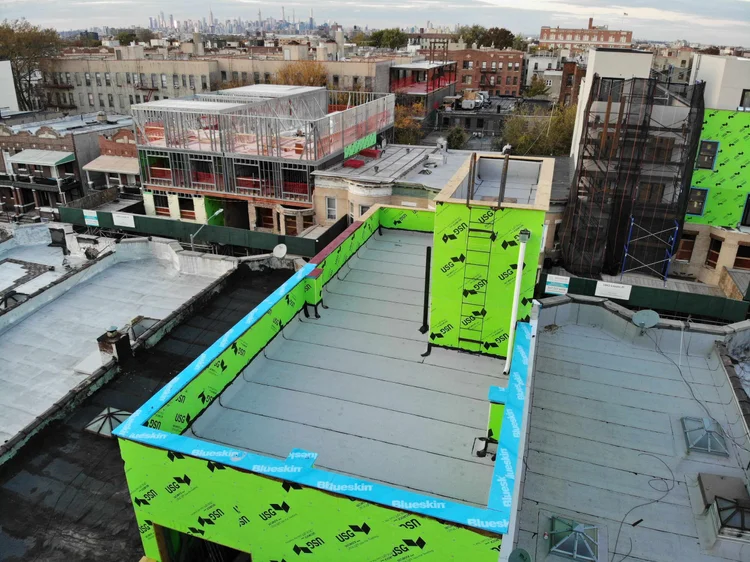
Add in New York’s seasonal extremes — hot, humid summers followed by freezing winters with snow and ice — and the wear-and-tear cycle accelerates. Flat and low-slope roofs, common on multi-family buildings and commercial structures throughout the borough, are especially sensitive to ponding water and membrane fatigue if they aren’t inspected regularly.
This is the reality behind most searches for roof repair in the Bronx, NY — the fixes people need are shaped by the borough’s mix of older buildings, dense multi-family housing, and unpredictable weather, not by generic national roofing advice.
Early Warning Signs of Roof Damage
Roof problems tend to develop quietly before they become obvious. Property owners and building managers should keep an eye out for:
- Interior water stains, especially on top-floor ceilings, which often appear after storms before a visible exterior leak develops.
- Sagging or soft spots on flat roofs, indicating trapped moisture beneath the surface.
- Cracked or curling shingles on pitched residential roofs, a sign the material is nearing the end of its service life.
- Rust, gaps, or separation around flashing near chimneys, vents, and roof edges — one of the most common leak sources in older buildings.
- Debris buildup around drains on flat roofs, which can cause water to pool instead of draining properly.
- Peeling paint or musty smells on upper floors, often the first indoor clue that moisture is getting into the building envelope.
In multi-family buildings, these signs are sometimes reported by tenants before the property owner notices them directly — which is one more reason routine inspections matter more than reactive repairs.
Why Roof Inspections Are Worth Scheduling Regularly
A roof inspection in the Bronx, NY does more than confirm a roof looks fine from the ground. It identifies developing issues — deteriorating membrane seams, weakened flashing, or early moisture intrusion — while they’re still inexpensive to address.
A comprehensive inspection typically covers:
- Material condition — checking for cracking, blistering, granule loss, or membrane separation depending on the roof type.
- Drainage function — confirming water moves off the roof correctly rather than collecting in low spots.
- Flashing integrity — the point where most leaks originate, particularly around chimneys, parapet walls, and roof penetrations.
- Ventilation — poor airflow contributes to faster material breakdown and can worsen ice buildup in winter.
- Structural condition — identifying soft decking, sagging, or signs that water has already reached the roof’s underlying structure.
For older buildings, a twice-yearly inspection schedule — once before winter and again in spring — is a reasonable standard. Buildings with flat or low-slope roofs benefit from an additional check after any major storm, since wind and heavy rain are the two conditions most likely to compromise a membrane system quickly. Landlords and property managers also often need current inspection documentation for insurance renewals or when preparing a building for sale.
What Residential Roofing Looks Like Across the Bronx
Residential roofing in the Bronx, NY spans a wide range of housing types, and the right approach depends heavily on the building itself.
Single-family and detached homes typically have pitched, shingled roofs. These are more straightforward to inspect and repair, but material age and attic ventilation still play a major role in how long a roof lasts.
Multi-family walk-ups and apartment buildings often have flat or low-slope roofs shared across multiple units. Roofing work on these buildings has to account for occupied units below, meaning contractors need a plan to limit disruption and protect residents’ daily routines during repairs or replacement.
Mixed-use buildings, common along commercial corridors, may combine a flat roof over ground-floor retail with residential units above — a configuration that requires roofing solutions built for both structural loads and long-term weatherproofing.
Older housing stock may include roofing materials or repair layers that are no longer standard, which means new repairs need to use compatible materials to avoid trapping moisture between old and new layers.
Repair or Replace? A Practical Way to Decide
Not every roofing issue calls for full replacement, but not every repair holds up long-term either. A useful framework:
- Repair typically makes sense when damage is isolated, the roof is within its expected lifespan, and the deck and structure underneath remain sound.
- Replacement becomes the smarter investment when a roof has been repaired multiple times in the same spots, the material has reached or passed its expected service life, or damage has spread across a large portion of the surface.
A thorough inspection — one that evaluates the roof’s full condition rather than just the immediate symptom — is the most reliable way to make this decision with confidence.
Maintenance Habits Between Professional Visits
A few consistent habits help extend a roof’s life between inspections:
- Clear debris after storms, especially around drains on flat roofs, where blockages cause water to back up.
- Inspect gutters each fall to prevent overflow that can damage roof edges and fascia.
- Watch for ice accumulation in winter, since ice damming can force water beneath roofing materials as it melts and refreezes.
- Note changes indoors, like discoloration on ceilings or a musty smell on upper floors, which often signal a developing issue before it becomes a visible leak.
These habits won’t replace a professional evaluation, but they help property owners catch problems early and give any roofing contractor a clearer picture when a full inspection is needed.
The Takeaway
The Bronx’s mix of building ages, roof types, and seasonal weather extremes means there’s no single roofing playbook that applies to every property. Recognizing early warning signs, keeping to a regular inspection schedule, and matching repair or replacement decisions to the specific roof and building type are the habits that protect property value over time — whether it’s a single-family home, a multi-family walk-up, or a mixed-use commercial building.
If you’ve noticed any of the warning signs above or it’s been a while since your roof was professionally evaluated, scheduling an inspection is the safest next step. Local contractors like N.V. Commercial Roofing work with the Bronx’s mix of residential, multi-family, and commercial roofs every day and can help determine whether repair or replacement is the right call for your property.
Contact us
About the Author
Billy Duka is a roofing and construction industry expert with hands-on experience across residential and commercial roofing systems. His work focuses on helping property owners and managers understand roof performance, material choices, and maintenance practices — particularly in dense, older housing markets like New York City, where building age and roof type play an outsized role in how a roof holds up over time.