Gaps are the most common complaint about tile floors, and they never show up on install day. The floor goes down tight, seams disappear, everything looks right. Three months later, there is a quarter-inch line along the back wall and a couple of tiles that no longer sit flush. Nobody moved anything. The floor moved. Understanding why interlocking gym flooring drifts is the difference between fixing it once and resetting tiles every few months.
Lateral Creep Is the Main Culprit
Every push, pull, and drag puts sideways force into the floor. Sled work, rower pulls, jumping off one foot, a loaded bench nudged into place. None of it feels like it should move a floor, but tiles migrate a fraction of an inch at a time in the direction of travel.
Look at where the gaps opened. They almost always appear opposite the busiest zone, because the whole field has walked away from that side. If the gaps sit on one end, you have creep, not a manufacturing issue.
Temperature Swings Move Rubber
Rubber expands in heat and contracts in cold. A conditioned basement barely moves. A detached garage running thirty degrees in January and close to a hundred in July moves a lot.
This is why installing season matters. Lay a floor tight in August and the tiles contract in winter, opening seams across the room. Lay it in February and summer expansion has nowhere to go, so tiles buckle at the edges. Neither is a product failure. Both are predictable.
What Is Underneath Matters More Than People Think
Tiles need a flat, clean surface. A pebble, a dried adhesive ridge, or a low spot means the tile above it is not sitting flat. Under load, that piece rocks. Rocking works the puzzle teeth loose, and once one connection opens the ones around it follow.
Sweep and inspect before anything goes down. Run a straightedge across the slab and mark anything worse than a small dip. Ten minutes of prep prevents a problem that takes an afternoon to undo.
Nothing Is Holding the Perimeter
A floating field with no containment has nowhere to push against. Wall to wall with zero expansion allowance buckles. An island floor in the middle of a room spreads outward until the edges separate. Different failures, same root cause.
How to Actually Stop It
Double-sided tape along the perimeter is the highest value fix for most home setups. Run it around the outer edge and at doorways, and the field has an anchor without committing the whole floor permanently. This is the answer for interlocking gym flooring in a rental where adhesive is not an option.
Adhesive is the right call for permanent installs, high-traffic zones, and anywhere sleds run. When resetting a floor that has already drifted, do not shove the loose tile back and call it done. The whole field moved. Start from the anchored side, work the tiles back in sequence, and close the gap across the room rather than at one seam.
Where Rolls Have the Advantage
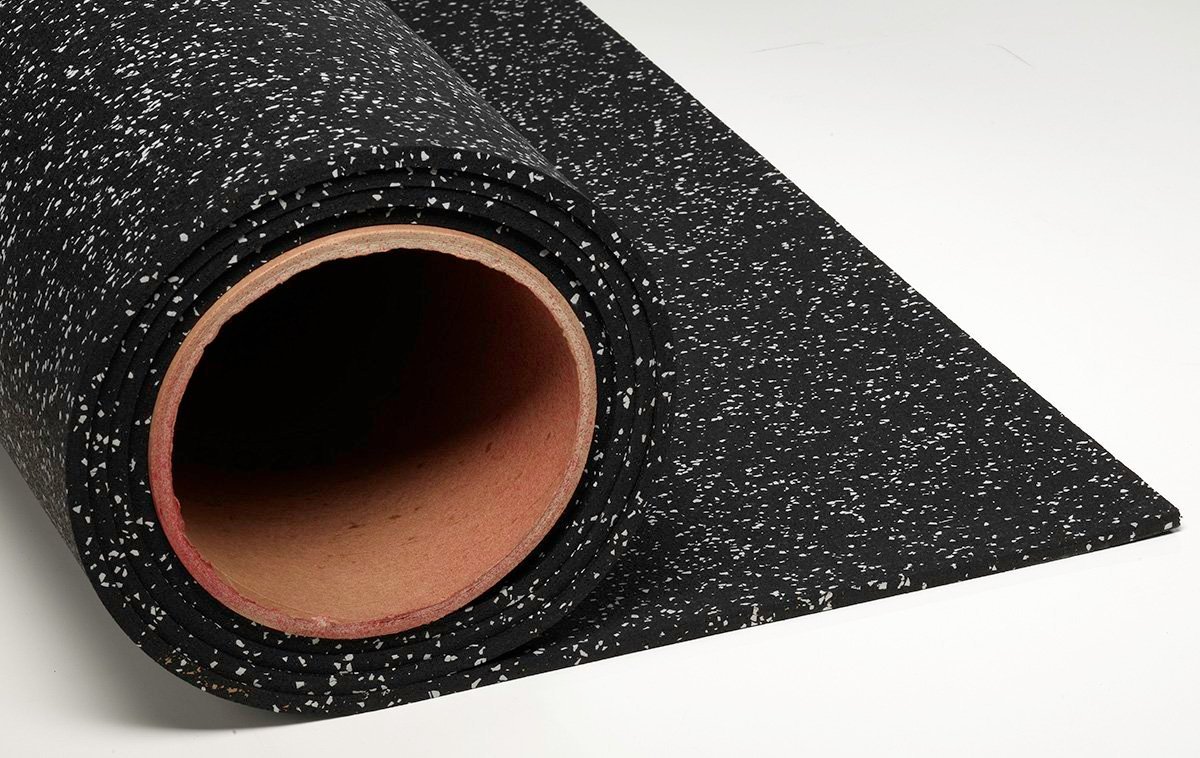
Format is part of the answer. Long uninterrupted runs are where rubber flooring rolls pull ahead, because a twenty-five- or fifty- foot roll has far fewer edges available to creep. Under a sled lane or through a busy corridor, that matters.
Rolls come with their own considerations. They are heavy, they need real access to get into the building, and a long run has to be carried in and unrolled in one piece. None of that is a performance problem, but it belongs in the decision before you commit to the format.
Tiles Still Win Plenty of Rooms
None of this makes tiles the wrong choice. They handle awkward rooms with posts and angled walls far better. They arrive in manageable boxes rather than requiring two people and a clear path. A tenant can take them along. Weigh those against rubber flooring rolls based on the room and the length of the install, not on the gap issue alone.
Freedom Fitness Equipment carries flooring in both formats, along with the adhesive, double-sided tape, and transition pieces that keep a floor where you put it. It is a reliable setup for anyone who wants the best result on the first install instead of resetting tiles every season.