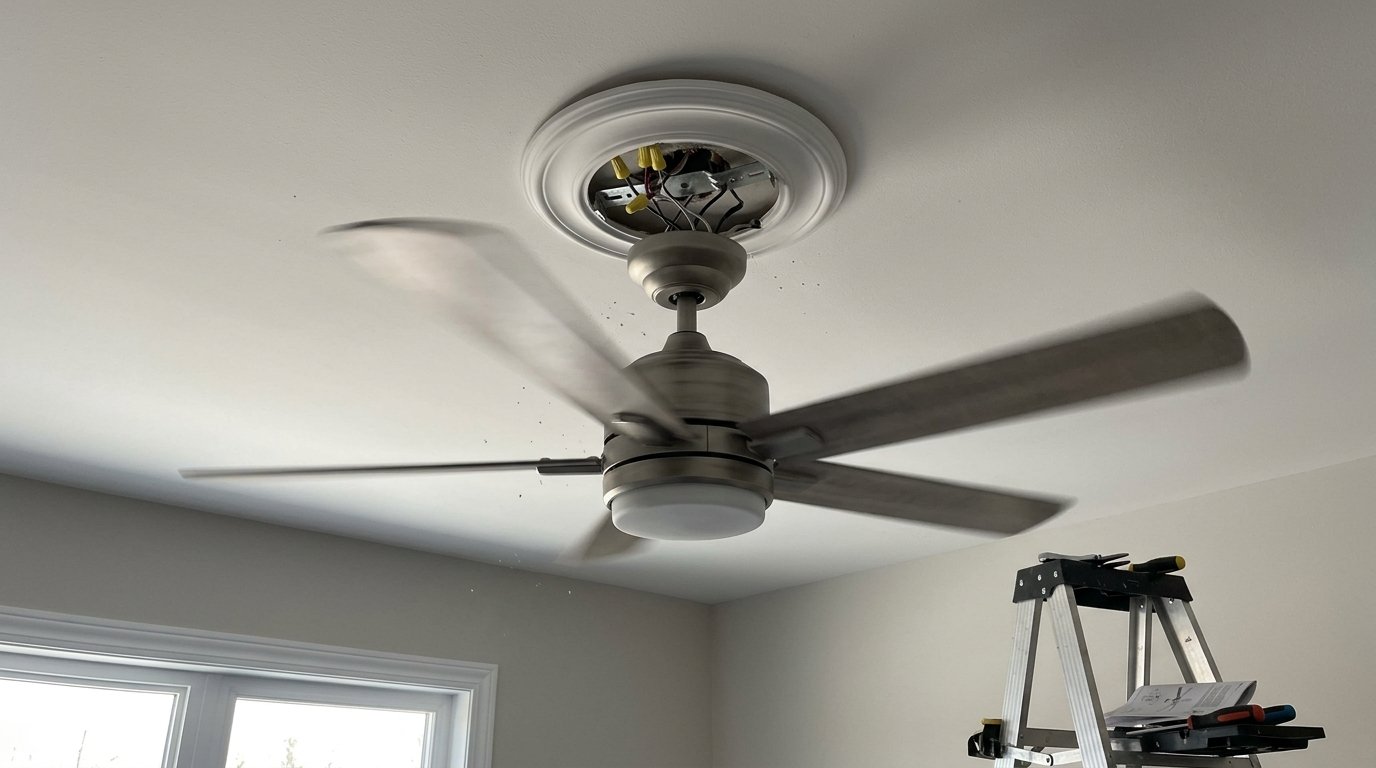
A ceiling fan can look perfectly installed from below while hiding problems above the ceiling. The blades may spin smoothly at first, but an unsuitable mounting box, incorrect wiring, or poor placement can lead to excessive movement, unwanted noise, and disappointing airflow. These problems often begin before the fan is even switched on.
Proper ceiling fan installation involves more than attaching a new fixture to an existing electrical connection. The ceiling must support the fan’s weight and movement, the wiring must suit its controls, and the blades need enough clearance to circulate air. Checking these details before installation helps prevent unnecessary repairs and makes it easier to choose equipment that works well in the room.
Why the Existing Ceiling Box May Not Be Safe for a Fan
Replacing a ceiling light with a fan seems like a straightforward upgrade because the electrical connection is already there. However, a standard light fixture and a ceiling fan place different demands on their mounting hardware. A light remains stationary, while a fan creates movement and vibration whenever its motor operates. Even if the existing box has supported a heavy light fixture for years, that does not establish that it can safely support a rotating fan.
A ceiling fan needs a listed electrical box identified as suitable for fan support, installed according to its rating and the manufacturer’s instructions. Depending on the ceiling structure, the box may attach directly to framing or to an approved fan-support brace between joists. Fastening a fan to drywall alone or relying on an ordinary lighting box can allow the assembly to loosen. The support should be verified before the fan is mounted, rather than after movement or noise becomes noticeable.
What Changes When the Ceiling Has No Existing Fixture?
Installing a fan in a room without an overhead electrical connection requires additional planning. A professional electrician must determine how power can reach the desired location, whether suitable structural support is available, and how the fan will be controlled. Ceiling access, attic conditions, insulation, and existing wiring routes can affect the work. A room with an accessible attic may be simpler to work in than one beneath a finished upper floor, where routing wiring might require carefully planned openings.
The location of the new fan also matters. Placing it directly above a seating area may seem practical, but nearby cabinets, tall furniture, or an uneven ceiling can interfere with blade clearance. Before selecting a mounting point, consider where people spend time, how air should circulate, and whether the fan can be installed without compromising electrical or structural safety.
How Ceiling Height and Blade Clearance Affect Performance
A fan needs enough space above and below its blades to operate effectively. ENERGY STAR guidance recommends keeping ceiling fan blades at least 7 feet above the floor and at least 18 inches from surrounding walls, with approximately 8 to 9 feet above the floor preferred when possible. Individual manufacturers and applicable local requirements may call for additional clearance. These measurements are especially important in rooms with low ceilings, sloped surfaces, or large furniture beneath the proposed mounting point.
For higher ceilings, a suitable downrod can position the fan closer to the occupied part of the room, where people can feel its airflow. Low-profile fans are generally more suitable for rooms where a standard downrod would reduce headroom too much. However, placing blades close to the ceiling can restrict the air entering the fan from above. The correct choice depends on both available clearance and the manufacturer’s approved mounting configurations.
Why the Mounting Style Matters
A standard downrod fan, a low-profile model, and a sloped-ceiling installation are not interchangeable solutions. Each has mounting requirements, and some models cannot be converted to another style. For vaulted ceilings, the mounting hardware must accommodate the ceiling angle while keeping the fan hanging correctly. Additional clearance may also be necessary on the rising side of the ceiling, where the blade tips could approach the surface.
Fans with integrated lighting need another measurement. The bottom of the light fixture may extend lower than the blades, creating an obstruction even when blade clearance is acceptable. Checking the complete assembled height before buying prevents discovering that the fan hangs too low after installation. Measure from the finished floor and account for the full fixture, not simply the length of its downrod.
Why Fan Size Alone Does Not Guarantee Better Airflow
A larger fan does not automatically provide better comfort. Blade design, motor performance, installation height, and room dimensions all influence the amount of air people actually feel. A fan that is too small may provide limited coverage in a large living room, while an oversized model may create uncomfortable drafts or have insufficient clearance in a compact bedroom. Manufacturers usually provide room-size recommendations that are more useful than choosing a model based only on appearance.
Airflow is commonly expressed in cubic feet per minute, or CFM. This measurement describes how much air a fan moves under specified operating conditions. Comparing CFM ratings can help when choosing between similar products, but the operating speed and energy use also deserve attention. A fan that provides comfortable circulation at a lower speed may be preferable in a bedroom, where motor sound and air movement can affect sleep.
Another important distinction is where the fan will operate. A model intended for dry indoor rooms may not be appropriate for a covered patio or an exposed outdoor location. Damp-rated fans are intended for moisture-prone locations without direct water exposure, while wet-rated models are designed for locations where water contact is possible. Selecting a fan with the appropriate environmental rating helps protect its electrical components and materials.
What the Existing Wiring and Wall Switch Can Actually Support
An existing wall switch may operate a ceiling light correctly but still be unsuitable for the replacement fan’s intended controls. Some fans use pull chains, others include wireless remotes, and newer models may have electronic speed controllers or integrated lighting systems. If a homeowner wants independent wall control of the fan and light, the existing wiring arrangement and selected control equipment must support that function.
A particularly important detail is the difference between a light dimmer and a fan-speed controller. An ordinary lighting dimmer should not be connected to a ceiling fan motor unless the equipment is specifically approved for that use. Certain electronic fan controls also work only with particular motor types or wiring configurations. An incompatible controller can cause humming, poor speed regulation, or other operating problems.
Older wiring deserves closer attention as well. Missing equipment grounding, damaged insulation, questionable splices, or unidentified conductors should be investigated rather than worked around. An electrician can assess the existing circuit, verify the required connections, and determine whether the selected fan and control system are compatible. These checks are particularly valuable when replacing an older fixture whose wiring condition is unknown.
What Should Be Checked During the Installation Process?
A properly planned installation follows a sequence that addresses safety before appearance. The electrical supply must be disconnected at the appropriate breaker and verified de-energized using suitable testing equipment before electrical work begins. The installer then evaluates the box, structural attachment, available conductors, and mounting instructions for the specific fan. These checks help prevent the common mistake of assembling an entire fixture before discovering that its support or wiring is unsuitable.
Several details deserve attention during the work:
-
Mounting support: Confirm that the electrical box and its attachment are rated for the selected fan.
-
Electrical connections: Check wiring condition, grounding requirements, and compatibility with the control equipment.
-
Blade clearance: Verify the assembled fan has adequate distance from floors, walls, ceilings, and nearby objects.
-
Final operation: Test the available speeds, lighting functions, remote controls, and overall stability.
These are useful points for homeowners to discuss with the installer, not a substitute for the product’s electrical installation instructions. Once the fan is assembled, it should be tested through its operating range while someone observes for unusual movement or noise from a safe position. If the fixture shakes noticeably, makes repeated mechanical contact, or behaves unpredictably, operation should stop until the cause is identified.
Why a Newly Installed Fan Might Wobble or Make Noise
A slight amount of movement can occur during normal operation, but persistent or pronounced wobbling deserves investigation. Uneven blade alignment, incorrectly seated blade brackets, manufacturing tolerances, or unbalanced blades can contribute to the problem. The first priority is confirming that the mounting assembly is secure and correctly installed. Adding balancing weights without checking the support can hide a symptom while leaving a more serious problem unresolved.
Once the mounting assembly has been verified, the manufacturer’s balancing procedure may help correct blade-related vibration. Many fans include balancing kits that use temporary clips to identify the blade position needing adjustment. This is different from trying to straighten components by force, which can damage hardware or change blade alignment. If the fan continues to shake or produces scraping sounds, a qualified installer should inspect it before further operation.
Humming and clicking also need different approaches. A mechanical click may come from a component contacting another part as the fan rotates, while electrical humming can sometimes involve the motor or incompatible control equipment. The sound alone cannot reliably identify the cause. Recording when the noise happens, which speed produces it, and whether it changes when the light operates can give the electrician or manufacturer useful diagnostic information.
When Does a Simple Fixture Replacement Become a Bigger Job?
The cost and difficulty of installing a fan depend heavily on what already exists above the ceiling. Replacing an old fan with a compatible new model may require comparatively little modification if its electrical box, wiring, and mounting location remain suitable. Replacing a standard ceiling light can involve more work because a fan-rated support box may need to be installed. Adding a fan where no ceiling wiring exists introduces further decisions about circuit access, switching, and possible ceiling repairs.
A practical estimate should distinguish the fixture itself from the labor and materials required to install it safely. Homeowners should ask whether the quoted work includes mounting-box replacement, new controls, electrical corrections, permits where required, and any necessary ceiling repairs. A lower initial quote may not represent the final project cost if these conditions have not been checked. Describing the existing fixture, ceiling height, attic access, and desired controls helps an electrician prepare a more useful estimate.
How to Prepare Before the Electrician Arrives
A little preparation can prevent avoidable delays. Start by measuring the room and ceiling height, then review the fan manufacturer’s mounting and clearance requirements. Keep the fan’s model number and installation manual available, particularly if the package includes optional downrods, remote controls, or a separate light kit. If the fan was purchased online, inspect the packaging for obvious damage and confirm that the required accessories are present before the appointment.
It also helps to explain how you want the fan to operate. Some homeowners prefer a remote because the room has only one wall switch, while others want separate controls for lighting and air movement. These preferences can affect electrical compatibility and installation planning. Clear the floor beneath the mounting location, move fragile items out of the work space, and provide access to the electrical panel. Electrical testing, mounting changes, and wiring alterations should remain with someone qualified to perform the work safely.
How to Keep the Fan Working Properly After Installation
Regular maintenance is relatively simple once the fan is correctly installed. Dust buildup can collect unevenly on the blades, so gently cleaning them according to the manufacturer’s instructions helps maintain their condition. The fan should be switched off and completely stopped before cleaning. Periodically observe it for new vibration, unusual sounds, loose-looking components, or changes in operation. If these symptoms appear, avoid repeatedly running the fan at high speed to see whether they disappear.
Using the fan correctly also affects comfort and energy consumption. During warm weather, many fans are designed to rotate counterclockwise to produce a downward breeze, although the manufacturer’s instructions should determine the appropriate direction. In colder weather, running a reversible fan slowly in the opposite direction can help circulate warm air that collects near the ceiling. A ceiling fan does not lower a room’s air temperature like an air conditioner; it primarily makes occupants feel cooler through moving air. Switching it off when the room is empty generally avoids unnecessary electricity use.
Conclusion
A dependable ceiling fan begins with the conditions above and around it, not just the style of the fixture. A correctly rated mounting box, suitable blade clearance, compatible controls, and a careful operating test all contribute to safer and more comfortable performance. One important safeguard is equipment grounding, which provides a protective fault-current path in appropriately designed electrical systems. Before replacing a light or adding a new fan, establish what the existing ceiling and wiring can safely support. Addressing those conditions first is a better investment than troubleshooting avoidable problems after the fan is already mounted.