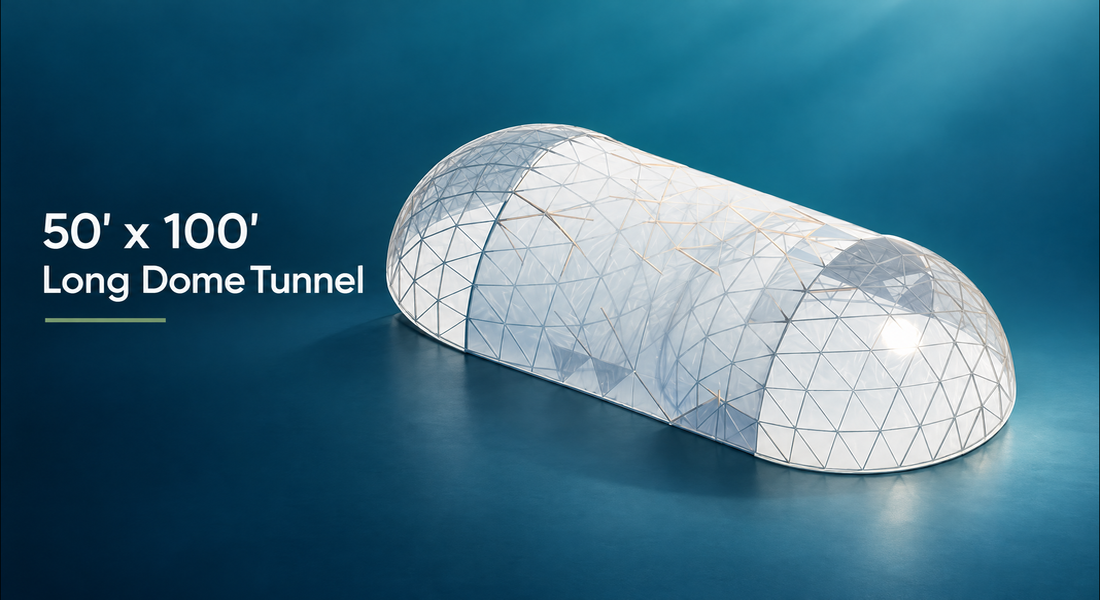
Successful greenhouse growing depends on more than the size of the structure. In a 50 x 100 Long Dome Tunnel, crop productivity is influenced by sunlight, temperature, irrigation, plant spacing, soil quality, and the way growing areas are managed. Each factor affects how plants develop, how consistently they produce, and how efficiently growers can use the available space.
A large tunnel offers room for multiple planting rows and different crop varieties, but its size alone does not guarantee higher yields. Understanding the conditions that support healthy plant growth can help growers make practical decisions throughout the growing season.
1. Sunlight and Light Distribution
Sunlight provides the energy plants need for photosynthesis, the process that supports growth and development. When plants receive insufficient light, they may grow slowly, produce weaker stems, or yield less fruit. Excessive heat and intense sunlight can also stress sensitive crops.
In a long dome tunnel, light conditions may vary according to the covering material, surrounding trees or buildings, season, and arrangement of planting rows. Tall crops can shade shorter plants, making crop placement an important part of planning.
Before planting, observe how sunlight reaches different sections of the tunnel. Place crops with higher light requirements in suitable locations and avoid allowing taller plants to block light from smaller varieties.
Keep the covering clean and maintain it according to the manufacturer’s instructions. The amount of light transmitted depends on the covering material, so select an option appropriate for the crops and local climate.
2. Temperature Management Throughout the Day
Temperature influences seed germination, root development, flowering, fruit formation, and overall plant growth. Each crop has its own preferred temperature range, and prolonged exposure to unsuitable conditions can reduce productivity.
A large growing tunnel may warm quickly during sunny weather. Without sufficient ventilation, high temperatures can interfere with flowering, reduce fruit set in some crops, and increase water demand. Cooler conditions can slow growth and delay maturity.
Use thermometers to monitor conditions in different parts of the structure rather than relying on a single reading. Temperature differences may develop between shaded beds, central rows, and areas close to the covering.
Ventilation openings, circulation fans, shade cloth, and suitable heating equipment can help manage temperature when needed. The appropriate combination depends on the crop, covering, available power, and local weather.
3. Irrigation and Consistent Soil Moisture
Water supports nutrient transport, photosynthesis, and many other plant functions. Both insufficient watering and excessive moisture can affect crop performance.
Plants that receive too little water may wilt, develop poorly, or produce smaller harvests. Waterlogged soil can deprive roots of oxygen and increase the risk of root problems.
A long tunnel benefits from an irrigation layout that distributes water consistently across planting rows. Drip irrigation can deliver water near the root zone and may reduce unnecessary wetting of foliage.
Check moisture at root level and adjust watering according to soil texture, crop type, plant maturity, and weather conditions. Water demand generally changes as plants grow and temperatures fluctuate.
Also inspect the system along its entire length. Blocked emitters, leaks, and uneven pressure can leave some plants receiving less water than others. Correcting these problems helps maintain more uniform growing conditions.
4. Soil Quality and Nutrient Availability
Productive crops need a suitable growing medium with adequate nutrients, good structure, and appropriate drainage. Soil that is compacted, excessively acidic or alkaline, or deficient in essential nutrients may restrict plant development.
Start with a soil test to assess pH and nutrient levels. Use the results to guide compost applications and fertilizer choices rather than adding nutrients without knowing whether they are needed.
Mature compost can contribute organic matter and improve soil structure. However, excessive compost or fertilizer may lead to nutrient imbalances or salt accumulation, particularly in a protected growing environment where rainfall may not naturally flush salts through the soil.
Different crops also have different nutritional demands. Fruiting vegetables may require a different nutrient management approach from leafy greens or seedlings.
Regular soil testing and careful fertilizer use help growers maintain suitable conditions while avoiding unnecessary inputs.
5. Plant Spacing and Growing Area Organization
The number of plants in a growing tunnel does not automatically determine its productivity. Crowding plants together may increase the number of seedlings initially, but it can reduce airflow, increase competition for light and water, and make harvesting more difficult.
Plan spacing according to each crop’s mature size and growth habit. Leafy greens can often be planted more closely than sprawling vegetables, while climbing crops may need vertical supports and sufficient room for maintenance.
A 50 x 100 Long Dome Tunnel provides substantial room for organizing multiple growing rows. Establish clear paths between beds so workers can inspect plants, manage irrigation, remove damaged leaves, and harvest crops without disturbing nearby plants.
Consider grouping crops with similar growing requirements. This can simplify watering, fertilization, and environmental management.
A balanced layout supports healthy growth while keeping routine work manageable throughout the growing cycle.
6. Ventilation, Humidity, and Air Circulation
Air movement affects temperature, moisture levels, and plant health. When humid air remains trapped around foliage, some fungal diseases may become more likely, particularly when leaves stay wet for extended periods.
A large tunnel should have a ventilation plan suited to its dimensions, covering, and growing conditions. Natural ventilation may be sufficient in some environments, while others may require circulation or exhaust fans.
Airflow should reach the growing rows without creating unnecessarily strong currents around sensitive plants. Crop spacing also contributes to ventilation by reducing dense foliage and allowing air to move between plants.
Monitor humidity and look for signs of condensation, persistent leaf wetness, or uneven temperatures. These observations can help identify areas where ventilation needs adjustment.
Good airflow does not eliminate disease risk, but it can contribute to a more stable growing environment when combined with appropriate watering, sanitation, and crop management.
7. Crop Selection and Seasonal Planning
Productivity also depends on choosing crops that suit the local climate, growing season, and available growing conditions. A variety that performs well outdoors may behave differently inside a covered tunnel.
Before planting, consider the crop’s temperature preferences, days to maturity, light requirements, expected yield, and demand from potential buyers. These factors influence whether a crop is practical for the planned production schedule.
Succession planting can help maintain a more consistent supply of produce. Instead of planting every bed at once, growers can sow or transplant smaller batches at planned intervals, depending on the crop and market needs.
Crop rotation can also support long-term management by reducing the buildup of certain crop-specific pests and diseases. Its effectiveness depends on the crops selected and the organisms present in the growing area.
Keeping planting records makes it easier to compare varieties, harvest timing, and performance across seasons.
8. Pest Monitoring and Routine Maintenance
Pests and diseases can reduce both the quantity and quality of a harvest. In a protected growing environment, problems may spread quickly when crops are crowded or environmental conditions favor pests.
Inspect plants regularly for discolored leaves, unusual spots, damaged stems, insects, and other warning signs. Early identification can help growers respond before a problem affects a large section of the tunnel.
Maintain clean tools, remove diseased plant material appropriately, and avoid carrying contaminated soil or plant debris between growing areas. Use pest management methods suited to the crop and follow relevant product labels and local regulations.
Routine maintenance also matters. Check irrigation lines, ventilation equipment, doors, and the greenhouse covering for damage or reduced performance.
For growers planning a larger protected growing area, Dome Greenhouses offers dome greenhouse structures in different sizes and configurations. Reviewing the available options and specifications can help match a structure to the intended crops, climate, and production goals.
Final Thoughts
Crop productivity in a long dome tunnel depends on how well growing conditions, crop choices, and daily management work together. Sunlight, temperature, irrigation, soil quality, plant spacing, and ventilation each play an important role in supporting healthy development.
A 50 x 100 Long Dome Tunnel offers substantial growing space, but consistent results come from planning that space carefully and monitoring conditions throughout the season. By keeping accurate records, maintaining equipment, and adjusting growing practices to the needs of each crop, growers can make better use of their tunnel and support more reliable harvests.
Frequently Asked Questions
1. What is the biggest factor affecting crop productivity in a dome tunnel?
There is no single factor for every crop. Light, temperature, water, nutrients, plant spacing, and pest management interact to influence growth and harvest quality.
2. How can growers improve water distribution in a long tunnel?
A properly designed irrigation system, regular emitter inspections, and checks for pressure differences can help deliver water more consistently across planting rows.
3. Does plant spacing affect greenhouse yields?
Yes. Suitable spacing helps reduce competition for light, water, and nutrients while improving airflow and access for harvesting.
4. Why is ventilation important for tunnel-grown crops?
Ventilation helps manage heat and humidity, supports air circulation, and can reduce conditions that favor certain plant diseases.
5. How can growers track crop productivity over time?
Keep records of planting dates, varieties, irrigation, fertilizer use, pest issues, harvest quantities, and crop quality. Comparing these records can help identify practices that work best.