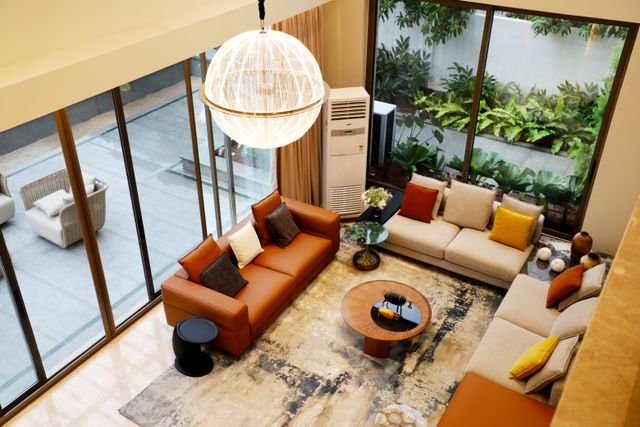
Designing a home is exciting, but it can also become expensive very quickly.
There are furniture pieces you love, beautiful lighting fixtures, premium flooring, custom window treatments, artwork, kitchen finishes, rugs, accessories, and countless other choices competing for your budget.
The good news is that you do not need to spend the most on everything.
A well designed home is not necessarily the home with the most expensive products. It is a home where money is spent thoughtfully on the things that have the greatest effect on comfort, function, durability, and overall appearance.
For homeowners considering Luxury interior design services west windsor, understanding where to invest and where to save can make the design process much easier.
The key is to separate the elements that are difficult to replace from those that can be changed later.
A quality sofa may be worth a larger investment because it receives daily use. A decorative cushion, on the other hand, can be replaced when your style changes.
The same principle applies throughout the home.
This guide explains where homeowners should consider spending more, where it can make sense to save, and how professional interior design can help create a balanced home within a realistic budget.
Start With Your Total Home Design Budget
Before choosing furniture or finishes, establish a realistic overall budget.
Your budget should account for more than the cost of furniture.
Depending on your project, you may need to consider:
- Interior design fees
- Space planning
- Furniture
- Flooring
- Lighting
- Window treatments
- Paint
- Kitchen work
- Bathroom work
- Cabinetry
- Fabrics
- Rugs
- Artwork
- Accessories
- Delivery
- Installation
- Contractor costs
If you only budget for the visible products, unexpected expenses can appear later.
A professional designer can help organize these costs and determine where your money is likely to have the greatest impact.
Décor Design Services includes budget planning as part of its interior design approach and considers furniture, carpets, drapery, window treatments, flooring, and other project requirements when developing a design.
The Basic Rule: Spend on What You Use Every Day
A simple way to decide where to spend is to ask:
Will I use this every day?
If the answer is yes, quality may be worth the additional cost.
For example:
- Sofa
- Mattress
- Kitchen cabinets
- Countertops
- Frequently used flooring
- Dining chairs
- Work chair
- Main lighting
- Bathroom fixtures
These elements directly affect everyday comfort.
By comparison, decorative objects that are used mainly for visual appeal may not need the same level of investment.
This does not mean inexpensive décor cannot look beautiful.
It means your budget should reflect how important each item is to your daily life.
Where to Spend More
1. Invest in Good Space Planning
Before spending money on furniture, consider spending on the plan itself.
A poorly arranged room can make expensive furniture look wrong.
A well planned room can make reasonably priced furniture feel intentional and comfortable.
Professional space planning considers:
- Room dimensions
- Furniture proportions
- Walking paths
- Doors
- Windows
- Natural light
- Storage
- Room functions
- Connections between spaces
Décor Design Services provides space planning and layout drawing services that include measurements, furniture placement, multiple layout options, and 2D and 3D visualization.
This is one area where spending a little more during the planning stage may help prevent expensive mistakes later.
2. Spend More on a Sofa You Use Every Day
The sofa is often one of the most frequently used pieces of furniture in a home.
Instead of choosing a sofa based only on appearance, consider:
- Frame construction
- Cushion quality
- Seat depth
- Fabric durability
- Comfort
- Size
- Maintenance
- Warranty
A beautiful sofa that becomes uncomfortable after a short period is not a good investment.
If your family watches television, entertains guests, or spends significant time in the living room, the sofa deserves careful consideration.
Décor Design Services’ furniture and fabric selection approach considers scale, proportion, comfort, durability, material, and how the furniture works with the rest of the interior.
3. Invest in a Quality Mattress
The bedroom is another area where spending more can make sense.
You spend many hours in bed, so comfort should be a priority.
Instead of focusing only on the appearance of the bed frame, consider investing in the mattress and other items that directly affect sleep.
You can save on decorative accessories and spend more on the elements that affect your comfort.
4. Spend on Kitchen Cabinets
Kitchen cabinets are difficult and expensive to replace.
They also receive heavy daily use.
Doors are opened repeatedly.
Drawers are used constantly.
Cabinets need to support dishes, cookware, food, appliances, and other items.
When remodeling a kitchen, consider spending more on:
- Cabinet construction
- Hardware
- Storage mechanisms
- Durable finishes
- Functional drawer systems
- Proper layout
The most expensive cabinet is not automatically the best choice.
The priority should be quality and function appropriate for your budget.
Décor Design Services lists kitchen remodeling among its areas of specialization and considers layout, material selection, and functionality as part of the design process.
5. Invest in Durable Flooring
Flooring covers a large portion of your home and receives constant use.
Cheap flooring may look attractive initially but may not perform well in high traffic areas.
When selecting flooring, consider:
- Durability
- Maintenance
- Moisture
- Foot traffic
- Pets
- Children
- Cleaning requirements
- Long term appearance
You do not necessarily need premium flooring throughout the entire home.
Spend more in areas that receive heavy traffic and choose practical alternatives in rooms with lower use when appropriate.
6. Spend on Good Lighting
Lighting can change the way an entire room feels.
A well designed room with poor lighting can look flat or uncomfortable.
Consider spending more on important fixtures and planning rather than installing decorative lights everywhere.
A good lighting plan should include a combination of:
- General lighting
- Task lighting
- Accent lighting
- Decorative lighting
For example, kitchen work surfaces need useful task lighting.
A dining area may benefit from a well positioned pendant or chandelier.
A living room may need a combination of ceiling lighting, lamps, and accent lighting.
7. Invest in Custom Window Treatments When They Matter
Window treatments influence privacy, natural light, temperature, and appearance.
In rooms with large windows or prominent architectural features, professionally planned curtains or shades can make a noticeable difference.
Custom treatments may be worth the cost when:
- Windows have unusual dimensions
- Privacy is important
- Light control matters
- The windows are highly visible
- You want a finished luxury appearance
Décor Design Services works with vendors for custom drapery and window treatments as part of its broader interior design services.
8. Spend on High Use Dining Chairs
A dining table receives attention, but chairs determine how comfortable the dining experience is.
If your family eats at the dining table regularly or you entertain frequently, choose chairs with:
- Comfortable seating
- Strong construction
- Durable upholstery
- Appropriate proportions
- Easy maintenance
A beautiful chair that becomes uncomfortable after twenty minutes is not a good purchase.
Where You Can Save
9. Save on Decorative Accessories
Decorative accessories are among the easiest places to reduce spending.
You can create visual interest through:
- Vases
- Cushions
- Throws
- Small artwork
- Decorative objects
- Plants
- Books
- Baskets
These items can be changed over time.
You do not need to purchase the most expensive accessories to make a room look polished.
Instead, focus on grouping pieces thoughtfully.
10. Save on Trendy Furniture
Trends change.
A furniture style that feels exciting today may look dated several years later.
This does not mean avoiding trends completely.
Instead, use trendy pieces where they can be replaced easily.
For example, a trendy accent chair or side table may be a better place for experimentation than a large sectional sofa.
Keep major furniture pieces relatively timeless and use smaller items to introduce current styles.
11. Save on Small Side Tables
Side tables do not necessarily need to be expensive.
Look for:
- Appropriate dimensions
- Stable construction
- Useful storage
- A finish that works with the room
If the table fits the space and performs its function well, it may not need to be a luxury purchase.
12. Save on Decorative Lighting
Statement lighting can be beautiful, but not every light fixture needs to be expensive.
Spend more where the fixture is a major focal point.
For secondary areas, reasonably priced fixtures can work well.
The important factor is that the size, placement, finish, and light quality are appropriate.
13. Save on Some Artwork
Original artwork can be a significant investment.
However, you can create a sophisticated interior with a combination of original pieces, prints, photography, family photographs, and decorative artwork.
Choose artwork based on scale, color, subject, and relationship to the room.
The most important thing is that the piece works within the overall composition.
14. Save on Accessories in Children’s Rooms
Children’s preferences can change quickly.
A room designed around a specific cartoon, color, or theme may need to be changed after a few years.
Consider spending more on:
- Durable furniture
- Storage
- A good bed
- Quality lighting
Then save on:
- Artwork
- Bedding
- Decorative accessories
- Rugs
- Small furniture
This allows the room to evolve as the child grows.
Do Not Confuse Price With Quality
A higher price does not automatically mean better design.
A designer should evaluate:
- Construction
- Materials
- Durability
- Function
- Proportion
- Maintenance
- Warranty
- Long term value
A moderately priced product that fits the room perfectly can be a better choice than an expensive product that is too large, uncomfortable, or difficult to maintain.
This is another reason professional planning can be valuable.
Consider the Long Term Cost
When comparing two products, do not look only at the purchase price.
Ask:
How long will it last?
How difficult is it to maintain?
Can it be repaired?
Will it still work if my needs change?
Will I need to replace it soon?
A slightly more expensive product that lasts significantly longer may actually cost less over time.
Avoid Spending Money on Things You Do Not Need
One of the easiest ways to waste a design budget is to add products simply because there is space for them.
Every item should have a reason.
Ask:
- Does it improve comfort?
- Does it solve a storage problem?
- Does it improve lighting?
- Does it add useful functionality?
- Does it contribute meaningfully to the design?
If the answer is no, you may not need it.
A well designed room does not need to be filled.
Think About Your Lifestyle Before Spending
The best investment depends on the homeowner.
A family with children may need washable fabrics.
A homeowner with pets may prioritize durable upholstery.
Someone who entertains frequently may want a larger dining table.
A person who works from home may need a high quality desk chair and better office lighting.
A homeowner who rarely cooks may not need a premium professional kitchen.
Your budget should reflect your lifestyle.
When Professional Interior Design Is Worth the Investment
Professional interior design can be particularly useful when:
- You are renovating several rooms
- You are furnishing a new home
- Your home has an unusual layout
- You are making major furniture purchases
- You need help coordinating materials
- You have a defined budget but many decisions
- You want 2D or 3D layouts
- You need vendor recommendations
- You want assistance during implementation
Décor Design Services’ design process includes requirements gathering, layout drawings, budget planning, detailed design, vendor recommendations, and supervision depending on the selected service package.
Questions to Ask Before Hiring a Designer
Before starting your project, ask:
- What services are included?
- How do you approach budget planning?
- Can you work within a fixed budget?
- Do you provide layout drawings?
- Do you offer 3D visualization?
- Do you help select furniture?
- Do you coordinate fabrics and window treatments?
- Do you recommend vendors?
- Are site visits included?
- Do you provide supervision?
- How are revisions handled?
- What happens if the project budget changes?
Clear answers can help you avoid unexpected costs.
Frequently Asked Questions
Where should I spend the most money when designing my home?
Prioritize elements that receive daily use or are difficult to replace, such as quality seating, mattresses, kitchen cabinets, durable flooring, important lighting, and functional storage.
Where can I save money during an interior design project?
Decorative accessories, small tables, seasonal décor, some artwork, and trend based pieces can often be purchased at a lower cost without compromising the overall design.
Does luxury interior design mean everything has to be expensive?
No. Luxury can come from proportion, materials, comfort, craftsmanship, lighting, personalization, and a cohesive design rather than the price of every individual item.
Should I spend more on furniture or décor?
Generally, prioritize furniture that receives frequent use. Decorative pieces can often be replaced more easily, so they provide more flexibility for saving.
Is professional interior design worth the cost?
It can be, particularly for larger projects. A designer can help with layout, furniture sizing, materials, colors, budget allocation, vendors, and project coordination, which may help prevent costly mistakes.
Can an interior designer work with a limited budget?
Yes. A good designer should understand your priorities and help determine where your budget can have the greatest impact.
Conclusion
Designing a beautiful home does not mean spending the maximum amount on every item.
The smarter approach is to spend where quality, comfort, durability, and function matter most, while saving on elements that are easier to replace or change.
Invest in good planning.
Spend carefully on high use furniture, kitchen cabinets, durable flooring, important lighting, comfortable seating, and practical storage.
Save on accessories, trend based décor, small furniture pieces, and items that can be changed as your style evolves.
Most importantly, create a budget before making major purchases.
For homeowners considering Luxury interior design services west windsor, professional guidance can help turn a fixed budget into a well coordinated interior rather than a collection of expensive individual products.
Décor Design Services provides interior design services in West Windsor Township and throughout New Jersey, with services covering space planning, furniture and fabric selection, color planning, budget planning, layout drawings, vendor recommendations, and project supervision.
Ready to Plan Your Home Interior?
If you are furnishing a new home, remodeling an existing space, or looking for a more cohesive interior, Décor Design Services can help you determine where to invest and where to save.
Call: +1 201 284 8621
Email: Neha.bansu@gmail.com
Contact Décor Design Services to discuss your project and design requirements.