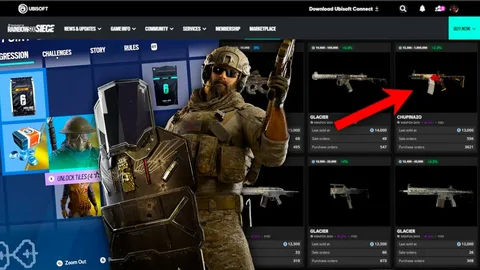
The in-game economy of tactical shooters has evolved significantly over the years, but few changes have been as impactful as the introduction of the r6 marketplace in Rainbow Six Siege. This system has reshaped how players acquire, trade, and value cosmetic items, creating a more dynamic and player-driven ecosystem.
As Rainbow Six Siege continues to grow, its economy is no longer limited to random loot drops and seasonal battle passes. Instead, the marketplace has introduced real supply-and-demand mechanics that mirror real-world digital economies.
The Shift From Random Loot to Player-Driven Trading
The r6 marketplace has fundamentally changed how players obtain cosmetic items by reducing reliance on pure randomness. Earlier systems depended heavily on alpha packs and seasonal events, where rewards were unpredictable and often frustrating for players seeking specific skins.
Now, players have more control over what they acquire, as the marketplace allows direct buying and selling between users. This shift has made item collection more strategic and goal-oriented rather than luck-based.
On the economic side, this change has reduced the dominance of loot box mechanics and introduced a more transparent value system. Items now have clearer price signals based on rarity and demand, making the economy feel more stable and player-friendly.
How Supply and Demand Now Shape Skin Prices
One of the biggest impacts of the r6 marketplace is the introduction of real-time supply and demand pricing. Rare skins, limited-event cosmetics, and discontinued items now fluctuate in value depending on how many are available and how many players want them.
This creates a more realistic economy where scarcity directly affects desirability. For example, older seasonal skins often become more valuable over time because fewer players are willing to sell them.
The result is a living marketplace where prices are not fixed by developers but influenced by community behavior. This adds a new layer of engagement, as players can now “invest” in cosmetics they believe will increase in value.
The Impact on Competitive and Casual Players
The r6 marketplace has not only affected collectors but also influenced how competitive and casual players interact with cosmetics. Competitive players now have more access to personalized loadouts without relying on chance-based rewards.
At the same time, casual players benefit from being able to purchase desired skins directly instead of grinding through unpredictable loot systems. This reduces frustration and increases overall satisfaction with cosmetic progression.
However, it has also introduced a divide between players who actively trade and those who simply play the game. Some users treat cosmetics as investments, while others focus purely on gameplay, creating two different engagement styles within the same community.
Ubisoft’s Role in Regulating the Marketplace Economy
The developer behind the game, Ubisoft, plays a crucial role in maintaining balance within the r6 marketplace. By controlling item availability, event rotations, and marketplace rules, Ubisoft ensures that the economy does not become unstable or exploitative.
For example, limiting the re-release of certain skins helps maintain scarcity, which is essential for keeping the trading system meaningful. Without these controls, prices could crash or inflate unpredictably, harming the overall experience.
Ubisoft also monitors marketplace activity to prevent abuse, such as bot-driven trading or price manipulation. These safeguards are essential for keeping the system fair and ensuring that the economy remains accessible to all players.
Long-Term Effects on Game Longevity and Player Engagement
The introduction of the r6 marketplace has significantly improved long-term engagement in Rainbow Six Siege. Players now have additional reasons to stay active, whether to earn, trade, or monitor the value of their cosmetic collections.
This added layer of economic interaction extends the lifespan of the game beyond traditional seasonal updates. Even when gameplay content slows down, the marketplace keeps players invested in the ecosystem.
Over time, this system may also influence how future Ubisoft titles design their in-game economies. The success of the marketplace could encourage more player-driven trading systems across other live-service games.
Conclusion
The r6 marketplace has completely redefined the economy of Rainbow Six Siege by introducing player-driven trading, dynamic pricing, and long-term economic engagement. It has moved the game away from purely random reward systems toward a more structured and interactive marketplace.
By allowing supply and demand to shape cosmetic value, and with oversight from Ubisoft, the system has created a more balanced and engaging ecosystem. As a result, the marketplace is not just a feature—it is now a core part of how the game’s economy operates and evolves.