Will Concrete Cure in the Rain? What Property Owners Should Know
Rain can be a concern when concrete has just been poured, especially during outdoor construction projects. Fresh concrete needs time to develop strength, and unexpected rainfall can affect its surface before it hardens.
So, will concrete cure in the rain? Yes, concrete can continue curing during rainy weather because moisture is essential for cement hydration. However, heavy rainfall shortly after placement can damage the surface and affect its durability.
Understanding when rain becomes a problem helps property owners in Jacksonville, FL, protect their concrete projects.
How Does Rain Affect Fresh Concrete?
Concrete hardens through a chemical reaction between cement and water called hydration. This process continues as long as suitable moisture and temperature conditions are maintained.
Rain itself does not stop curing. The main concern is how early the rain arrives.
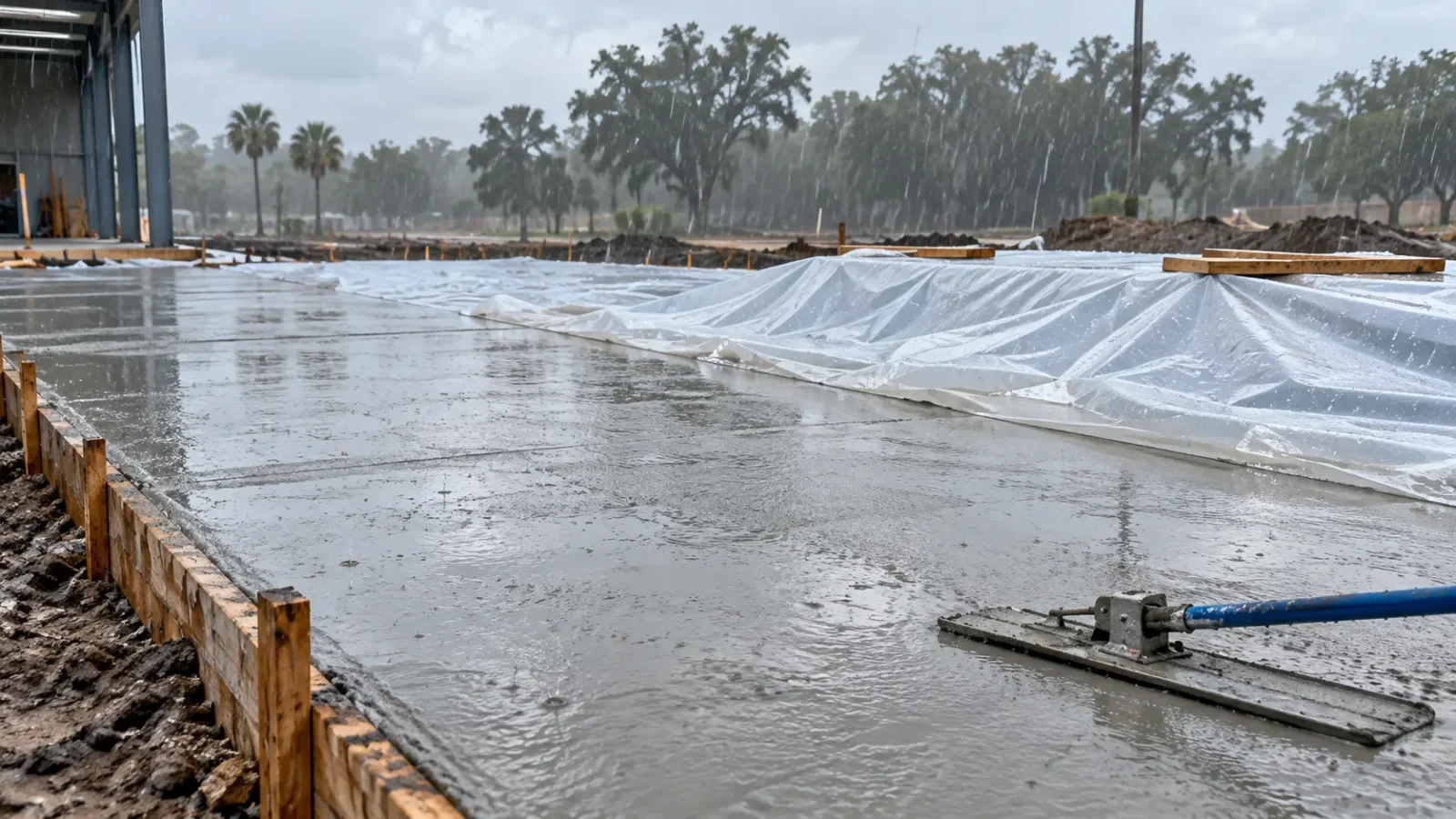
When heavy rain falls immediately after concrete placement, it can wash away cement paste, leave surface indentations, and create uneven finishes. If excess rainwater is worked into the fresh surface, it can weaken the upper layer.
Once concrete has hardened sufficiently, rainfall generally becomes less concerning and may help maintain moisture needed for curing.
How Long Should Concrete Be Protected From Rain?
There is no fixed waiting period that applies to every concrete project. The required protection time depends on the concrete mixture, temperature, humidity, rainfall intensity, and setting conditions.
Freshly finished concrete needs protection until its surface can withstand rain without damage.
For larger construction projects, working with an experienced commercial concrete contractor in Jacksonville can help ensure that placement schedules, weather protection, and curing procedures match the project’s requirements.
What Happens if Heavy Rain Falls on Fresh Concrete?
Heavy rainfall can cause several problems when the concrete has not developed enough surface strength.
Common concerns include:
-
Surface erosion: Rain can wash away cement paste and expose aggregates.
-
Uneven finishing: Raindrops may leave visible marks and shallow depressions.
-
Reduced durability: Excess water incorporated into the surface can weaken the upper layer.
-
Construction delays: Workers may need to stop finishing until conditions improve.
-
Additional repairs: Significant surface damage may require professional assessment.
Not every rain-exposed slab needs replacement. The extent of damage determines whether repairs are necessary.
How Can Concrete Be Protected During Rainy Weather?
Weather preparation is particularly important in Jacksonville, where thunderstorms can develop quickly during warmer months.
Contractors should review forecasts before scheduling concrete placement and have suitable protective coverings available.
Waterproof sheeting can protect fresh concrete, provided it is installed without disturbing the surface. Proper site drainage also prevents runoff from flowing across the placement.
If rain begins unexpectedly, workers should avoid adding dry cement or working excess water into the surface. Finishing should continue only when conditions are suitable.
Can Rain Actually Help Concrete Cure?
Yes, moisture is necessary for concrete to gain strength. Proper curing helps prevent rapid moisture loss and supports continued cement hydration.
However, rainfall should not replace planned curing methods.
Curing compounds, wet coverings, and other approved procedures provide more controlled conditions. Heavy or uncontrolled rainfall can still cause problems, especially before the surface becomes stable.
Does Rain Affect Concrete Curing Time?
Rain does not automatically extend the curing period. Concrete strength development depends on its mixture, temperature, moisture conditions, and workmanship.
Concrete is commonly evaluated for specified compressive strength at 28 days, although it may continue gaining strength afterward.
A slab should not be opened to heavy vehicles or equipment simply because its surface appears dry. The required strength and project specifications should determine when it can be used.
Frequently Asked Questions
Will concrete harden if it rains overnight?
Yes. Concrete can continue hardening during rainfall. The risk of damage depends on how soon the rain begins and how heavy it becomes.
Can rain damage concrete after 24 hours?
It is generally less vulnerable after 24 hours than immediately after placement, but actual resistance depends on the mixture, temperature, and setting conditions.
Should freshly poured concrete be covered?
Yes, when rain could damage the unfinished or recently finished surface. Protective materials should be placed carefully to avoid leaving marks.
Can commercial concrete be poured during rain?
Sometimes, but the decision depends on rainfall intensity, site conditions, and project requirements. Heavy rainfall may require postponing the work.
Final Thoughts
Concrete can cure in the rain, but timing makes a significant difference. Light rainfall after sufficient hardening may cause little concern, while heavy rain on freshly placed concrete can damage its surface and reduce durability.
For construction projects in Jacksonville, proper scheduling, surface protection, drainage, and curing practices help ensure that concrete develops the strength and finish required for long-term use.