
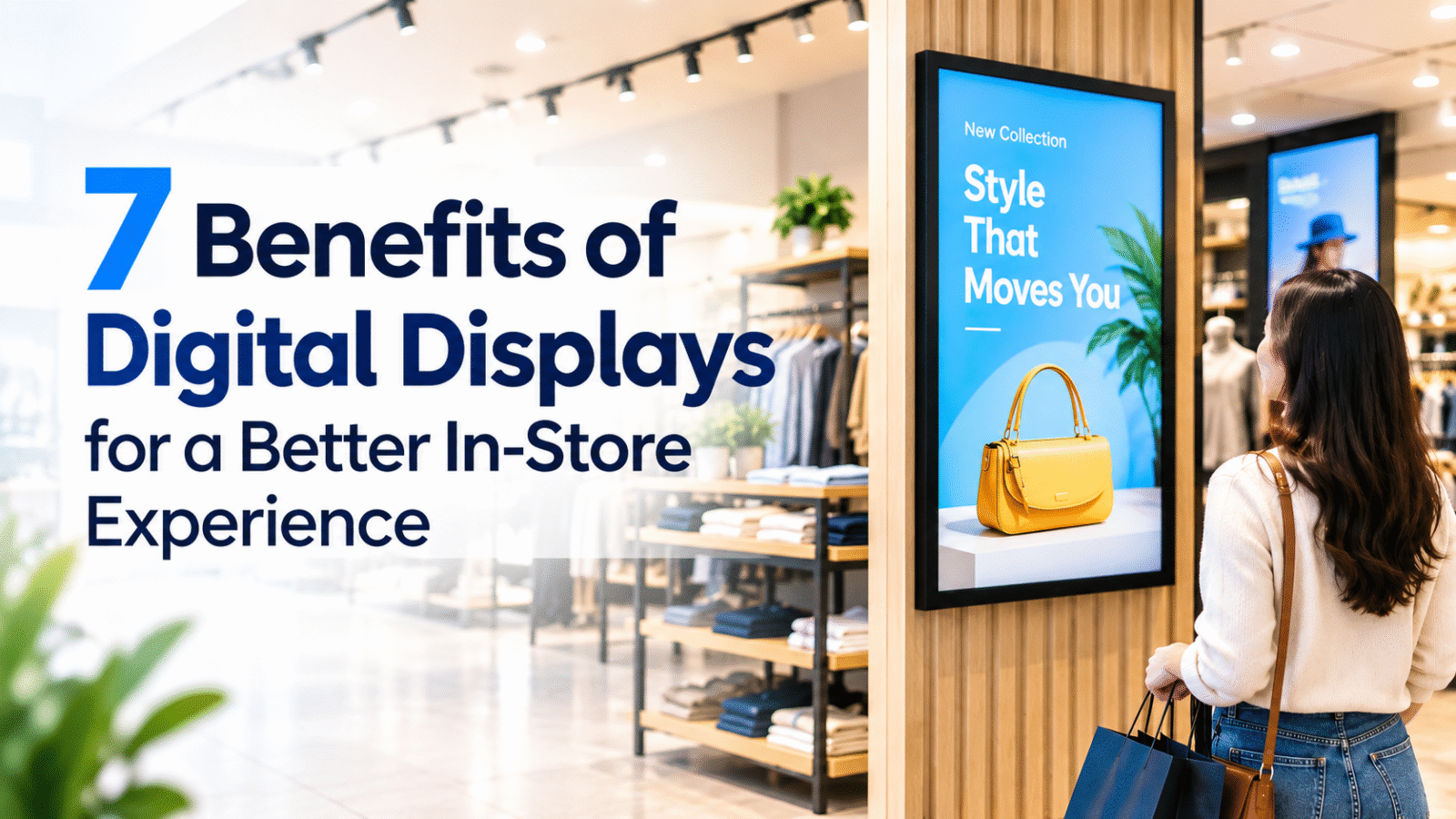
Retail stores are now focusing on competing based on interactive environments along with products and prices. They emphasize how easily customers can access information, learn about promotions, and navigate the store. In-store experience design helps these stores improve shopping convenience and facilitate communication with consumers.
Modern digital signage platforms are helping retailers convert empty displays into helpful touchpoints in the customer journey. Rather than using only printed paper posters or boards, a retail store can display a wide range of promotions, product descriptions, direction guides, brand messages, and relevant information. The displays can be easily edited to suit various sections of the retail store. They can also facilitate quick responses to changes that occur during campaigns.
7 Ways Digital Displays Improve the In-Store Customer Experience
1. Make Promotions More Visible
Printed posters are easy to overlook by shoppers because a shop usually has multiple posters. With digital displays, shops can show promotions in a specific area. These displays can involve moving pictures, video clips of the promotional products, and call-to-action messages.
Retailers can also schedule the promotion depending on the time of day, the season, or even the campaign. For example, a restaurant can showcase breakfast promotions in the morning and evening snacks in the evening.
2. Help Customers Find Their Way
Large retail stores and shopping centers are difficult to navigate, especially for first-time visitors. Digital wayfinding screens can show store locations, departments, facilities, entrances, exits, and other important points.
Digital signage in the shopping mall can be very helpful in directing people through the vast spaces. If a person wishes to go to a certain shop, it becomes easier without having to ask anyone for directions.
This makes the whole experience of visiting the place much easier.
-
Improve Product Discovery
There can be products that were not on the customer’s mind during the shop visit. Digital signage platforms allow them to become aware of these products. Retailers can display product information, such as demonstrations, styling tips, complementary products, and advantages of purchasing the product. It removes the need for an attendant to describe everything to the customers.
For instance, fashion retailers can use digital screens to display ways to style a particular item. Electronics retailers can use it to demonstrate the functionality of the device. Beauty retailers can use it to display how to use a particular product.
4. Create More Engaging Store Environment
Retailers can create a more lively atmosphere by placing relevant digital content in the surroundings. This can include anything from storytelling about the brand, lifestyle images, video content, social media posts, seasonal campaigns, or entertainment.
The content should serve a purpose and enhance the atmosphere. Good placement can make the customer experience more interactive and shape a good image of the retailer.
Digital signage platforms for shopping malls can be used to create a consistent environment throughout common areas, entrances, food courts, and promotional areas.
5. Reduce Information Gaps
There are many questions that consumers ask themselves when shopping, like –
- Is the item available?
- What are its specifications?
- Is there a promotional offer going on?
- Where is a certain department located?
- When do you close your store?
Digital displays help answer these questions by displaying the content regularly and effectively. In some instances, the displays can also carry messages, store details, service information, or even general guidelines.
Digital signage shopping mall deployments offer great significance since consumers look for information relating to several stores and other services.
6. Support Staff and Improve Communication
Digital displays can also support employees by reducing the amount of routine information they need to communicate repeatedly. Instead of answering the same basic questions throughout the day, staff can direct customers toward screens that display relevant information.
Internal screens can be used to announce employee performance information. Separating the customer content from employee content ensures that each screen has its role.
Centralized content management makes this task easy. With digital signage platforms, businesses can manage content for different locations at the same time.
7. Deliver More Consistent Brand Experience
Each interaction with the customer influences the perception of the retailer. Inconsistent promotion, colors, images, and communication techniques in different sites can affect it negatively.
Through digital signage platforms, retailers can manage the content centrally while maintaining visual consistency. The corporate team can create campaigns and distribute them among all locations. At the same time, the stores can display their own messages when required.
Shopping mall digital signage helps maintain consistency for multi-location stores running different campaigns, event notifications, and brand promotions.
Benefits of Digital Signage for Shopping Malls
In-store digital displays add value to customers in many practical ways:
- Use visual displays, animations, and videos to engage customers.
- Promote discounts, newly introduced items, and seasonal promotions.
- Make wayfinding easy by helping customers to locate the stores, departments, and facilities.
- Showcase information with respect to the changes in products, promotions, and announcements.
- Provide product discovery through the product availability information and demonstrations.
- Consistently communicate the branding across all stores and locations.
- Reduce dependence on print signage and increase flexibility for the retailers.
Making Digital Displays Part of the In-Store Strategy
Retailers can utilize digital displays effectively by integrating them into the overall retailing experience. The information, timing, and purpose of displays must enhance elements such as product displays, customer service, promotions, and store design.
The retailer can use the information, such as how customers interact with the display, to update their future content. Information receiving more interaction can be given more visibility, and any irrelevant information can be removed.
As businesses are choosing to integrate physical and digital experiences for their customers, displays can serve as an important communication tool for them. Through effective planning, retailers can use this channel to deliver information in an efficient way.
Conclusion
The in-store customer experience depends on more than the products available on shelves. The most important thing for businesses is to ensure that they are presenting the right information.
For retailers and shopping malls, the uses of the technology extend beyond the replacement of traditional posters. When the content in the shopping mall digital signage is well-planned, it makes the shopping experience more connected.