Introduction
Food is more than just a daily need—it is comfort, culture, memory, and emotion served on a plate. Whether it’s a hot plate of homemade dal-chawal after a long day or a spicy serving of pani puri from your favorite roadside stall, food has the power to instantly lift our mood. In India especially, food is deeply connected to everyday life. From Indian street food that fills busy roads with irresistible aromas to homemade food prepared with care and tradition, both have their own unique charm.
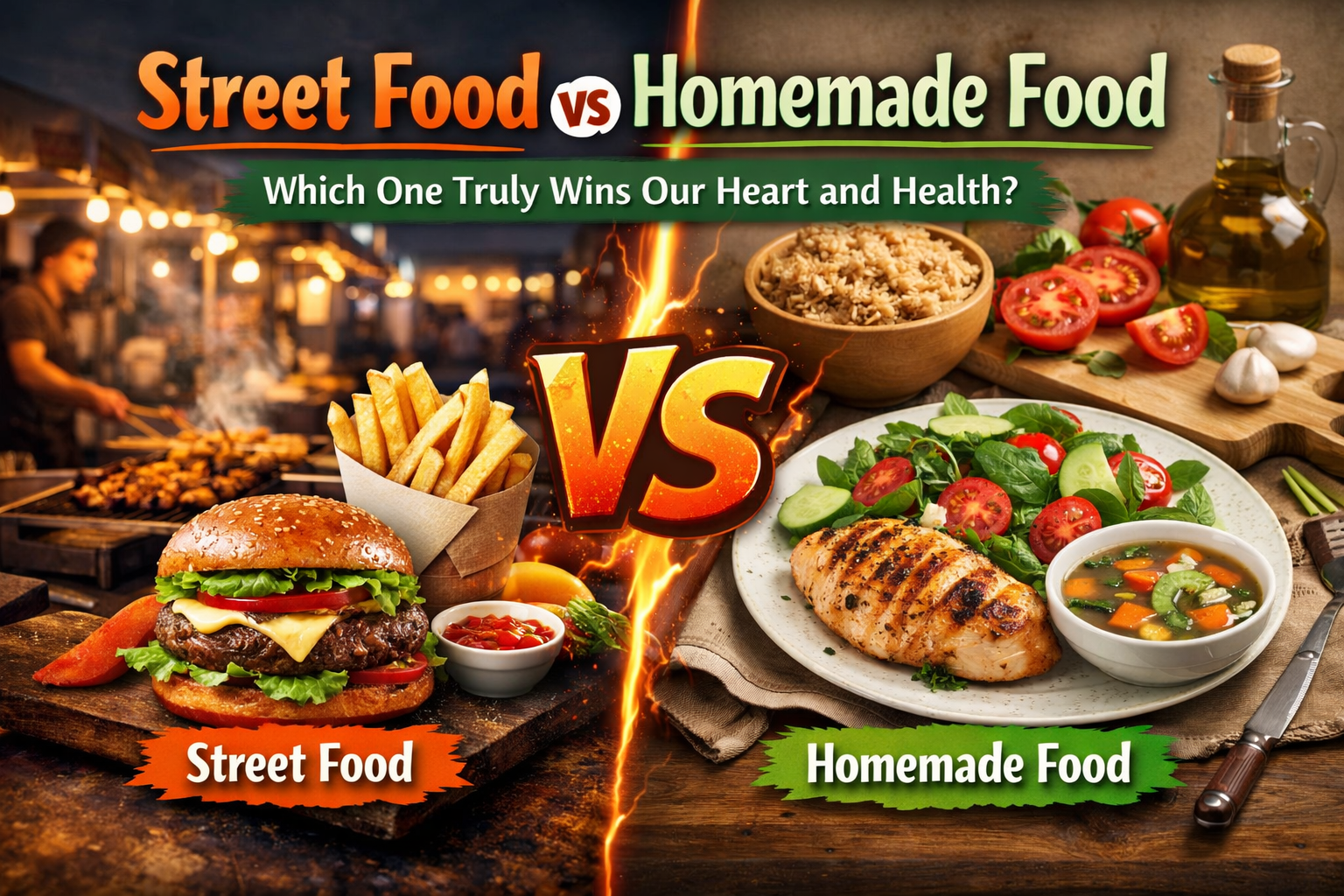
The debate between street food vs homemade food is one that almost everyone has had at some point. Some people love the excitement, taste, and variety of chaat, momos, pav bhaji, vada pav, noodles, frankie, dosa, and samosa from local stalls, while others strongly believe that nothing can beat the freshness, hygiene, and emotional value of ghar ka khana. The truth is, both have their own place in our lives. But if we compare them based on health, hygiene, affordability, convenience, nutrition, and emotional connection, the difference becomes much more interesting.
The Irresistible Charm of Street Food
Street food has always been an important part of Indian culture. It is fast, flavorful, affordable, and full of personality. Every city has its own iconic street food identity. In Ahmedabad, people enjoy fafda-jalebi, khaman, sev usal, dabeli, and maska bun. In Mumbai, vada pav, misal pav, bhel puri, and Bombay sandwich rule the streets. Delhi is famous for golgappa, aloo tikki, chole bhature, and paratha. Kolkata offers kathi rolls and puchka, while South India is known for idli, dosa, appam, and filter coffee. This variety makes street food not just a meal but an experience.
One of the biggest reasons people love street food is the taste. It is bold, spicy, tangy, crispy, cheesy, and often highly addictive. Street vendors know exactly how to create flavors that excite the palate. They use masalas, chutneys, butter, cheese, and deep-fried textures to make every bite satisfying. This is also why many viral food trends, Instagram food reels, and food vlogs often feature street food. Whether it is cheese burst dosa, Korean corn dogs, loaded fries, tandoori momos, fusion chaats, or masala Maggi, modern street food has become a mix of tradition and trend.
Why Street Food Is So Popular
Street food is also incredibly convenient. It is available almost everywhere, from busy markets and railway stations to college areas and office zones. It saves time, satisfies cravings instantly, and usually costs less than restaurant meals. For students, office workers, travelers, and food lovers, street food often becomes the easiest and tastiest option. In today’s fast-paced lifestyle, where people are constantly multitasking, quick bites, budget meals, and grab-and-go snacks have become more popular than ever.
Apart from convenience, street food also offers a social experience. People often enjoy it with friends, family, or colleagues. Evening walks, food stalls, and local food markets create a lively atmosphere that adds to the overall enjoyment. This emotional and cultural aspect is one of the reasons why street food continues to remain a favorite across generations.
The Health and Hygiene Concerns of Street Food
While street food wins in taste and convenience, it often raises serious concerns about health and hygiene. Many roadside stalls operate in open environments where dust, pollution, and poor sanitation can affect food quality. The oil used may not always be fresh, ingredients may not be stored properly, and water used in items like pani puri or chutneys may not always be safe. This can increase the risk of stomach infections, food poisoning, acidity, and digestive issues.
Another common issue is the excessive use of refined flour, oil, butter, salt, and artificial sauces. These ingredients can make food delicious, but regular consumption may not support a healthy lifestyle. While not all street food is unsafe, the inconsistency in hygiene is one of its biggest drawbacks.
Why Homemade Food Remains the Healthier Choice
This is where homemade food stands strong. Homemade food is often considered the safest and healthiest option because it gives you full control over ingredients, cooking methods, oil quantity, spice levels, and cleanliness. You know exactly what is going into your meal, and that makes a big difference in the long run.
Whether it is homemade roti sabzi, khichdi, dal rice, upma, poha, curd rice, or vegetable pulao, homemade meals are generally more balanced and nutritious than street-side alternatives. They are prepared in a cleaner environment and are usually made fresh, which adds to their overall health value.
Nutritional Benefits of Homemade Food
One of the biggest advantages of homemade food is nutrition. A home-cooked meal usually includes a healthier combination of carbohydrates, proteins, fiber, vitamins, and minerals. For example, a simple lunch of roti, sabzi, dal, salad, and curd offers far more nutritional value than a plate of oily noodles or fried snacks.
Homemade food can also be customized according to your body’s needs. If someone is trying weight loss meals, high-protein recipes, a healthy Indian diet, low-oil cooking, or gut-friendly food, it is much easier to manage through home cooking. You can choose fresh vegetables, whole grains, healthy oils, and natural ingredients to support your overall well-being.
The Emotional Value of Homemade Meals
Homemade food is not just about health—it is also about care. Food made at home often carries emotional value because it is associated with family, warmth, routine, and love. The smell of fresh rotis, homemade chai, or your mother’s special curry can bring a sense of peace that no street food can replace.
In many Indian homes, recipes are passed down through generations, making food an important part of family tradition and identity. Homemade meals often remind us of festivals, childhood memories, and family gatherings. This emotional comfort is something that adds a deeper meaning to everyday eating.
Homemade Food Is Evolving with Modern Trends
Recently, homemade food has also become more exciting and modern. It is no longer limited to plain or repetitive meals. With the rise of healthy recipes, easy dinner ideas, meal prep ideas, air fryer recipes, high-protein breakfasts, vegetarian meal ideas, and quick homemade snacks, people are exploring creative ways to make home food both tasty and nutritious.
Social media has played a major role in this shift. Today, people are making everything at home—from pizza, burgers, wraps, pasta, smoothies, smoothie bowls, overnight oats, millet recipes, and Korean ramen bowls to protein pancakes and homemade desserts. This has helped bridge the gap between health and taste.
Comparing Cost: Street Food vs Homemade Food
Homemade food also offers better long-term value for money. While a single street food item may seem cheap, regular spending on outside food adds up quickly. A homemade meal is usually more cost-effective, especially for families. Buying vegetables, grains, lentils, spices, and pantry essentials in bulk can help save money while ensuring healthier eating habits.
Street food may feel affordable in the moment, but daily consumption can become expensive over time—especially when paired with delivery charges, extra snacks, and beverages. For people who are trying to maintain a budget while eating well, homemade food is often the smarter choice.
The Challenges of Homemade Food
That said, homemade food is not always perfect. One common challenge is time. Cooking at home requires planning, grocery shopping, preparation, and effort. For working professionals, students living away from family, or people with hectic schedules, making fresh meals every day can feel exhausting.
Another challenge is that some people find homemade food less exciting compared to street food. Street food offers variety, surprise, and instant satisfaction. Homemade meals can sometimes feel repetitive if there is not enough creativity in the kitchen. However, this gap is slowly reducing as more people experiment with recipes inspired by global cuisine, fusion food, street-style recipes, and restaurant-style cooking at home.
Finding the Right Balance Between Both
If we compare street food and homemade food honestly, the real answer is not about choosing one and rejecting the other completely. Instead, it is about balance. Street food can absolutely be enjoyed in moderation. It adds joy, flavor, social connection, and cultural richness to life. Going out for chaat nights, evening snacks, food walks, or trying a viral food spot with friends is part of what makes food fun.
Homemade food, on the other hand, is the foundation of a healthy lifestyle. It supports better digestion, stronger immunity, stable energy levels, and more mindful eating. It may not always have the instant thrill of roadside snacks, but it offers something more valuable—consistency, nourishment, and long-term wellness.
Healthier Street-Style Food at Home
A smart approach is to bring the best of both worlds together. You can enjoy the flavors of street food while preparing healthier versions at home. For example, instead of ordering oily pav bhaji, you can make a low-butter version at home with extra vegetables. Instead of deep-fried samosa, you can try baked or air-fried versions.
Similarly, homemade pani puri, bhel, momos, frankie rolls, noodles, sandwiches, and chaat bowls can be made more hygienically and with better ingredients while still satisfying the same craving. This trend of recreating street-style food at home is becoming increasingly popular, especially among younger audiences.
It matches current interests in clean eating, home cooking, budget-friendly meals, healthy comfort food, and easy Indian recipes. It also gives people a chance to enjoy their favorite flavors without compromising too much on health.
Conclusion
Ultimately, food should not only be enjoyable to eat, but also contribute to our overall well-being. While street food may excel in terms of excitement, spice, and immediate craving satisfaction, homemade food prevails in terms of nutrition, safety, emotional comfort, and long-term health.
If you are someone who loves both, you are not alone. Most of us want the comfort of home and the thrill of the street—and honestly, that is what makes our food culture so beautiful.
So, when it comes to street food vs. homemade food, the best answer is simple: enjoy street food as a treat, but let homemade food be your everyday hero. Because while the street may offer unforgettable flavors, home always serves the kind of food that truly nourishes both body and soul.
In today’s world of food trends for 2026, including healthy eating, viral recipes, Indian snacks, street-style cooking, and home chef culture, people are no longer choosing between taste and health—they want both. This topic is trending across top blogging platforms and even on free blogging platforms in Italy, where food bloggers are sharing insights on how to enjoy both street food and homemade food in a smart, balanced way.