Bearings operating in humid or water-prone environments face unique lubrication challenges that can significantly impact performance and service life. Moisture ingress can degrade grease, reduce its protective properties, and accelerate wear and corrosion. Selecting the right grease for such conditions is essential to ensure reliability, minimize downtime, and extend equipment lifespan. Understanding how humidity affects grease and what characteristics to look for can help in making the right choice.
Why Humidity Impacts Grease Performance
Humidity introduces water into bearing systems, either through condensation, washdown processes, or direct exposure to rain and splashes. This moisture disrupts the structural and chemical stability of grease, leading to several issues:
1. Water Washout
Water washout occurs when grease is physically displaced from the bearing surface due to water exposure. In high-humidity or wet environments, conventional greases can easily lose adhesion, leaving metal surfaces unprotected and increasing friction and wear.
2. Emulsification
Some greases absorb water and form emulsions, which can significantly alter their consistency and lubrication properties. Emulsified grease often becomes softer, reducing its load-carrying capacity and leading to inadequate lubrication under stress.
3. Corrosion Formation
Water promotes rust formation on metal surfaces, especially in bearings. When grease fails to provide a proper protective barrier, corrosion can initiate and spread quickly, causing pitting and premature failure.
4. Additive Depletion
Moisture can dilute or wash away critical additives in grease, such as anti-wear, anti-corrosion, and extreme pressure (EP) agents. This reduces the grease’s ability to perform under demanding conditions.
Key Qualities of Water-Resistant Grease
To combat the adverse effects of humidity, greases used in such environments must possess specific properties:
- Excellent water resistance to prevent washout
- Strong adhesion to metal surfaces
- Corrosion protection additives
- Mechanical stability to maintain consistency under load
- Resistance to emulsification or the ability to repel water
- High load-carrying capability for demanding applications
Greases formulated with these characteristics ensure consistent lubrication even in challenging environmental conditions.
Lithium vs. Calcium Grease
Two of the most commonly used grease types are lithium-based and calcium-based greases, each offering distinct advantages:
- Lithium Grease: Known for its versatility, lithium grease provides good mechanical stability, moderate water resistance, and excellent temperature tolerance. It is widely used in general industrial applications.
- Calcium Grease: Calcium-based grease offers superior water resistance compared to lithium grease. It forms a strong barrier against moisture, making it ideal for wet or humid environments, although it may have lower temperature tolerance.
The choice between the two depends on the balance between water resistance and temperature requirements.
Lithium-Based Greases: General Purpose and Temperature Stable
Lithium-based greases are among the most popular due to their all-around performance. They offer:
- Good oxidation stability
- Wide operating temperature range
- Strong mechanical stability
- Compatibility with various applications
While they perform well in moderately humid conditions, they may not be sufficient for environments with constant water exposure unless enhanced with additional additives or formulated as lithium complex greases.
Quick Comparison: Lithium Complex vs. Calcium Sulfonate Complex
When dealing with high humidity or direct water exposure, advanced grease formulations provide better protection:
- Lithium Complex Grease:
- Higher dropping point (better high-temperature performance)
- Improved mechanical stability
- Moderate water resistance
- Calcium Sulfonate Complex Grease:
- Exceptional water resistance and washout protection
- Excellent corrosion protection
- Naturally high load-carrying capacity
- Superior performance in wet and marine environments
For humid conditions, calcium sulfonate complex grease is often the preferred choice due to its inherent resistance to water and corrosion.
Selecting EP Greases for Heavy-Load Bearings
In applications where bearings operate under heavy loads and humid conditions, Extreme Pressure (EP) greases are essential. These greases contain additives that form a protective film on metal surfaces, preventing direct metal-to-metal contact even under high stress.
When selecting EP greases for humid environments, ensure they also offer:
- Water resistance
- Anti-corrosion properties
- High load-bearing capacity
Combining EP performance with moisture resistance ensures durability and consistent operation.
Bearing Maintenance in Humid Conditions
Even with the right grease, proper maintenance practices are crucial for optimal performance:
1. Follow OEM Re-Lubrication Intervals
Always adhere to manufacturer recommendations for re-lubrication. In humid environments, intervals may need to be shortened due to faster grease degradation.
2. Apply the Correct Amount
Over-greasing can cause heat buildup, while under-greasing leads to insufficient lubrication. Use the correct quantity to maintain balance.
3. Conduct Regular Inspections
Check for signs of contamination, corrosion, or grease breakdown. Early detection helps prevent major failures.
4. Store and Handle Properly
Keep grease in sealed containers and store it in a dry environment to avoid contamination before use.
5. Use Automatic Lubricators
Automatic lubrication systems ensure consistent grease supply, reducing the risk of human error and improving reliability in humid conditions.
MAGNUM Greases — Reliable Under Moisture and Heat
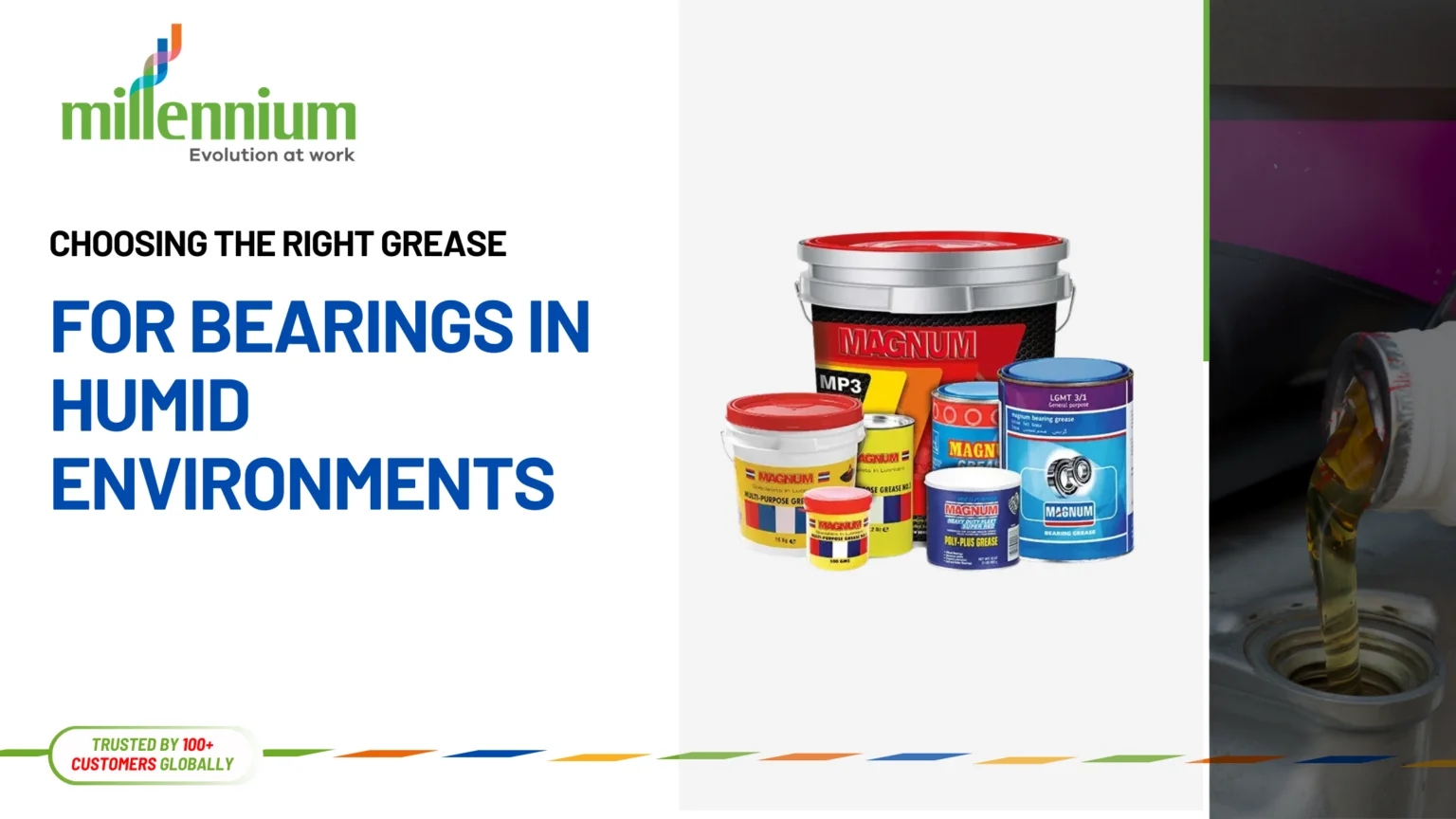
MAGNUM greases are specifically engineered to perform in demanding environments, including those with high humidity and temperature fluctuations. Their formulations are designed to resist water washout, protect against corrosion, and maintain structural stability under load. With advanced additive technology, MAGNUM greases provide long-lasting lubrication and enhanced equipment protection, making them a reliable choice for industries operating in challenging conditions.
Final Word
Humidity is a critical factor that can compromise bearing performance if not properly addressed. From water washout to corrosion and additive loss, the impact of moisture is significant. Choosing the right grease—especially one with strong water resistance, corrosion protection, and load-carrying capability—is essential for maintaining efficiency and extending equipment life.
By understanding the differences between grease types, selecting appropriate EP formulations, and following best maintenance practices, industries can effectively protect their bearings in humid environments. Investing in high-quality, moisture-resistant greases ultimately leads to reduced downtime, lower maintenance costs, and improved operational reliability.