Introduction
In today’s competitive business environment, companies often face a common challenge—lack of liquidity despite owning valuable assets. Many businesses have significant capital locked in real estate, machinery, or infrastructure but struggle with cash flow.
This is where Sale and Leaseback emerges as a powerful financial strategy. It allows businesses to unlock capital tied up in assets without interrupting operations.
Unlike traditional loans, this approach converts ownership into liquidity while maintaining usage of the asset. In India, Sale and Leaseback is increasingly becoming a preferred financing solution for companies seeking growth, debt reduction, or restructuring.
What is Sale and Leaseback?
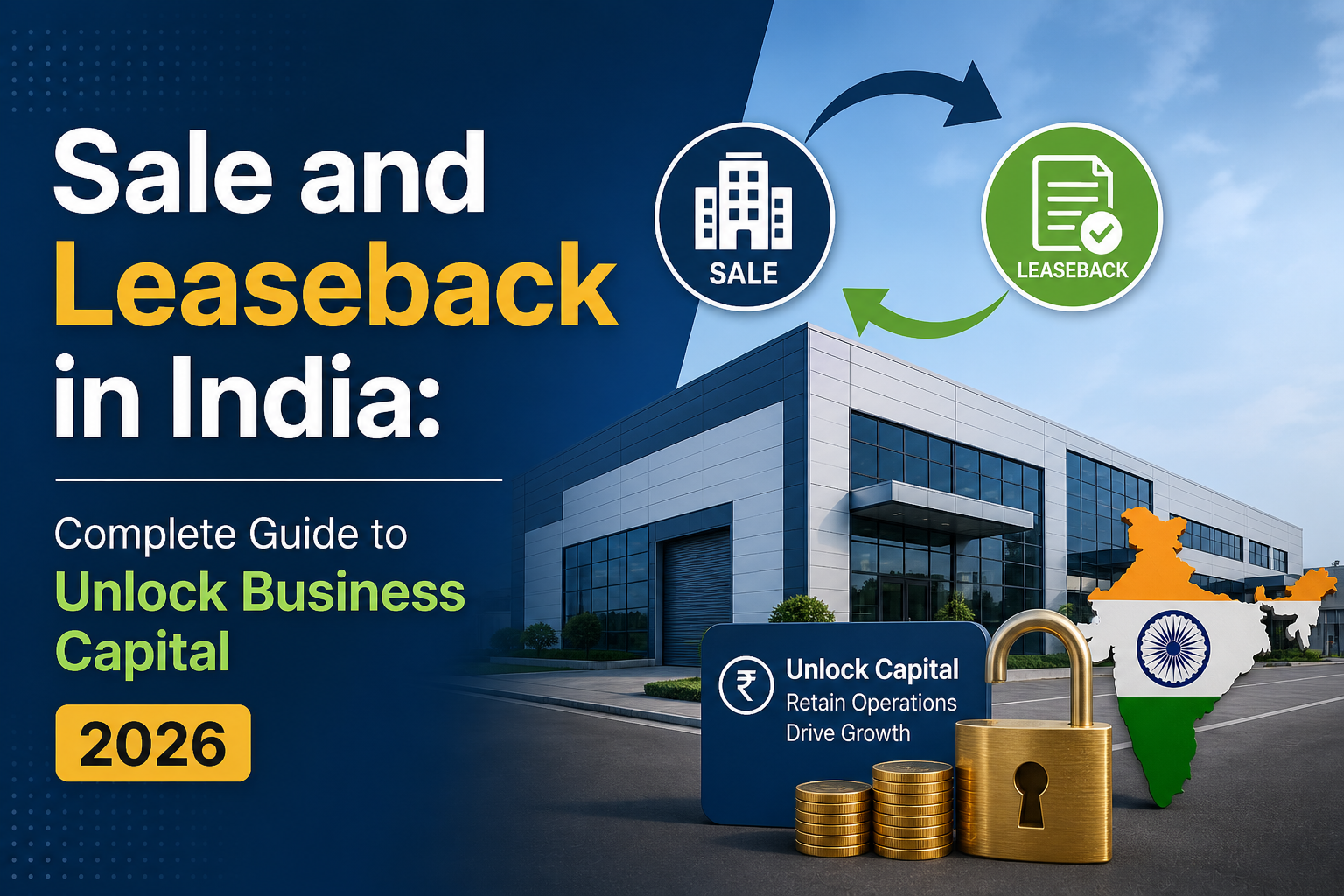
A Sale and Leaseback is a financial transaction where a company sells an asset it owns and simultaneously leases it back from the buyer.
In simple terms:
- The company sells the asset
- Receives immediate cash
- Continues using the same asset by paying lease rent
This arrangement allows businesses to free up capital while maintaining operational continuity.
For example, a company owning an office building can sell it to an investor and lease it back for 10–15 years, continuing operations without disruption.
How Sale and Leaseback Works
The structure of a Sale and Leaseback transaction typically involves the following steps:
1. Asset Identification
The company identifies high-value assets such as:
- Commercial property
- Land
- Machinery
- Equipment
2. Asset Sale
The asset is sold to an investor, leasing company, or financial institution at market value.
3. Lease Agreement
A lease agreement is signed where:
- The seller becomes the tenant (lessee)
- The buyer becomes the landlord (lessor)
4. Capital Infusion
The business receives immediate funds from the sale, which can be used for:
- Working capital
- Debt repayment
- Expansion
5. Continued Usage
The business continues to use the asset without operational disruption.
Why Businesses Use Sale and Leaseback
1. Unlock Trapped Capital
Many companies have capital locked in physical assets. Sale and Leaseback converts these illiquid assets into usable cash.
2. Improve Cash Flow
The upfront cash received can be used to:
- Stabilize operations
- Invest in growth
- Manage short-term liabilities
3. Alternative to Loans
Unlike bank loans:
- No additional debt burden
- No collateral requirements
- Flexible terms
Sale and Leaseback acts as a hybrid financing method rather than pure debt.
4. Maintain Business Continuity
Companies can continue using the asset without relocation or disruption.
5. Balance Sheet Optimization
This strategy improves financial ratios by:
- Increasing liquidity
- Reducing asset-heavy balance sheets
Key Benefits of Sale and Leaseback
1. Immediate Liquidity
One of the biggest advantages is instant access to capital. Businesses can use this cash for expansion, innovation, or debt repayment.
2. No Loss of Operational Control
Even after selling the asset, companies retain full operational usage.
3. Tax Benefits
Lease payments are often treated as operating expenses, which may reduce taxable income.
4. Flexible Financing Option
Compared to traditional loans, Sale and Leaseback offers:
- Longer tenure
- Negotiable lease terms
- Lower restrictions
5. Better Return on Assets
By freeing capital from fixed assets, companies can reinvest in higher-return opportunities.
Types of Sale and Leaseback Transactions
1. Real Estate Sale and Leaseback
Most common form involving:
- Office buildings
- Warehouses
- Retail spaces
2. Equipment Leaseback
Includes:
- Manufacturing machinery
- Construction equipment
- Logistics assets
3. Industrial Leaseback
Used by factories and infrastructure companies to unlock capital from plants and facilities.
Industries That Benefit the Most
Sale and Leaseback is widely used across industries such as:
- Manufacturing
- Real Estate
- Healthcare
- Aviation
- Logistics
- Retail
Capital-intensive industries benefit the most due to large asset ownership.
Advantages for Investors (Buyers)
Sale and Leaseback is equally beneficial for investors:
- Guaranteed rental income
- Long-term tenant security
- Stable returns
- Reduced vacancy risk
Investors acquire assets with pre-existing tenants, making it a low-risk investment.
Risks and Challenges
While Sale and Leaseback offers many benefits, it also comes with certain risks:
1. Loss of Ownership
The business no longer owns the asset, which may impact long-term control.
2. Lease Obligations
Companies must commit to regular lease payments, regardless of financial performance.
3. Long-Term Cost
Over time, lease payments may exceed the original asset value.
4. Limited Flexibility
Lease agreements may restrict modifications or relocation.
Sale and Leaseback vs Traditional Financing
| Factor | Sale and Leaseback | Bank Loan |
|---|---|---|
| Ownership | Sold to investor | Retained |
| Cash Flow | Immediate large inflow | Gradual |
| Debt Impact | Not treated as debt | Increases debt |
| Collateral | Not required | Required |
| Flexibility | High | Limited |
Sale and Leaseback is often preferred when businesses want capital without increasing liabilities.
When Should You Consider Sale and Leaseback?
This strategy is ideal if your business:
- Owns valuable assets but lacks liquidity
- Needs capital for expansion
- Wants to reduce debt burden
- Is undergoing restructuring
- Faces cash flow issues
It is particularly useful for stressed or NPA businesses looking to revive operations.
Example of Sale and Leaseback
Consider a manufacturing company owning a factory worth ₹50 crore:
- The company sells the factory to an investor
- Receives ₹50 crore upfront
- Signs a 15-year lease agreement
- Continues manufacturing operations
This allows the company to:
- Clear debts
- Invest in technology
- Expand production
Sale and Leaseback in India: Growing Trend
India is witnessing increasing adoption of Sale and Leaseback due to:
- Rising demand for alternative financing
- Growth in commercial real estate
- Increasing stressed assets
- Expansion of private equity and institutional investors
This model is becoming popular among SMEs, corporates, and infrastructure companies.
Tips to Structure a Successful Deal
To maximize benefits, businesses should:
- Choose the right asset with strong valuation
- Negotiate favorable lease terms
- Work with experienced financial advisors
- Ensure long-term affordability of lease payments
- Align the deal with business growth strategy
Future of Sale and Leaseback
The future of Sale and Leaseback in India looks promising with:
- Increased investor participation
- Growth in real estate investment trusts (REITs)
- Expansion of asset monetization strategies
- Rising demand for non-traditional funding
This financing model is expected to play a crucial role in business growth and restructuring.
Conclusion
Sale and Leaseback is a smart financial strategy that enables businesses to unlock capital without disrupting operations. It offers a perfect balance between liquidity and operational continuity.
For companies facing cash flow challenges or looking for expansion capital, this model provides a powerful alternative to traditional financing.
However, it is important to carefully evaluate lease terms, long-term costs, and strategic goals before entering into such agreements.
When used effectively, Sale and Leaseback can transform idle assets into growth opportunities and drive long-term business success.