Last year, a buddy of mine watched his brand-new deck turn into toothpicks. One thunderstorm. Forty minutes of wind. And just like that, $8,000 gone.
He called me afterward, frustrated. “I thought building codes covered this stuff.”
They don’t. Not really.
That’s why I keep coming back to stormproofing in building projects. It sounds like a buzzword, I know. But here’s the truth: it’s just common sense with a little planning. And after fifteen years of writing about construction, I’ve seen too many people skip it—then pay triple to fix what broke.
So let’s sit down for a minute. I’ll walk you through what actually works. No engineering degree required.
Why Most Homes Fail the Storm Test
Walk through any neighborhood after a bad storm. You’ll see a weird pattern.
One house loses a few shingles. The one right next to it? Roof peeled back like a sardine can.
What’s the difference? It’s almost never luck. It’s how that building was put together.
I’ve noticed that most contractors still build for “average weather.” But we don’t get average weather anymore. We get the weird stuff. The microbursts. The sideways rain. The wind that doesn’t let up for six hours.
Regular building methods aren’t designed for that. Stormproofing in building projects closes that gap. It’s like adding a seatbelt to a car that only had airbags. You hope you never need it. But when you do, you’re glad it’s there.
The Three Weak Spots Nobody Talks About
Let me save you some research. After looking at dozens of storm-damaged properties, three problems show up again and again:
-
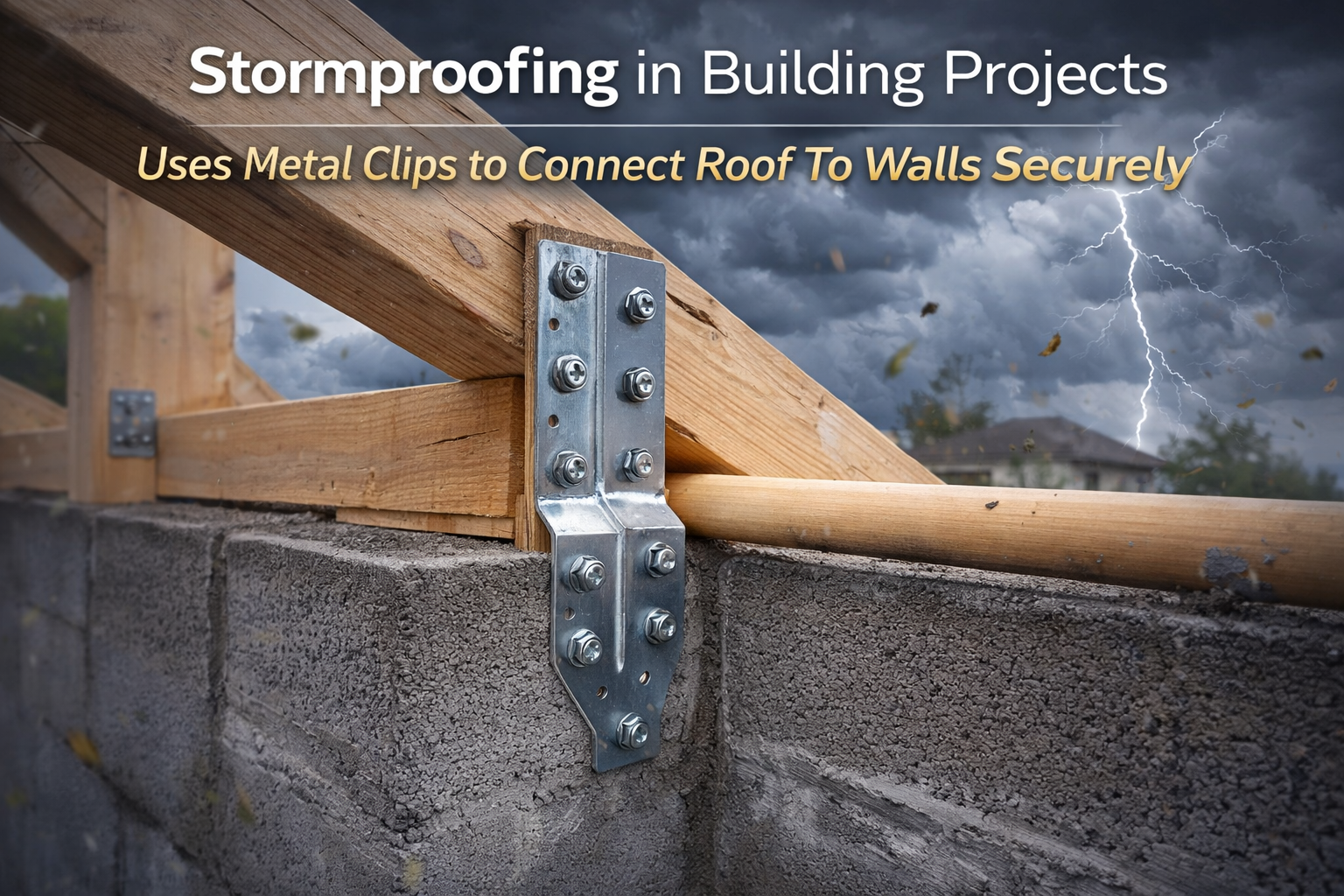
The roof-to-wall connection – Most homes just sit on top of the walls. Nails straight up. Storm hits, roof lifts, and goodbye structure.
-
Windows and doors – That pretty picture window? It’s basically a sail once the glass breaks. Wind gets inside, pressure builds, and walls push outward.
-
Grading and drainage – Water always wins. If your yard slopes toward the foundation, you’re inviting a flood.
Here’s the good news. Fixing these doesn’t have to cost a fortune. You just have to know where to focus.
A Personal Story That Changed How I Build
My own house taught me this lesson. Hard.
We put on an addition about seven years ago. I told the crew I wanted “extra strong.” They nodded. Did their thing.
First spring storm came through. Nothing crazy—maybe 50 mph gusts. I’m sitting in my living room when I hear this crack from the back. Walk outside. The new gutter is twisted like a pretzel. And water is pouring down the brand-new siding.
Turns out they’d used the cheapest strap ties they could find. No hurricane clips. No real connection between the roof and the wall framing.
I was furious. But mostly at myself. I assumed “extra strong” meant something specific to them. It didn’t.
So I ripped it out and did it right. Added metal strapping. Upgraded the fasteners. Sealed every single gap with high-quality caulk and flashing tape.
That was seven years ago. That addition has now survived three storms that knocked out power for days. Not a single leak.
That’s what stormproofing in building projects actually looks like. Small choices. Big results.
Stormproofing in Building Projects: Where to Start (Without Going Broke)
You don’t need a bunker. You just need a smarter build.
Here’s my practical checklist. Pick one or two things from each section, and you’ll be miles ahead of most people.
Start Outside: The First Line of Defense
Your roof matters more than anything else.
-
Use ring-shank nails instead of smooth ones. They hold 40% better in high wind.
-
Install ice and water shield under your shingles—at least six feet up from the eaves. Regular felt paper tears too easily.
-
If you’re replacing the roof anyway, ask about continuous sheathing clips. They tie your roof deck to the rafters.
Windows and doors need help too.
-
Impact-rated windows are expensive. A cheaper win? Install storm shutters or keep ½-inch plywood cut and labeled for each window.
-
Check the weatherstripping on your garage door. That’s often the first thing to blow in.
Gutters and downspouts
-
Clean them twice a year. Clogged gutters send water straight down your foundation wall.
-
Extend downspouts at least four feet away from the house. Burying them is even better.
The Inside Game: What You Can Do Today
Not every storm fix requires a construction crew.
-
Seal air leaks around windows, doors, and where pipes enter the house. Expanding foam or high-quality caulk does the trick. Less air pressure difference = less chance of wind damage.
-
Anchor heavy furniture to wall studs if you live in a high-wind area. I’m serious. I’ve seen a bookcase punch through drywall during a tornado.
-
Take photos of every room and store them in the cloud. That’s not stormproofing the building—it’s stormproofing your insurance claim. And trust me, you’ll thank yourself later.
The One Upgrade I Recommend to Every Client
If you do nothing else, do this: install a continuous load path.
Fancy term. Simple idea.
Right now, your roof is probably nailed to your walls. Your walls are bolted to your foundation. But those connections might be weak or missing altogether.
A continuous load path means metal connectors (straps, clips, hold-downs) tie everything together—roof to wall, wall to floor, floor to foundation. The whole house acts like one solid unit.
I had a client last year who added this to a renovation. Cost about $1,200 extra. Two months later, a derecho hit their town. Trees down everywhere. Their house? A few missing shingles. The neighbor’s house? Structural cracks and a shifted roof.
She sent me a text that just said: “Worth every penny.”
That’s stormproofing in building projects in action. You’re not building for the weather you have today. You’re building for the weather that’s coming.
Don’t Wait for a Warning
I’ll be honest with you. Most people read articles like this, nod along, and do nothing.
I get it. Life is busy. Storms feel like a “someday” problem.
But someday comes fast. And when it does, you want to be the one looking out the window, not the one making calls to FEMA.
So here’s what I’d do if I were you:
-
Walk around your house tomorrow morning. Look at your roof edges, your windows, and your gutters.
-
Pick one small fix. Maybe it’s adding weatherstripping. Maybe it’s calling a contractor about those roof clips.
-
Do it this week. Not next month.
Stormproofing in building projects isn’t about fear. It’s about freedom. Freedom to stop worrying every time the wind picks up. Freedom to sleep through a thunderstorm.
That peace of mind? You can’t put a price on it.