Technology has transformed the global education system, and US universities are among the leading educational institutions that embrace technological approaches to education. In addition to teaching theoretical aspects of education, USA universities emphasize practical learning through innovation and technology. Smart classrooms, virtual laboratories, and online learning are among the technologies universities are embracing to enhance students’ learning experience.
Technology-based education in the USA benefits learners in many ways, including improving academic performance, developing technology-related skills, and preparing students for future careers. Apart from benefiting learners, technology-based education fosters creativity, innovation, collaboration, and independent learning, among other advantages of attending a university in the USA. In this article, we outline how technology enhances learning at USA universities.
Are you planning to study in the USA? If so, then take guidance from an experienced and the best USA study visa consultants. They can make the admission and visa process much easier.
How technology enhances learning in USA universities
Smart classrooms and interactive learning
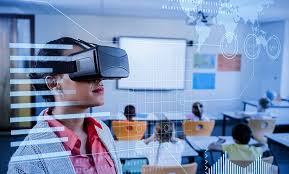
One of the primary ways technology improves learning at universities in the USA is through smart classrooms. While conventional teaching methods have been integrated with state-of-the-art technologies such as interactive boards, multimedia presentations, and projectors, these technologies are used to make classes more engaging and comprehensible for students.
The use of technological tools such as videos and simulations makes it easier for students to learn complex concepts. Interactive learning systems motivate students to be more proactive in their learning process.
Online learning platforms
Learning management systems such as Blackboard, Canvas, and Moodle have become popular in US colleges for facilitating learning. The study materials, homework, lecture videos, exams, and notices can be accessed anytime, anywhere through the portals.
Students who are studying while holding down jobs or working on projects would find online learning platforms useful for the freedom and convenience they offer.
Students can study at their own pace and repeat lessons they found difficult to understand.
Virtual labs and simulations
Technology has significantly improved hands-on learning through virtual laboratories and simulations. In addition to advanced software and other technological means, learners in fields such as technology, science, engineering, and medicine can conduct experiments and practice.
Students can effectively and safely engage with actual cases through virtual simulation. Science learners can run computerized experiments, engineering learners can test their machines, and medical learners can even conduct their operations.
Hands-on learning with technology increases students’ understanding, technical knowledge, and confidence.
Access to digital libraries and research resources
Digital libraries, periodicals, e-books, databases, and other sources are easily accessible to university students in the United States.
By not limiting themselves to textbooks alone, students can easily conduct research, search for information, and learn about scholarly works worldwide. Easy access to information makes research-based education, as well as independent learning, possible.
Furthermore, technology has greatly facilitated international cooperation and collaboration among researchers and scholars.
Artificial intelligence and personalized learning
The significance of artificial intelligence (AI) in American colleges is increasing day by day. The provision of customized learning experiences through AI-based education technologies, tailored to individual students’ strengths and weaknesses, is made possible by AI.
There are specific platforms that test students and provide personalized study material, quizzes, and methods to improve. It improves learning efficiency and allows students to focus on their weaknesses.
Moreover, AI-based solutions enable teachers to track learners’ progress.
Enhanced communication and collaboration
With the help of technology, teachers and learners can now cooperate and communicate more efficiently. Learners can engage in teamwork on projects despite being physically apart, thanks to collaboration tools, video conferencing, and discussion boards.
Technology facilitates communication among international learners, lecturers, peers, and academic advisors.
Flexible learning opportunities
The education system has become increasingly flexible due to technological innovations. Currently, many US-based universities provide virtual classrooms, online degrees, and other flexible learning mechanisms.
Lectures can be viewed at one’s convenience as they are pre-recorded. The students are also capable of attending virtual classes and completing assignments through online mediums. This flexibility allows individuals to manage their studies alongside personal and professional commitments effectively.
Flexibility in the education process has enabled individuals worldwide to benefit from quality education.
Innovation and creativity in learning
In the USA, universities’ technology helps foster innovation and creativity. With up-to-date technologies and software, students will be able to develop mobile applications, conduct research on computers, prepare presentation slides, create projects, and participate in innovation competitions.
Moreover, universities provide advanced research labs, business incubators, and innovation centers that help students translate ideas into reality.
The students will be well-prepared for becoming future innovators, researchers, and entrepreneurs.
With expert support from a trusted US visa consultants, you can improve your chances of getting successful university admissions and visa approval.
Conclusion
Technology has revolutionized education at American institutions, making it more exciting, flexible, and practical. Modern classroom methods have been replaced by up-to-date approaches to education in smart classrooms, online labs, online learning, digital libraries, and other technology tools.
Not only does technological incorporation contribute to better academic understanding, but it is also essential in developing technical skills, creativity, research abilities, and self-confidence at work. Education at American universities provides international students with unique opportunities to receive top-notch and technologically equipped education and become successful professionals anywhere in the world.
The universities in the USA will always remain ahead of the curve in education due to ongoing technological developments, helping students adapt to modern requirements.