In today’s highly competitive manufacturing environment, precision is more than just a quality requirement it is a necessity. Industries such as aerospace, automotive, oil and gas, defense, medical equipment, and heavy engineering depend on components that meet strict dimensional standards. Among these critical dimensions, thread accuracy plays a vital role in ensuring product reliability, safety, and performance.
Threaded components are used in countless applications where secure fastening and proper assembly are essential. Even a minor deviation in thread dimensions can lead to assembly problems, equipment failure, increased maintenance costs, and customer dissatisfaction. This is why thread inspection remains a crucial part of modern manufacturing quality control.
One of the most reliable tools used for thread verification is Un Thread Gauges. These gauges help manufacturers confirm that threaded components comply with established standards, ensuring consistency and interchangeability across production batches. By incorporating accurate thread inspection into the manufacturing process, companies can maintain superior product quality while reducing costly defects.
Understanding Unified National Threads
Unified National (UN) threads are standardized thread forms commonly used across North America and many international industries. The unified thread system includes several classifications, including UNC (Unified National Coarse), UNF (Unified National Fine), and UNEF (Unified National Extra Fine).
These standards were developed to create consistency in thread manufacturing and ensure that mating components from different manufacturers can fit together correctly. Standardization simplifies assembly processes, reduces compatibility issues, and improves product reliability.
However, achieving compliance with unified thread standards requires precise inspection methods. Manufacturers must verify thread dimensions throughout production to ensure they remain within specified tolerance limits.
This is where thread gauges become an essential quality assurance tool.
Why Thread Inspection Matters
Threaded components are often exposed to demanding operating conditions such as vibration, pressure, temperature changes, and heavy mechanical loads. If threads are not manufactured accurately, a variety of issues can occur, including:
- Improper assembly
- Loose or weak connections
- Excessive wear
- Fluid leakage
- Reduced product lifespan
- Equipment downtime
- Increased production costs
Even small thread imperfections can significantly impact the performance of an entire assembly. Effective inspection helps identify these issues before products reach customers.
By implementing reliable inspection procedures, manufacturers can improve product quality, reduce scrap rates, and strengthen customer confidence.
The Role of Un Thread Gauges in Quality Control
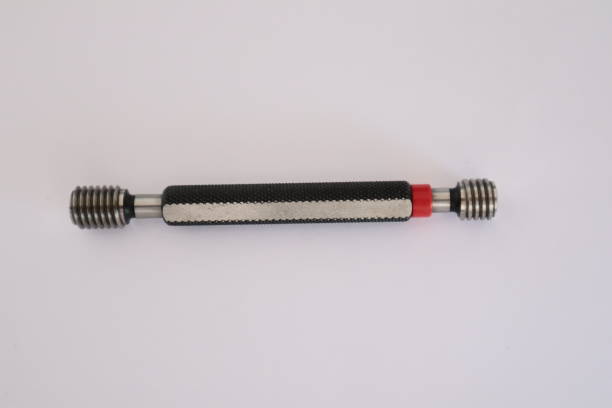
Un Thread Gauges are specifically designed to inspect unified threads and verify their dimensional accuracy. These gauges provide a fast, simple, and highly effective method for determining whether a thread meets the required specifications.
Most thread gauges are manufactured as GO and NO-GO gauges.
The GO gauge checks whether the thread can properly engage with its mating component. It verifies that the thread meets the minimum material condition and allows correct assembly.
The NO-GO gauge confirms that the thread does not exceed the maximum allowable tolerance. If the NO-GO gauge enters too far into the thread, it indicates that the component may be out of specification.
Together, these gauges provide a comprehensive assessment of thread quality and help prevent defective components from entering the production process.
Ensuring Manufacturing Consistency
Consistency is one of the most important goals in manufacturing. Customers expect every component they receive to meet the same quality standards, regardless of production volume or manufacturing location.
Thread gauges help manufacturers maintain this consistency by providing repeatable and reliable inspection results. Operators can quickly verify thread dimensions during production, ensuring that every part conforms to established standards.
This consistency is particularly important for industries that rely on interchangeable components. Without accurate thread inspection, manufacturers risk producing parts that do not fit properly, resulting in assembly delays and increased costs.
Routine use of thread gauges helps eliminate variation and supports a more efficient manufacturing process.
Supporting Compliance with Industry Standards
Many industries operate under strict regulatory and quality requirements. Aerospace, defense, medical device, and energy manufacturers must demonstrate compliance with recognized standards and specifications.
Accurate thread inspection plays an important role in meeting these requirements.
By using certified inspection tools, companies can verify that their threaded components comply with relevant standards and engineering drawings. This documentation helps support audits, quality certifications, and customer requirements.
Reliable thread gauges provide manufacturers with confidence that their products meet both industry expectations and regulatory obligations.
Reducing Production Costs
Quality issues can be expensive. When thread defects are discovered late in the manufacturing process, companies may face significant costs related to rework, scrap, labor, and production delays.
Early detection is the key to reducing these expenses.
Thread gauges enable operators to identify non-conforming parts before they progress further through production. Corrective action can be taken immediately, minimizing waste and preventing larger quality problems.
By investing in accurate inspection tools, manufacturers can improve efficiency while lowering overall production costs.
Enhancing Product Reliability
Product reliability is directly connected to thread quality. Components with properly manufactured threads are more likely to perform consistently throughout their intended service life.
Reliable threaded connections contribute to:
- Improved structural integrity
- Better load distribution
- Enhanced sealing performance
- Reduced maintenance requirements
- Increased operational safety
Thread inspection ensures that every component meets design requirements before reaching the customer.
This proactive approach helps manufacturers deliver products that perform reliably in real-world applications, strengthening customer trust and brand reputation.
The Importance of Choosing High-Quality Gauges
Not all inspection tools are created equal. The accuracy of thread inspection depends heavily on the quality of the gauges being used.
Manufacturers should select gauges produced from high-quality materials and manufactured to recognized standards. Durable gauges provide consistent measurement performance and longer service life, even in demanding industrial environments.
Trusted suppliers such as Gaugestools offer precision-engineered thread gauging solutions designed to support modern quality control requirements. By providing reliable inspection tools, Gaugestools helps manufacturers achieve greater accuracy, consistency, and compliance across a wide range of applications.
High-quality gauges also reduce the likelihood of measurement errors, ensuring dependable inspection results throughout their operational lifespan.
Best Practices for Effective Thread Inspection
To maximize inspection accuracy, manufacturers should follow established best practices:
Regular Calibration
Periodic calibration ensures that gauges continue to provide accurate and traceable measurements.
Proper Storage
Gauges should be stored in clean, dry environments to prevent damage and corrosion.
Operator Training
Inspection personnel should understand proper gauging techniques and thread specifications.
Routine Maintenance
Regular cleaning and inspection help maintain gauge performance and extend service life.
Documentation
Recording inspection results supports quality assurance programs and regulatory compliance.
Organizations that follow these practices are better positioned to maintain consistent thread quality and improve overall manufacturing performance.
Future Trends in Thread Inspection
As manufacturing technologies continue to evolve, quality control processes are becoming increasingly sophisticated. Automation, digital measurement systems, and advanced data analytics are transforming how manufacturers monitor product quality.
Despite these advancements, traditional thread gauges remain one of the most efficient and trusted methods for routine thread inspection. Their simplicity, speed, and reliability make them indispensable tools in both manual and automated production environments.
Companies that combine advanced manufacturing techniques with proven inspection methods can achieve higher levels of quality and operational excellence.
Suppliers like Gaugestools continue to support this evolution by providing precision gauging solutions that meet the growing demands of modern industry.
Conclusion
Precision and consistency are essential for maintaining high manufacturing standards. Thread quality directly affects product performance, reliability, and safety, making accurate inspection a critical part of the production process.
By utilizing Un Thread Gauges, manufacturers can verify thread accuracy, maintain compliance with industry standards, reduce production costs, and improve overall product quality. These gauges provide a simple yet highly effective solution for ensuring that threaded components meet required specifications.
As industries continue to pursue greater precision and efficiency, the role of Gaugestools and reliable thread inspection tools will remain vital in supporting quality-driven manufacturing operations around the world.
FAQ
1. What are Un Thread Gauges used for?
Un Thread Gauges are used to inspect unified threads and verify that they meet specified dimensional and tolerance requirements.
2. Why is thread inspection important?
Thread inspection ensures proper fit, functionality, safety, and compliance with manufacturing standards.
3. What is the difference between a GO gauge and a NO-GO gauge?
A GO gauge verifies proper thread engagement, while a NO-GO gauge confirms that the thread does not exceed maximum tolerance limits.
4. Which industries commonly use thread gauges?
Industries such as aerospace, automotive, defense, oil and gas, medical devices, and general manufacturing frequently use thread gauges.
5. How often should thread gauges be calibrated?
Calibration schedules vary by usage and quality requirements, but regular calibration is recommended to maintain measurement accuracy.
6. Why choose Gaugestools for thread inspection solutions?
Gaugestools provides precision-engineered thread gauges that support accurate inspection, quality compliance, and reliable manufacturing performance.