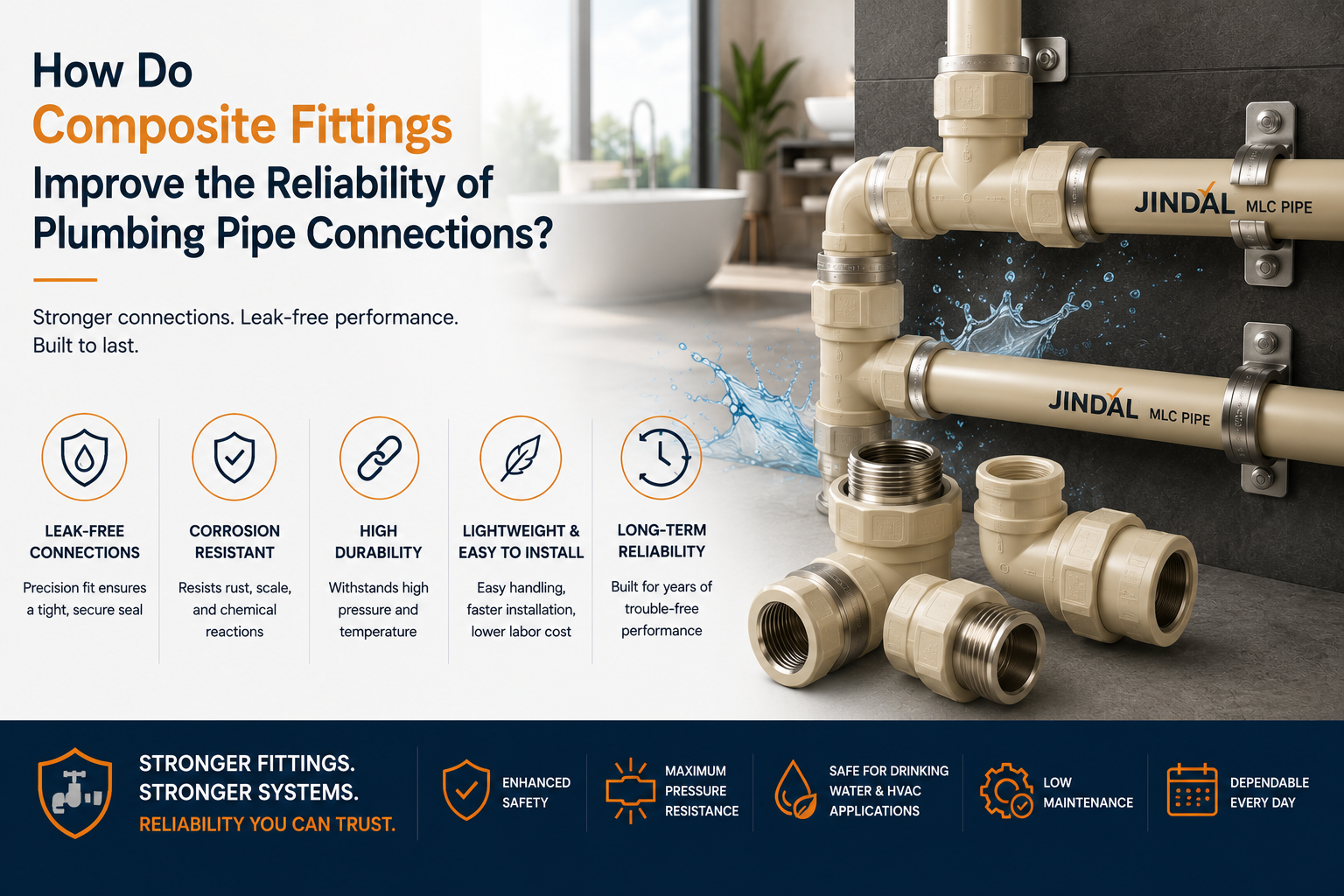
Pipe connections are often the most vulnerable points in a plumbing system. Even if high-quality pipes are used, poorly designed or incompatible fittings can lead to leaks, pressure loss, and costly repairs. Composite fittings improve connection reliability by creating strong, secure joints that withstand pressure changes, temperature fluctuations, and long-term operation, making them an essential component of modern plumbing infrastructure.
Why Reliable Pipe Connections Matter
Every plumbing system contains numerous connection points where pipes change direction, branch into different lines, or connect to fixtures and equipment. These joints experience continuous stress throughout the life of the building.
Common challenges affecting pipe connections include:
- Water pressure fluctuations
- Thermal expansion and contraction
- Mechanical vibration
- Improper installation
- Material incompatibility
- Age-related wear
According to the International Code Council (ICC), properly engineered press-connect systems create permanent mechanical joints that improve the consistency and reliability of plumbing installations while meeting modern building code requirements.
Understanding Composite Fittings
Composite fittings are specially designed connectors used with multilayer composite pipes such as PE-AL-PE systems. Unlike conventional threaded fittings that depend heavily on manual tightening, press-fit composite fittings create a uniform mechanical connection around the pipe.
Their purpose is to:
- Securely join pipe sections
- Maintain pressure integrity
- Reduce the risk of leakage
- Improve installation consistency
- Support long-term system performance
Understanding the multilayer pipe structure helps explain why compatible fittings are so important. The guide on How PE-AL-PE Multi-Layer Pipes Work provides a detailed overview of how pipes and fittings function together.
Stronger Connections Mean Fewer Leaks
Many plumbing failures occur at connection points rather than within the pipe itself.
Reliable composite fittings help prevent problems by providing:
- Uniform compression around the pipe
- Secure sealing under pressure
- Reduced joint movement
- Consistent installation quality
Unlike traditional joining methods that may loosen over time, press-fit technology creates durable mechanical joints designed for long-term performance.
The American Society of Plumbing Engineers (ASPE) recognizes proper fitting selection and installation as critical factors in achieving safe and dependable plumbing systems.
Better Pressure Resistance Improves Reliability
Modern plumbing systems operate under constantly changing pressure conditions.
Composite fittings are engineered to perform reliably during:
- Daily pressure fluctuations
- Pump operation
- High-demand water usage
- Multi-storey water distribution
Their secure mechanical design helps maintain tight connections even as operating conditions change.
Benefits include:
- Stable pressure performance
- Reduced connection failures
- Improved structural integrity
- Greater plumbing reliability
Thermal Stability Protects Pipe Joints
Temperature changes naturally cause plumbing materials to expand and contract.
Repeated thermal movement can weaken traditional joints over time.
Composite fittings designed for multilayer piping systems help accommodate these conditions while maintaining reliable sealing performance.
This contributes to:
- Better joint stability
- Reduced stress on connections
- Lower maintenance requirements
- Longer system lifespan
Faster Installation with Consistent Results
Construction professionals increasingly choose press-fit systems because they improve both installation efficiency and quality.
Compared with conventional joining methods, composite press fittings typically provide:
- Faster installation
- No soldering or welding
- Cleaner job sites
- Reduced labour time
- More consistent joint quality
The ASTM International develops standards for press-insert fittings that support compatibility, performance, and reliability in modern plumbing applications.
Compatible Systems Deliver Better Performance
Pipes and fittings should always be designed to work together.
Using compatible components helps improve:
- Joint strength
- Hydraulic efficiency
- Pressure performance
- Long-term durability
For multilayer plumbing systems, EZ-PRESS composite fittings are designed specifically for PE-AL-PE composite pipes, helping installers create secure press-fit connections that support reliable plumbing performance.
Reduced Maintenance Throughout the Building Lifecycle
Reliable fittings help minimize one of the most common causes of plumbing maintenance—joint failures.
Fewer connection problems mean:
- Lower repair costs
- Less water damage
- Reduced building downtime
- Longer service intervals
- Improved lifecycle value
The U.S. Environmental Protection Agency (EPA) recommends considering lifecycle performance when selecting infrastructure components, recognizing that long-term maintenance often represents a significant share of ownership costs.
Composite Fittings vs Traditional Plumbing Connections
|
Feature |
Composite Press Fittings |
Traditional Threaded Connections |
|
Leak Resistance |
Excellent |
Moderate |
|
Installation Speed |
Faster |
Slower |
|
Pressure Stability |
High |
Moderate |
|
Thermal Performance |
Excellent |
Moderate |
|
Maintenance Needs |
Low |
Higher |
|
Long-Term Reliability |
Excellent |
Varies |
Why the Plumbing Industry Is Choosing Composite Fittings
Modern plumbing systems are expected to operate reliably for decades with minimal maintenance.
As a result, engineers, contractors, and consultants increasingly prioritize connection technology alongside pipe selection.
Manufacturers such as Jindal Tubes have contributed to this evolution by developing integrated multilayer piping systems where composite pipes and compatible press-fit fittings work together to improve installation quality and long-term reliability.
Rather than viewing fittings as simple accessories, today’s plumbing industry recognizes them as essential components that directly influence system performance.
Frequently Asked Questions
Why are composite fittings more reliable?
They create secure mechanical joints that resist leaks, maintain pressure, and perform consistently under varying operating conditions.
Can composite fittings reduce plumbing leaks?
Yes. Properly installed press-fit composite fittings help reduce many of the common causes of leakage associated with traditional connection methods.
Why should compatible fittings be used with multilayer pipes?
Compatible fittings are engineered to match the pipe’s dimensions and performance characteristics, improving joint integrity and long-term reliability.
Where are composite fittings commonly used?
They are widely used in residential, commercial, healthcare, hospitality, and industrial plumbing systems that utilize multilayer composite piping.
Final Insight
The long-term performance of a plumbing system depends as much on its connections as on the pipes themselves. Reliable fittings help maintain pressure, prevent leaks, and reduce maintenance, making them a critical factor in overall system durability.
As modern construction continues to prioritize lifecycle performance and installation efficiency, composite press-fit fittings have become an integral part of dependable plumbing infrastructure. When paired with compatible multilayer piping systems, they help deliver the secure, long-lasting connections required for today’s residential and commercial buildings.