How On-Demand Home Service Trends Are Shaping Handyman App Development in 2026
Not long ago, finding someone to fix a broken tap meant flipping through a local directory or calling around for a recommendation. Today, the same problem gets solved from a phone screen — pick a nearby professional, check their rating, confirm a time slot, and the payment is sorted before they even show up at the door. The real shift, though, isn’t just in how bookings happen. It’s in what’s running quietly behind the scenes: systems that anticipate how long a repair will actually take, pricing that moves with real-time demand, and connected devices that catch a failing water heater or HVAC unit before the homeowner even notices something’s wrong.
Essential Features Every Modern Handyman App Needs
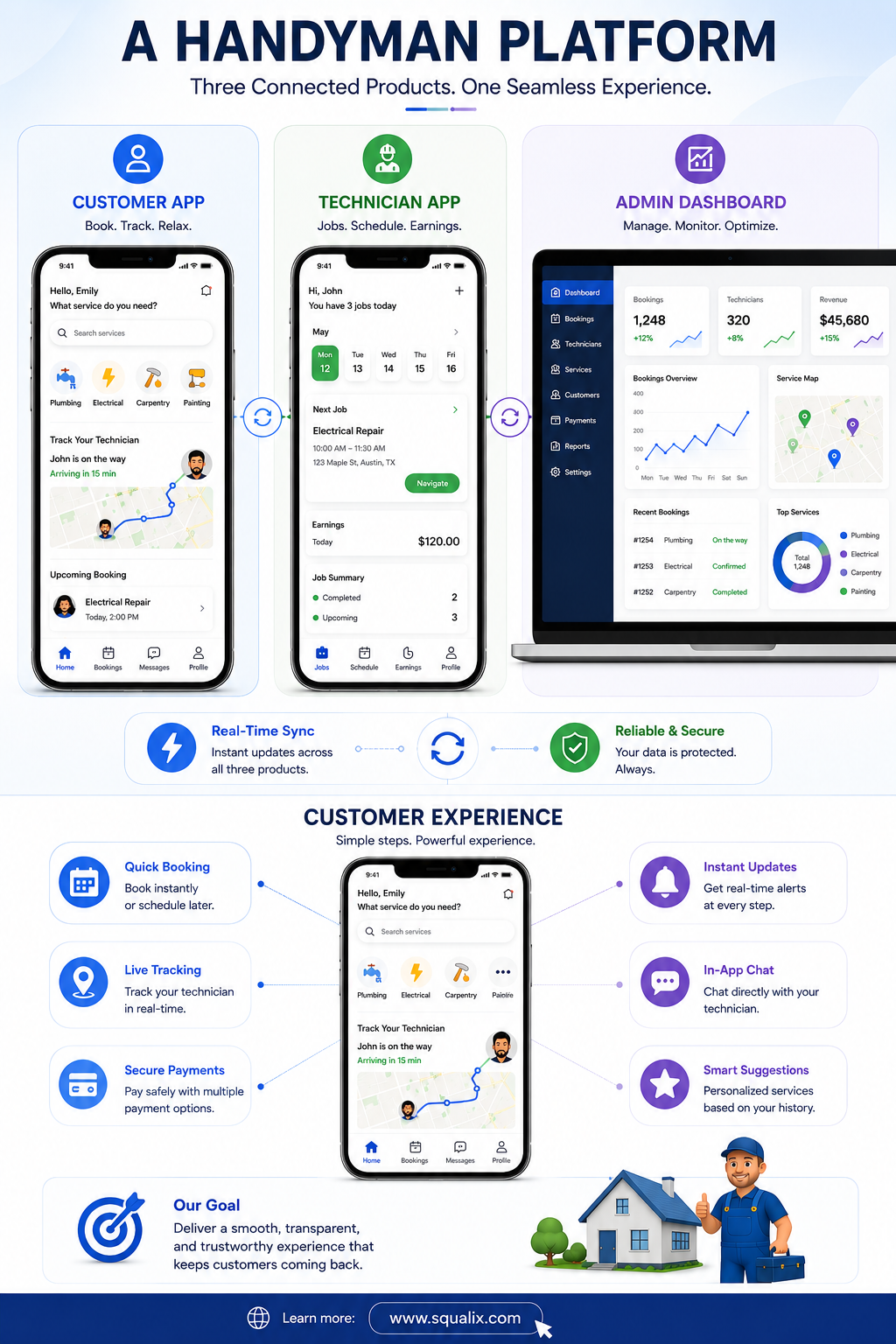
A handyman platform isn’t really one product — it’s three, packaged under a single brand. There’s the app the customer sees, the app the technician works out of, and the admin system that keeps both sides in sync. Weak spots in any one of these tend to surface as friction somewhere else, so each layer needs its own attention rather than being treated as an afterthought.
Customer App:
- Instant or scheduled booking, depending on how urgent the job is
- Live GPS tracking of the assigned technician
- Support for multiple payment methods, including saved cards and wallets
- Verified reviews tied to completed jobs
- Timely push notifications for confirmations, arrival, and completion
- Direct in-app messaging with the assigned technician
- Service suggestions based on the customer’s own booking history
Technician App:
- Calendar and availability controls
- Job details with photos and context before arrival
- Route planning to cut down travel time between jobs
- A clear earnings breakdown, per job and cumulative
- Simple check-in and check-out for each job
Admin Dashboard:
- Centralized oversight of bookings and technicians
- Real-time performance analytics across job volume and completion rates
- A working process for disputes and refunds
- Role-based access for anyone managing a region or franchise
None of this works if data doesn’t move between all three surfaces almost instantly — a delay of even a minute or two is enough to break the experience.
How AI Is Transforming Handyman Mobile Applications
AI in a handyman app isn’t a single standout feature — it’s spread across several layers working together. Predictive models get better at estimating job duration the more completed jobs they learn from, which cuts down on the overlapping bookings that quietly erode customer confidence. Pricing that flexes with demand, technician availability, and time of day works on the same logic ride-hailing platforms use, just adapted to service windows that run longer than a car ride.
Beyond scheduling and pricing, AI shapes what a returning customer sees first based on their booking history, helps catch suspicious payment activity or unusual cancellation patterns, and takes over the repetitive front line of customer support so human staff can focus on issues that actually need judgment. Smarter route optimization also has a very direct effect on a technician’s day — fewer wasted minutes between jobs means more jobs get done. None of it functions well, though, without a solid base of historical booking, location, and job-completion data — platforms that skip that groundwork tend to get underwhelming results from their AI investment no matter how advanced the models are.
Benefits of Investing in a Handyman App
- Revenue growth from higher booking volume and better job-matching, which reduces cancellations and no-shows
- Customer retention through faster booking experiences and consistent technician quality
- Automation that cuts down on administrative overhead once handled by a dedicated dispatcher
- Reduced operational costs from better routing and fewer scheduling conflicts
- Competitive advantage against third-party marketplaces that control visibility and pricing
- Scalability, since expanding into new service areas becomes a configuration change rather than a rebuild
- Brand trust built through consistent, professional digital touchpoints
Future Trends in On-Demand Home Service Apps
Generative AI is moving past basic chatbots into more genuinely useful territory — producing a rough repair diagnosis from a photo and a short description, or putting together a maintenance schedule tailored to a home’s actual equipment inventory. Scheduling is likely to become even more autonomous, cutting down on how much a human dispatcher needs to step in, while augmented reality could let someone point a phone camera at a broken appliance and get an early read on repair complexity before a technician is even sent out.
Voice assistants built into smart home systems may soon let someone book a repair just by describing the issue out loud, and deeper IoT integration means more appliances will report problems on their own instead of waiting for a person to catch them. Wearables for technicians, demand forecasting that extends down to the neighborhood level, and routing built around efficiency rather than just speed are all worth watching as this space keeps maturing past 2026.
Why We Chose Web Squalix for On-Demand App Development
Building a platform like this takes more than writing code — it takes a partner who understands how dispatching, scheduling, and technician management actually play out once real users are booking real jobs. That’s the reason Web Squalix was the right fit for this kind of on-demand app development: real-time booking and tracking systems, a technology stack built to handle unpredictable spikes in demand, and admin tooling that gives a business genuine control over its own customer relationships instead of borrowing them from a marketplace.
To explore building or upgrading an on-demand handyman or home service app, visit squalix.com.