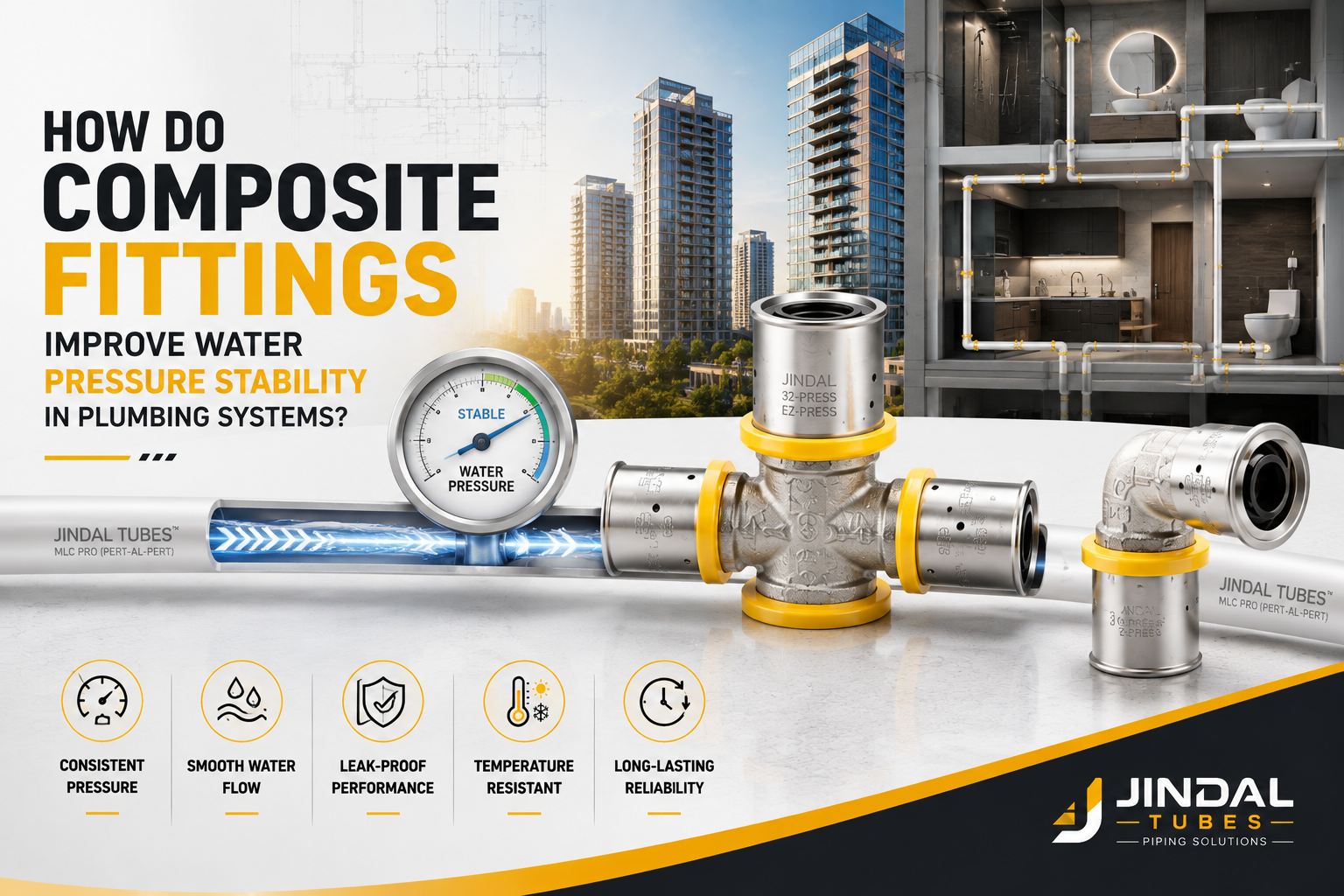
Consistent water pressure is essential for the performance and reliability of any plumbing system. While pipe material influences flow, the quality of the fittings that connect the system has an equally significant impact. Composite press-fit fittings help maintain stable water pressure by creating secure, leak-resistant joints, reducing pressure losses, and supporting efficient water distribution throughout residential, commercial, and industrial buildings.
Why Water Pressure Stability Matters
A plumbing system is designed to deliver water at a consistent pressure from the source to every outlet. When pressure fluctuates excessively, it can affect appliance performance, increase wear on plumbing components, and lead to premature system failures.
Poor pressure stability can result in:
- Uneven water flow
- Reduced fixture performance
- Increased stress on pipe joints
- Higher risk of leaks
- Greater maintenance costs
The American Society of Plumbing Engineers (ASPE) emphasizes that proper system design and component selection are essential for maintaining efficient and reliable water distribution throughout a building.
Pipe Connections Influence More Than Just Leak Prevention
Many people associate plumbing fittings only with joining pipes, but they also play an important role in maintaining hydraulic performance.
Every connection creates a point where water flow can be affected. Poorly designed or improperly installed fittings may introduce restrictions, turbulence, or pressure loss.
Modern composite fittings are engineered to create smooth, secure connections that help preserve water pressure throughout the system.
How Composite Fittings Help Maintain Stable Water Pressure
Composite press-fit fittings are specifically designed for multilayer composite pipes such as PE-AL-PE systems.
Their precision-engineered design helps maintain consistent flow by:
- Creating uniform internal connections
- Reducing unnecessary flow restrictions
- Providing secure mechanical joints
- Minimizing pressure losses caused by leakage
- Maintaining dimensional accuracy throughout installation
To understand how fittings complement multilayer pipes, readers can explore How PE-AL-PE Multi-Layer Pipes Work Explained.
Leak-Free Connections Help Preserve Pressure
Even small leaks reduce the effective pressure available throughout a plumbing system.
Composite fittings help minimize leakage by creating durable mechanical joints that maintain sealing performance over years of operation.
According to the International Code Council (ICC), approved press-connect systems provide permanent mechanical joints that improve the consistency and reliability of plumbing installations while supporting modern building code requirements.
By reducing leakage, these fittings help maintain more consistent water pressure at fixtures across the building.
Better Hydraulic Performance Means More Efficient Water Distribution
Water naturally loses pressure as it travels through a plumbing network. While pipe length and elevation influence this loss, poorly designed fittings can increase resistance even further.
Well-engineered composite fittings help support efficient water movement by:
- Reducing turbulence at connection points
- Maintaining consistent internal pipe alignment
- Supporting smoother water flow
- Improving hydraulic efficiency
The Plastic Pipe Institute (PPI) notes that properly designed plastic and multilayer piping systems can deliver excellent hydraulic performance while resisting corrosion and scaling that may otherwise restrict water flow over time.
Pressure Stability Protects the Entire Plumbing System
Stable water pressure benefits more than occupants—it also protects plumbing infrastructure.
Reliable pressure management helps reduce:
- Joint fatigue
- Water hammer effects
- Mechanical stress
- Equipment wear
- Premature fitting failures
This contributes to longer service life for the entire plumbing network.
Composite Fittings Perform Well Under Changing Operating Conditions
Modern buildings rarely operate under constant water demand.
Daily pressure variations occur because of:
- Simultaneous fixture use
- Booster pumps
- High-rise distribution systems
- Variable occupancy
Composite press-fit fittings are designed to maintain secure mechanical joints despite these changing operating conditions, improving overall system reliability.
Integrated Systems Deliver Better Results
Modern plumbing performs best when pipes and fittings are engineered to work together.
Using compatible components improves:
- Pressure stability
- Leak resistance
- Installation consistency
- Long-term durability
- Overall system efficiency
For multilayer plumbing applications, EZ-PRESS composite fittings are designed to integrate with compatible composite piping systems, helping installers achieve secure press-fit connections while supporting efficient water distribution.
Composite Press-Fit Fittings vs Traditional Connections
|
Feature |
Composite Press-Fit Fittings |
Traditional Threaded Fittings |
|
Pressure Stability |
Excellent |
Moderate |
|
Leak Resistance |
Excellent |
Moderate |
|
Hydraulic Efficiency |
High |
Moderate |
|
Installation Consistency |
High |
Depends on workmanship |
|
Maintenance Requirements |
Low |
Higher |
|
Long-Term Performance |
Excellent |
Varies |
Why Modern Construction Is Choosing Composite Fittings
Builders and plumbing consultants increasingly evaluate plumbing systems based on lifecycle performance rather than simply installation costs.
Composite fittings support these goals by offering:
- Reliable water pressure
- Secure mechanical joints
- Faster installation
- Reduced maintenance
- Better compatibility with multilayer composite pipes
Manufacturers such as Jindal Tubes have contributed to the growing adoption of integrated multilayer plumbing systems by developing compatible composite fittings that work alongside multilayer pipes to improve long-term plumbing reliability.
Frequently Asked Questions
Do composite fittings improve water pressure?
Composite fittings do not increase water pressure directly. Instead, they help maintain pressure by creating secure, leak-resistant connections that minimize unnecessary pressure losses within the plumbing system.
Why do plumbing fittings affect water flow?
Every fitting changes the direction or path of water. Poorly designed or incompatible fittings can create additional resistance, turbulence, or leakage that affects overall system performance.
Are composite fittings suitable for high-pressure plumbing systems?
Yes. When installed correctly and paired with compatible multilayer piping systems, composite press-fit fittings are commonly used in residential, commercial, and institutional plumbing applications designed for pressurized water distribution.
Why are press-fit composite fittings preferred in modern buildings?
They provide reliable mechanical connections, improve installation consistency, reduce maintenance requirements, and help support efficient water distribution throughout the plumbing network.
Final Insight
Maintaining stable water pressure requires more than selecting high-quality pipes. The reliability of every connection throughout the plumbing system has a direct impact on hydraulic performance, leak prevention, and long-term operational efficiency.
Composite press-fit fittings address these challenges by providing secure, precision-engineered connections that minimize pressure loss and support dependable water distribution. As modern buildings increasingly prioritize efficiency, durability, and lifecycle performance, these fittings have become an important component of advanced plumbing systems that are built to perform reliably for decades.