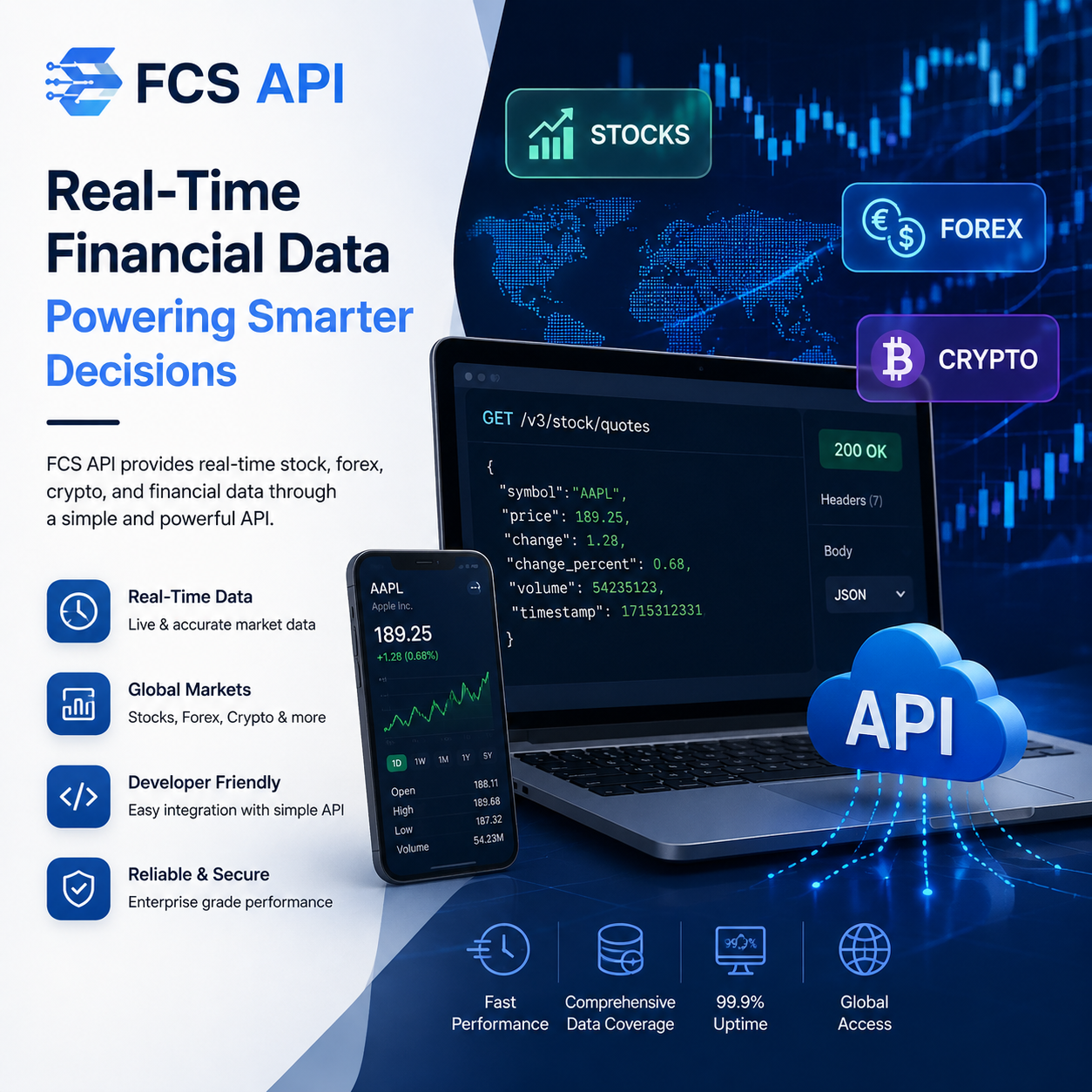
Financial markets move quickly, and having access to accurate and organized market data is important for investors, traders, developers, and financial businesses. Stock prices can change within seconds, while trading volume, market trends, company information, and historical prices can provide valuable insights into market behavior.
Manually collecting this information can take a lot of time. This is where a Free Stock Data API can be useful. An API allows applications, websites, dashboards, and financial tools to connect with market data and retrieve information in a structured way.
A free stock market api can help make market analysis more efficient by providing easier access to financial information. It can also help developers build tools that allow users to monitor markets, compare stocks, study historical movements, and identify trends.
In this article, we will explore 10 ways a free stock market API can improve market analysis and why financial data APIs are becoming useful tools for modern financial applications.
What Is a Free Stock Market API?
A Free Stock Data API is an application programming interface that allows users or applications to access stock market information. Depending on the provider, the available information may include current prices, historical data, market statistics, company information, and other financial data.
How Does a Stock Market API Work?
The process is relatively simple. An application sends a request to an API endpoint for specific information. The API processes the request and returns the available data in a structured format.
For example, a stock analysis application can request information about a particular stock and then use the response to display its price, historical performance, or other available market information.
This removes the need to manually collect data from multiple websites and enter it into an application.
Why Are APIs Useful for Market Analysis?
Market analysis depends heavily on data. The easier it is to access organized information, the easier it becomes to study market behavior.
A financial API can help automate data collection and provide developers with information that can be used to create charts, dashboards, screeners, research tools, and other financial applications.
10 Ways a Free Stock Market API Can Improve Market Analysis
There are many ways financial APIs can support market research and analysis. Here are 10 important benefits.
1. Provides Easier Access to Market Data
The first advantage of using a free stock market api is easier access to financial information.
Instead of visiting different websites to search for stock prices or historical information, an application can retrieve available data through API requests.
This can make the research process faster and more convenient. Developers can also integrate the data directly into their own websites or applications.
2. Saves Time on Manual Data Collection
Manual data collection can become a major problem when analyzing multiple stocks.
Imagine a researcher wants to monitor 50 or 100 stocks. Collecting prices and other information manually would require significant time and effort.
A Free Stock Data API can automate much of this process. Applications can request available data automatically, reducing repetitive work and allowing analysts to focus more on understanding the information.
3. Makes Historical Analysis Easier
Historical market data is important when studying how an asset has performed over time.
Analysts can use historical information to examine previous price movements, identify patterns, compare different periods, and understand how markets behaved under different conditions.
A stock market API can make historical data easier to integrate into financial applications. Developers can then create charts and other tools that help users study past market performance.
4. Helps Create Interactive Charts
Charts can make complex financial information much easier to understand.
Instead of looking at a large table of numbers, users can view price movements through visual charts. Depending on the available API data, developers can create charts showing historical prices, market trends, and other relevant information.
For example, a financial website can combine API data with an interactive chart so visitors can quickly understand how a stock has moved over a specific period.
5. Supports Stock Screening
Stock screening is another important part of market analysis. Investors may want to find stocks based on different criteria, such as price movement, market capitalization, trading activity, or other available financial metrics.
A Free Stock Data API can provide data that developers use to build stock screening tools.
Instead of checking individual stocks one at a time, users can potentially filter available market information and narrow their research to assets that match their selected criteria.
6. Makes Market Comparison More Convenient
Comparing multiple stocks can help analysts understand differences between assets.
For example, a user may want to compare several companies based on historical prices or other available market information.
A free stock market api can provide the data required to build comparison dashboards. Developers can display multiple stocks together through tables, charts, or other visual formats.
This can make it easier for users to study market performance without switching between multiple sources.
7. Supports Automated Financial Applications
Automation is one of the biggest advantages of using APIs.
Once an application has been properly connected to an API, it can request available market information without requiring someone to manually update the application every time.
For example, a market dashboard can be designed to request updated information according to the API’s available capabilities and usage limits.
This can make financial applications more efficient and reduce repetitive maintenance work.
8. Helps Developers Build Custom Analysis Tools
Every investor or financial business may have different research requirements. Standard financial websites may not always provide the exact tools a user wants.
A Free Stock Data API allows developers to build customized applications around available financial data.
Developers can create dashboards, watchlists, market trackers, research platforms, educational tools, and other applications based on their specific requirements.
This flexibility can be especially useful for startups and independent developers experimenting with new financial products.
9. Makes Financial Research More Organized
Good market analysis requires organized information. When data comes from multiple sources, researchers may have to spend additional time cleaning and organizing it.
Using an API can provide a more structured method of accessing financial information. Developers can integrate the returned data into databases, dashboards, spreadsheets, or analytical systems.
A more organized data workflow can make it easier to analyze information and develop financial reports.
10. Supports Broader Market Analysis
Modern financial markets include more than just stocks. Investors and businesses may also monitor cryptocurrencies, forex, commodities, ETFs, and indices.
A financial data platform that covers multiple asset classes can help users create broader market analysis tools.
For example, FCS API provides financial information covering cryptocurrencies, stocks, forex, commodities, ETFs, and indices. This type of coverage can be useful for applications that need to monitor different parts of the global financial market.
What Should You Look for in a Free Stock Data API?
Not every API provides the same data or features. Before selecting a Free Stock Data API, it is important to evaluate several factors.
Data Coverage
First, check which markets and assets are supported. If you only need stock information, a stock-focused API may be enough. However, if you plan to monitor forex, cryptocurrencies, commodities, ETFs, or indices, broader coverage can be helpful.
API Limits
Free API plans often have usage limits. These may include limits on the number of requests, available endpoints, or data frequency.
Understanding these limitations before development can help you choose an API that matches your project’s requirements.
Documentation
Good documentation is important for developers. Clear documentation should explain API endpoints, request parameters, authentication, response formats, and usage examples.
Well-organized documentation can make integration easier, especially for developers who are new to financial APIs.
Data Quality and Reliability
Market analysis depends on useful and reliable data. Before integrating an API into an important application, developers should understand its data sources, update frequency, coverage, and reliability.
How FCS API Can Support Market Analysis
FCS API is a financial information platform designed to provide access to market data, news, and analysis for global financial markets.
Multiple Asset Classes
The platform covers stocks, cryptocurrencies, forex, commodities, ETFs, and indices. This allows users to explore different areas of the financial market through one platform.
Charts and Market Trends
Charts can help users understand price movements and market trends more easily. Combining structured financial data with visual tools can make market research more accessible.
Financial News and Economic Updates
Market analysis is not only about prices. Economic developments and financial news can also influence market conditions. Access to news and economic updates alongside market data can help users build a broader view of financial markets.
Conclusion
A free stock market api can make market analysis more efficient by simplifying access to financial information and reducing the amount of manual work required. From historical analysis and interactive charts to stock screening and automated applications, APIs can support many different financial use cases.
A Free Stock Data API can also give developers an affordable way to experiment with financial applications and create customized market analysis tools. However, users should always review an API’s coverage, limitations, documentation, reliability, and terms before choosing a provider.