Imagine a nurse moving a patient from a room to a treatment area. The floor is smooth, but the route includes a doorway, a tight corner, and a slight change in flooring. The equipment needs to move safely, stop quickly, and remain stable throughout the transfer.
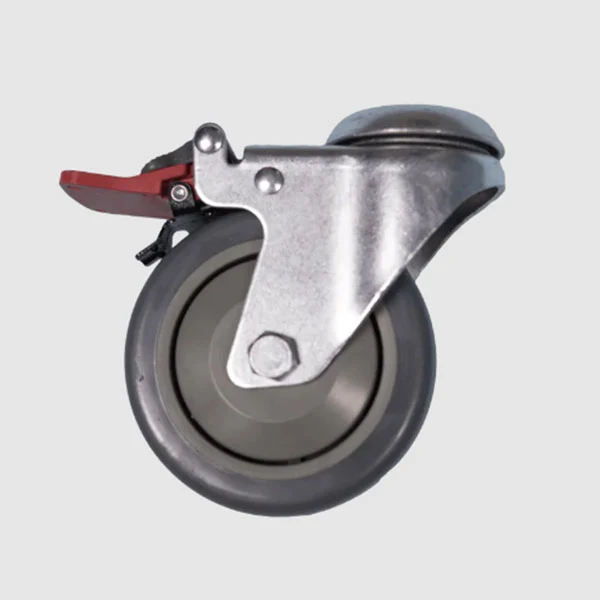
This is where Patient Lift Casters become more than simple wheels. The right caster system can improve the maneuverability, stability, and control of patient-handling equipment while helping healthcare staff move patients more confidently.
From patient lifts and mobile medical equipment to hospital beds and transport carts, mobility components play an important role in day-to-day healthcare operations. Choosing the right wheels and casters can also help reduce unnecessary pushing force, improve positioning, and support safer workflows.
In this guide, we’ll look at how mobility components improve safety and maneuverability in healthcare facilities, what to consider when selecting them, and why hospital bed wheels and patient lift casters need to be designed for demanding clinical environments.
Table of Contents
- Why Mobility Matters in Healthcare
- How Patient Lift Casters Improve Safety
- The Role of Hospital Bed Wheels
- Key Features of Healthcare Casters
- How Casters Improve Maneuverability
- Choosing the Right Mobility Components
- Maintenance and Safety Tips
- Real-World Healthcare Use Cases
- Frequently Asked Questions
- Conclusion
Why Mobility Matters in Healthcare
Healthcare facilities are busy environments. Nurses, caregivers, technicians, and support staff regularly move equipment through hallways, patient rooms, elevators, operating areas, and treatment spaces.
A mobility component may seem small compared with the equipment it supports, but its performance can have a major effect on everyday operations.
Poorly selected or worn casters can make equipment:
- Difficult to push or steer
- Harder to position accurately
- More likely to roll unexpectedly
- Difficult to stop on certain surfaces
- More demanding for caregivers to operate
By contrast, well-designed mobility components provide smoother movement and better control.
Think about how often a patient lift or hospital bed is repositioned during a typical day. Even a small improvement in steering or rolling resistance can make repeated movements easier for staff.
How Patient Lift Casters Improve Safety
Patient Lift Casters are designed to support mobility while helping caregivers maintain control of patient-handling equipment.
Patient lifts are used to move individuals who may have limited mobility. Because the equipment is supporting a person, stability and predictable movement are especially important.
Here are several ways quality casters contribute to safer operation.
1. Better Stability
A stable caster system helps equipment remain balanced while it is stationary or being moved.
Locking mechanisms can prevent unwanted movement when the lift is positioned for a transfer. This gives caregivers a more controlled setup before beginning the procedure.
The exact locking system depends on the equipment design, but the goal remains the same: keep the equipment where it needs to be.
2. Easier Steering
Patient lifts often need to navigate around beds, chairs, medical devices, and other obstacles.
Swiveling casters allow the equipment to change direction more easily. This can be particularly useful in patient rooms where available floor space may be limited.
Better steering can also reduce repeated adjustments by caregivers.
3. Reduced Pushing Effort
Caster design influences how much force is needed to start and maintain movement.
Wheel diameter, tread material, bearing construction, load capacity, and floor conditions can all affect rolling performance.
When the caster is properly matched to the equipment and environment, caregivers can move equipment with less unnecessary effort.
4. Controlled Movement
Healthcare equipment should not simply roll easily. It should also be controllable.
A caster that rolls too freely without adequate braking or directional control may create its own safety concerns. That’s why healthcare mobility systems need to balance low rolling resistance with stability and control.
The Role of Hospital Bed Wheels
Hospital beds are among the most frequently moved pieces of equipment in a healthcare facility.
They may need to travel between patient rooms, diagnostic departments, operating areas, recovery spaces, and other locations. As a result, hospital bed wheels must handle repeated movement while supporting substantial loads.
Good hospital bed wheels can contribute to:
- Smooth rolling
- Easier directional changes
- Reliable braking
- Better positioning
- Reduced vibration
- Improved staff control
However, choosing a wheel based only on its load rating isn’t enough.
The hospital floor itself matters.
For example, a facility may have vinyl flooring, tile, concrete, thresholds, ramps, or transitions between different surfaces. A wheel that performs well on one surface may behave differently on another.
Wheel Size Matters
Larger wheels can often handle floor irregularities and transitions more effectively than smaller wheels.
However, wheel size must be compatible with the equipment’s frame, load requirements, and overall design.
Tread Material Matters
The tread affects traction, noise, rolling resistance, and floor interaction.
Healthcare applications may require materials that provide reliable performance while protecting floors and meeting applicable equipment requirements.
Key Features of Healthcare Casters
Not all casters are designed for healthcare applications. Medical equipment places specific demands on mobility components.
When evaluating a caster, consider these important characteristics.
Load Capacity
Every caster has a rated load capacity. The selected caster should be appropriate for the total equipment load and intended application.
For patient-handling equipment, this becomes particularly important because the operating load can vary.
Don’t simply calculate the empty equipment weight. Consider the equipment, patient, accessories, and other expected loads.
Braking Systems
Brakes help keep mobile equipment stationary when required.
Depending on the application, healthcare equipment may use total-lock brakes, directional locks, or other mechanisms designed for specific movement and positioning requirements.
A good brake should be easy for staff to operate and provide consistent engagement.
Swivel Performance
A swivel caster allows the wheel to rotate around its mounting point, making directional changes easier.
This is especially useful when equipment must navigate tight spaces.
For example, moving a patient lift beside a bed may require several small steering adjustments. Smooth swivel action can make those movements easier and more predictable.
Bearing Quality
Bearings influence how smoothly the caster moves.
A quality bearing system can reduce friction and contribute to consistent rolling performance. It can also help maintain performance over repeated use when properly selected and maintained.
Noise Reduction
Noise is another consideration in healthcare environments.
Excessive rolling noise can disturb patients, especially in hospitals, rehabilitation centers, and long-term care facilities.
Caster designs that reduce vibration and noise can support a quieter environment.
How Casters Improve Maneuverability
Safety and maneuverability are closely connected.
If equipment is difficult to steer, caregivers may need to use more force or make repeated corrections. That can make routine tasks less efficient.
Here are some practical ways mobility components improve maneuverability.
Tight Turns
Patient rooms can be crowded with beds, chairs, monitors, IV equipment, and other devices.
Swivel casters allow equipment to turn within a smaller space, helping staff position it around obstacles.
Straight-Line Tracking
Directional locks can help equipment maintain a straighter path when traveling through long corridors.
This can be useful when a caregiver needs to move a bed or cart over a longer distance.
Floor Transitions
Healthcare equipment may encounter thresholds and surface changes.
A properly selected wheel can help the equipment move over these transitions with less resistance and vibration.
Positioning Accuracy
Sometimes the goal isn’t simply to move equipment from point A to point B.
The caregiver may need to position the equipment precisely next to a bed or transfer surface.
Smooth caster movement makes small adjustments easier.
Choosing the Right Mobility Components
Selecting mobility components should be treated as an application-specific decision rather than a one-size-fits-all purchase.
Use this simple framework:
Step 1: Identify the Equipment
Determine whether the caster will be used on:
- Patient lifts
- Hospital beds
- Stretchers
- Medical carts
- Transport equipment
- Rehabilitation equipment
Each application can have different requirements.
Step 2: Calculate the Expected Load
Determine the maximum working load, not just the equipment’s empty weight.
Also consider how the load is distributed across the caster system.
Step 3: Evaluate the Floor
Look at the surfaces where the equipment will operate.
Ask:
- Is the floor smooth or uneven?
- Are there thresholds?
- Are there ramps?
- Is the equipment used indoors only?
- Are there areas where moisture or cleaning chemicals are common?
These factors can influence wheel and tread selection.
Step 4: Consider Movement Requirements
Does the equipment need to:
- Move in a straight line?
- Turn frequently?
- Navigate tight spaces?
- Remain stationary during procedures?
- Move long distances?
Understanding the workflow helps determine the appropriate caster configuration.
Step 5: Consider Staff Usability
A mobility system should be practical for the people using it every day.
Brake pedals, directional controls, and steering behavior should be easy to understand and operate.
Pro Tip: Don’t Choose Casters by Size Alone
A common mistake is assuming that a larger or heavier-duty caster is automatically better.
That’s not always the case.
A caster needs to match the equipment, load, floor, speed, maneuverability requirements, and operating environment.
The best solution is the one that provides the right balance between load capacity, rolling performance, stability, durability, and control.
Maintenance and Safety Tips
Even high-quality mobility components require regular inspection.
Healthcare facilities should establish inspection and maintenance procedures appropriate for their equipment and manufacturer requirements.
Look for:
- Damaged wheels
- Flat spots
- Excessive tread wear
- Loose mounting hardware
- Unusual noise
- Restricted swivel movement
- Brake problems
- Debris around the wheel or bearing
If a caster doesn’t roll or lock as expected, it should be evaluated before continued use.
Cleaning is also important. Healthcare equipment is routinely exposed to cleaning agents, disinfectants, moisture, and other environmental conditions. Always follow the equipment and caster manufacturer’s cleaning recommendations.
Real-World Example: Moving a Patient Between Departments
Consider a patient being moved from a hospital room to a diagnostic department.
The equipment may need to travel through a doorway, down a corridor, into an elevator, and around several corners.
At each stage, mobility matters.
The casters need to roll smoothly over the floor, allow controlled turns, and provide reliable stopping when the equipment needs to remain stationary.
Now imagine the same journey with worn wheels that don’t swivel properly.
The caregiver may need to push harder, make multiple corrections, or struggle to position the equipment.
This example shows why mobility components aren’t just mechanical accessories. They are part of the overall usability and safety of medical equipment.
Frequently Asked Questions
What are Patient Lift Casters?
Patient lift casters are mobility components designed for patient lifts and similar patient-handling equipment. They support movement, steering, positioning, and, depending on the design, locking or braking functions.
Why are hospital bed wheels important?
Hospital bed wheels allow beds to be transported and positioned throughout healthcare facilities. Proper wheel selection can improve maneuverability, rolling performance, stability, and staff control.
What factors should I consider when selecting healthcare casters?
Consider load capacity, wheel diameter, tread material, bearing construction, swivel performance, braking requirements, floor conditions, cleaning exposure, and the way the equipment will be used.
Do larger casters always provide better performance?
Not necessarily. Larger wheels may handle certain floor transitions well, but the correct caster depends on the complete application. Equipment design, load, floor type, maneuverability, and braking requirements all matter.
How often should healthcare casters be inspected?
Inspection frequency depends on the equipment, usage, facility procedures, and manufacturer recommendations. High-use equipment should be checked regularly for wheel wear, brake performance, loose hardware, and restricted movement.
Conclusion
Mobility components play a much bigger role in healthcare than their small size might suggest. From Patient Lift Casters to hospital bed wheels, the right wheel and caster system can make medical equipment easier to move, position, and control.
For healthcare facilities, the goal shouldn’t simply be to find a wheel that rolls. The better approach is to select mobility components based on the equipment, expected load, flooring, maneuverability needs, braking requirements, and daily workflow.
When these factors are considered together, casters can support safer equipment handling while making everyday tasks more efficient for healthcare professionals.