If your doctor has recommended an allergy test, you may wonder how much time you need to set aside for the appointment. The answer depends on the type of allergy test being performed, the number of allergens being evaluated, and whether additional testing is necessary.
A skin prick Allergy Test in Dubai may take only a short time to perform, although the complete appointment can last longer because the healthcare professional needs to review your medical history and interpret the reactions. An allergy blood test usually involves a quick blood draw, but laboratory results may take additional time to become available.
Other procedures, such as patch testing or an oral food challenge, can take considerably longer.
Understanding what happens before, during, and after allergy testing can help you know what to expect and why the process may vary from one patient to another.
The Short Answer: How Long Does Allergy Testing Take?
There is no single appointment length for every allergy test.
A routine skin prick test may involve several stages:
-
Reviewing symptoms and medical history
-
Selecting relevant allergens
-
Applying the test substances
-
Waiting for the skin to react
-
Measuring and interpreting the results
-
Discussing what the findings mean
The actual skin testing portion can be relatively quick, while the entire clinical visit may take longer.
An allergy blood test is different. The blood collection itself is usually brief, but the sample must be processed by a laboratory before the results are available.
The type of suspected allergy is therefore the biggest factor in determining how long the overall evaluation takes.
Why the Appointment May Start With Questions?
Allergy testing does not usually begin with the test itself.
Your healthcare professional may first ask detailed questions about your symptoms, possible triggers, previous reactions, medications, and exposure patterns.
For example, they may want to know whether symptoms appear after eating a particular food, visiting a home with pets, spending time outdoors during pollen season, or using a particular cosmetic.
The timing of symptoms is especially important.
A reaction that develops within minutes may suggest a different type of immune response than a rash that appears many hours after exposure.
This discussion helps the clinician decide which allergens should actually be tested.
Skin Prick Allergy Test: What Happens During the Procedure?
A skin prick test is one of the most common methods used to investigate suspected IgE-mediated allergies.
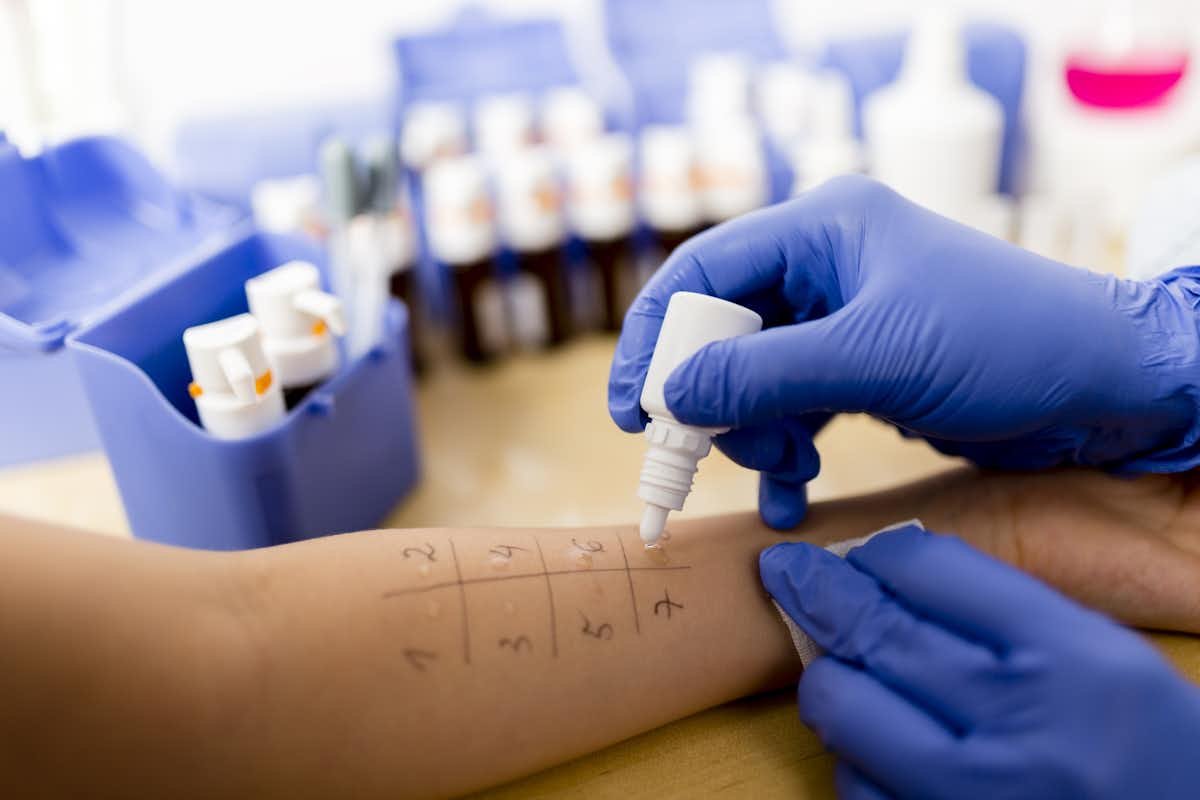
During the procedure, small amounts of selected allergen extracts are placed on the skin, usually on the forearm or back.
The skin is then gently pricked through each allergen so the substance can interact with the superficial layer of skin.
The procedure involves multiple test points, depending on how many allergens are being evaluated.
A control solution is also used to help the healthcare professional determine how your skin is responding.
The test itself is generally quick, but the appointment does not end immediately after the allergens are applied.
Why Do You Have to Wait After a Skin Prick Test?
After the allergens are applied, the healthcare professional needs to wait for a measurable skin response.
If you are sensitized to one of the tested allergens, you may develop a small raised, itchy area known as a wheal-and-flare reaction.
The clinician measures the reactions and compares them with the appropriate controls.
This waiting period is an important part of the procedure because the result cannot be interpreted immediately after the skin is pricked.
The exact timing can vary according to the testing protocol used by the clinic.
How Long Does a Skin Allergy Test Appointment Take?
The actual testing process may be completed relatively quickly, but the total appointment can take longer.
Factors that may affect the duration include:
-
Number of allergens being tested
-
Type of skin test
-
Complexity of your symptoms
-
Time required for medical history
-
Medication review
-
Additional examinations
-
Discussion of the results
A patient being evaluated for a straightforward environmental allergy may have a simpler appointment than someone with several different types of suspected allergic reactions.
It is therefore sensible to allow extra time rather than planning another important appointment immediately afterward.
What About an Allergy Blood Test?
An allergy blood test works differently from skin testing.
Instead of observing a reaction on the skin, the test uses a blood sample to measure allergen-specific antibodies, commonly specific immunoglobulin E or specific IgE.
The blood draw itself is usually brief.
However, the overall process does not end when the blood sample is collected. The laboratory needs to analyze the sample, and the results then need to be reviewed by the healthcare professional.
The time required for laboratory reporting can vary between testing services.
How Quickly Do Allergy Blood Test Results Come Back?
The turnaround time for an allergy blood test depends on the laboratory, the number of allergens tested, and the type of analysis requested.
Some results may become available relatively quickly, while others can take longer.
It is important to distinguish test completion time from result availability.
A blood sample may take only minutes to collect, but you may need to wait before the final laboratory report is ready.
Once the results are available, your healthcare professional should interpret them in the context of your symptoms rather than relying on the laboratory values alone.
Does a Positive Allergy Test Take Longer?
A positive skin test does not necessarily make the appointment substantially longer.
The healthcare professional measures the size of the skin reactions and documents the findings.
The more important question is what the positive result means.
A positive skin prick test or specific IgE blood test can indicate sensitization to an allergen. However, sensitization does not automatically prove that exposure to that allergen causes symptoms in everyday life.
For example, a person may have detectable sensitivity to a pollen but experience symptoms only during certain seasons or circumstances.
The clinician needs to compare the test result with the patient’s actual exposure and reaction history.
What If the Allergy Test Is Negative?
A negative result can usually be discussed during the same clinical evaluation for a skin test.
For a blood test, the clinician will review the laboratory report once it becomes available.
A negative result may make sensitization to the tested allergen less likely, but it does not necessarily explain every symptom.
The suspected allergen may not have been included in the test, the reaction may involve a different immune mechanism, or the symptoms may have a non-allergic cause.
Depending on the circumstances, additional evaluation may be recommended.
Why Some Allergy Tests Take Much Longer?
Not every allergy investigation is a quick skin prick or blood test.
Patch Testing:
Patch testing is commonly used when allergic contact dermatitis is suspected.
Small amounts of potential contact allergens are applied to patches placed on the skin. The patches remain in place for a specified period, and the skin is examined later for delayed reactions.
This means patch testing usually requires more than one visit or reading.
Oral Food Challenge:
A medically supervised oral food challenge can take considerably longer because the patient receives controlled amounts of a suspected food while being monitored for symptoms.
The purpose is to determine whether consuming the food produces a clinically significant reaction.
Because an allergic reaction can potentially become serious, this procedure should only be performed under appropriate medical supervision.
It should never be recreated as a home experiment.
Can You Go Home Immediately After Allergy Testing?
For many routine allergy tests, patients can leave once the testing and clinical assessment are complete.
Skin prick testing may leave temporary itching or small raised areas at positive sites. These reactions generally settle, but your healthcare professional can explain what to expect.
Blood testing generally involves the usual considerations associated with a blood draw.
If you have undergone a more involved procedure, such as a food challenge, the healthcare team may observe you for a longer period before allowing you to leave.
Always follow the instructions provided by the testing clinic.
What Can Make an Allergy Test Take Longer?
Several factors can extend the appointment.
A complicated medical history may require more discussion. Testing many relevant allergens can also increase the amount of time needed for preparation and interpretation.
Sometimes the initial test does not provide enough information, and additional testing is considered.
Your medication history can also affect planning. Certain medicines may interfere with some skin allergy tests, so the healthcare professional may need to review what you are taking before proceeding.
Do not stop prescription or over-the-counter medication simply to shorten or prepare for an appointment. Ask the testing clinic for specific instructions.
Why Allergy Test Results Should Not Be Read in Isolation
A common mistake is to look at an allergy report and assume that every positive number represents a confirmed allergy.
That is not always correct.
Allergy tests identify particular forms of immune sensitization, while a clinical diagnosis considers the entire picture.
A healthcare professional may consider:
-
Your symptoms
-
Timing of reactions
-
Amount of exposure
-
Previous reactions
-
Test results
-
Medical history
-
Other possible explanations
This approach helps reduce unnecessary allergen avoidance and prevents patients from making major dietary or lifestyle changes based on an isolated test result.
When Should You Ask About Additional Testing?
Additional evaluation may be considered when your symptoms and initial allergy test results do not match.
For example, a person may have persistent skin symptoms but negative results on standard IgE-based testing. In that situation, the clinician may investigate contact allergy, eczema, irritation, infection, medication effects, or another condition.
Similarly, suspected food allergy may sometimes require a supervised food challenge when the history and preliminary testing remain uncertain.
The next test should be selected because it can answer a specific clinical question, not simply because more testing is available.
A Practical Timeline for Your Allergy Appointment:
You can think of the process in four stages:
Before testing: Your healthcare professional reviews your symptoms, exposures, medications, and medical history.
During testing: The selected procedure is performed, whether that involves skin exposure, blood collection, patches, or controlled food exposure.
After testing: Immediate reactions are assessed when appropriate, and you receive instructions about what to expect.
Results review: The findings are interpreted alongside your symptoms and discussed with you so that a management plan can be developed.
This timeline explains why the total process may take longer than the actual test procedure.
When Allergy Symptoms Require Urgent Attention?
Do not wait for an allergy test if you are experiencing signs of a severe allergic reaction.
Severe difficulty breathing, swelling of the throat or tongue, fainting, severe dizziness, or rapidly worsening symptoms can indicate anaphylaxis and require emergency medical attention.
Allergy testing is designed to investigate possible triggers after or between reactions. It is not a substitute for emergency treatment during a serious reaction.
Final Takeaway
So, how long does an allergy test take? It depends on the type of testing and the complexity of the evaluation.
A skin prick allergy test can often be completed within a relatively short clinical visit, although time is needed to review your history, apply the allergens, wait for reactions, and interpret the findings. An allergy blood test requires only a brief blood draw, but laboratory processing means the final results may take longer.
Patch Lab tests and oral food challenges generally require more time and may involve multiple visits or extended observation.
Most importantly, the goal of allergy testing is not simply to obtain a result as quickly as possible. The goal is to identify clinically meaningful sensitization and understand whether it explains your symptoms.
If your doctor has recommended allergy testing, ask the clinic what type of test you will receive, how long the appointment is expected to take, and when you can expect the results. Being prepared can make the process smoother and help you understand what happens at each stage.