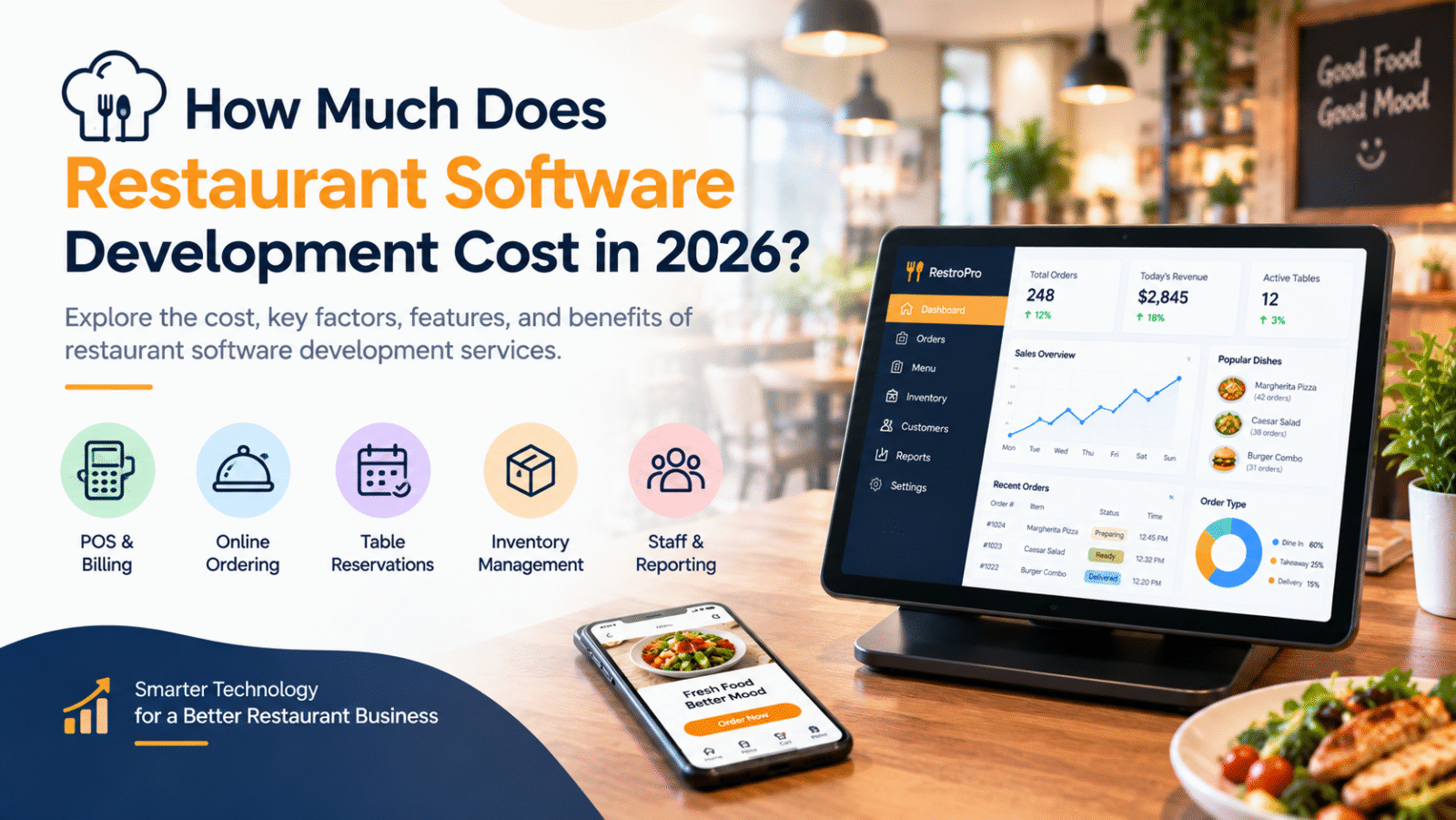
Restaurant businesses are using digital tools to manage orders, billing, inventory, kitchen operations, reservations, and customer relationships. However, the cost of building restaurant software in 2026 depends on the type of solution, required features, integrations, and number of locations.
According to a 2026 restaurant software development guide by Pharos Production, a focused restaurant software module may cost around $40,000 to $120,000, while a larger platform can range from $120,000 to $400,000. Multi-location enterprise solutions may require $400,000 or more. These figures are scope-based estimates, not fixed prices for every project.
What Is Restaurant Software Development?
Restaurant software development involves creating digital systems that help restaurants manage their daily activities. Depending on the business model, the software may include point-of-sale billing, online ordering, inventory tracking, kitchen display systems, staff management, customer loyalty, and business reporting.
A small café may need a simple billing and ordering system, while a restaurant chain may require a complete platform that connects multiple outlets and departments.
Main Factors That Affect Restaurant Software Development Cost
1. Type of Restaurant Software
The type of software is one of the biggest cost factors. Common options include:
- Restaurant POS software
- Online food ordering software
- Table reservation systems
- Kitchen display systems
- Inventory management software
- Restaurant loyalty applications
- Multi-location restaurant management platforms
A single-purpose system usually requires less development effort than a complete restaurant management platform.
2. Features and Functional Requirements
The number and complexity of features directly influence the budget. Basic billing, menu management, and order tracking are generally easier to develop than advanced functions such as automated inventory forecasting, loyalty programs, delivery tracking, and real-time analytics.
Businesses should first identify essential features and plan advanced functionality for later stages.
3. Third-Party Integrations
Restaurant software often needs to connect with payment gateways, accounting tools, delivery platforms, printers, kitchen screens, CRM systems, and external APIs.
These integrations can increase development time because each system has different technical requirements, security rules, and maintenance needs.
4. Number of Locations
Software for one restaurant outlet is usually less complex than software for multiple branches. Multi-location systems may need centralized reporting, separate staff permissions, shared menus, location-based taxes, inventory transfers, and outlet-level performance tracking.
Therefore, businesses planning expansion should discuss scalability during the initial planning stage.
5. UI/UX Design and Platforms
The cost also depends on whether the software is designed for web browsers, Android devices, iPhones, tablets, or desktop systems. A custom and mobile-friendly interface may require additional design and testing work.
A simple interface is often sufficient for internal staff, while customer-facing ordering apps may require a more polished user experience.
Estimated Restaurant Software Development Cost by Scope
| Software Scope | Estimated Cost Level | Suitable For |
|---|---|---|
| Basic restaurant module or MVP | Low to moderate | Small restaurants and focused business needs |
| Mid-level restaurant platform | Moderate to high | Growing restaurants with multiple workflows |
| Enterprise restaurant software | High | Restaurant chains, cloud kitchens, and multi-location businesses |
These categories are more useful than choosing a fixed price because every project has different features, integrations, and operational requirements.
How to Reduce Development Expenses
Businesses can control restaurant software development cost by following a practical approach:
- Start with a minimum viable product.
- Prioritize billing, ordering, inventory, or another core function.
- Use reliable third-party services where suitable.
- Avoid unnecessary features during the first release.
- Select a scalable technology stack.
- Include testing, security, and maintenance in the budget.
- Work with an experienced restaurant software development company.
Build Custom or Buy Ready-Made Software?
Ready-made software may be suitable for restaurants with standard operational needs and limited customization requirements. On the other hand, custom restaurant software development can be useful when a business needs unique workflows, advanced integrations, complete ownership, or support for multiple locations.
The right choice depends on the restaurant’s budget, business model, growth plans, and operational challenges.
Final Thoughts
Restaurant software development cost in 2026 depends on the project’s scope rather than one universal price. Features, integrations, platforms, security, maintenance, and the number of restaurant locations all influence the final investment.
Before starting restaurant management software development, define your business requirements and request a detailed estimate from a reliable restaurant software development company. A clear development plan can help control costs while creating a solution that supports long-term restaurant growth.