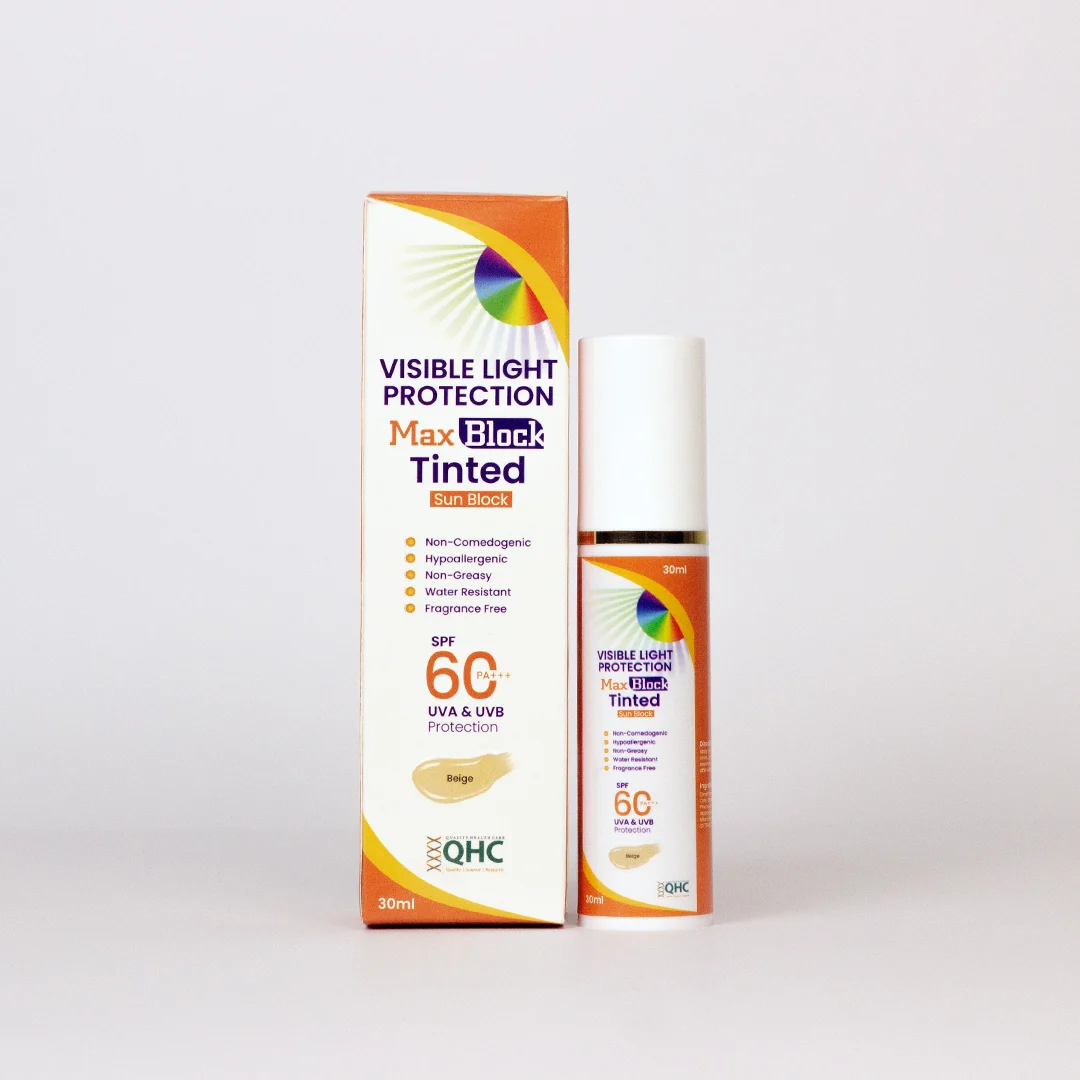
The right choice is a mineral-based formula with a high SPF that adds a light wash of color while it protects. Look for a shade that matches your skin, a broad protection label and a texture you can wear every day. QHC Max Block SPF 60 in Beige and Ivory covers all three, so it suits most skin colors in Pakistan.
Why Skin Color Looks Uneven Under the Sun
Sun exposure is the biggest reason skin loses its even look. UV rays push skin cells to make extra melanin. That extra melanin gathers in patches. It shows up as dark spots on the cheeks, a shadow above the lip and dullness across the forehead.
Pakistan gets strong sun for most of the year. Even a short walk to the car or a few minutes near a window adds up. Without daily protection, the patches get darker and take longer to fade.
Plain sun cream stops new damage. It does not change how the skin looks today. That is where a shaded formula helps. It protects the skin and softens the look of uneven color at the same time.
What a Shaded Formula Can and Cannot Do
A shaded formula has a small amount of skin-toned pigment in the base. The pigment blurs redness, minor dark marks and a patchy look. Most people see a smoother face within a minute of applying it.
Some of the color also helps in a way many people miss. Iron oxide and mineral pigments can block part of the visible light that darkens stubborn patches. A colorless product gives less help here.
It has limits too. It is not a full-coverage foundation. It will not hide deep scars or strong pigmentation. It also cannot lighten spots that are already there. Think of it as a daily habit that keeps things from getting worse while giving a light, natural finish.
What to Check Before You Buy
A few points save you from a poor match:
- SPF level. SPF 50 or higher is a sensible pick for strong sun. Higher numbers add only a small extra gain, so the label matters less than how well you apply it.
- Broad protection. The label should say it blocks both UVA and UVB rays. UVA is the one linked with dark patches and early aging.
- Filter type. Mineral filters such as zinc oxide and titanium dioxide sit on top of the skin. They tend to be kinder to sensitive skin.
- Shade range. A shade that is too light leaves a gray cast. One that is too dark looks like a mask. Test it on your jawline in daylight.
- Texture. Choose a finish you will actually wear. A product that feels heavy usually ends up unused in a drawer.
- Skin needs. Oily skin needs a lighter feel. Dry skin needs some added moisture from oils or plant extracts.
Shade Guide
|
Skin color |
Suggested shade |
Result |
|
Fair to light |
Ivory |
Soft glow with a smooth look |
|
Medium to wheatish |
Beige |
Natural cover that blends into the neck |
If you fall between the two, pick the lighter shade. It is easier to blend and looks more natural in daylight.
QHC Max Block SPF 60 Options
QHC offers two shaded options in its Max Block SPF 60 line. Both give strong sun protection and add a light tone.
Beige. This one uses titanium dioxide and zinc oxide as its filters. The base has dimethicone and cyclomethicone, which give a smooth and easy spread. It suits all skin types and works well for medium and wheatish skin.
Ivory. This version is a hybrid. It has zinc oxide along with a chemical filter called OMC. The base carries almond oil, jojoba oil and cucumber extract, which keep the skin soft. It is made for lighter skin and helps even out tone and pigmentation.
You can see both on the QHC Max Block tinted sunblock page or browse the wider QHC sunblock collection.
What Sets This Range Apart
Many shaded products in the market ask you to choose between protection and looks. This range tries to give both in one step. That saves time in a morning routine where most people already run late.
The formula also comes from a brand that focuses on skin care. QHC lists its ingredients openly. You can read what goes on your face before you buy. That kind of clarity is something a careful shopper should ask from any brand.
How to Apply for the Best Results
- Wash your face and pat it dry.
- Apply a light moisturizer if your skin feels dry. Let it settle for a minute.
- Squeeze about two finger lengths of product for the face and neck.
- Dot it on the forehead, cheeks, nose and chin. Blend outward with clean fingertips.
- Blend down to the jawline and neck so there is no line.
- Wait a few minutes before putting on makeup.
- Reapply after about two to three hours outdoors. Reapply sooner after sweating or wiping your face.
Do not apply a thin layer and expect full protection. A small amount gives far less cover than the label promises.
Common Mistakes to Avoid
Picking the wrong shade. Always test in natural light. Store lighting can trick you.
Skipping the neck and ears. These areas get lots of sun and often look darker than the face.
Using it only on sunny days. UVA rays pass through clouds and glass. Daily use gives the best results.
Depending on it alone. Shade, a hat and sunglasses add real protection during peak hours.
Expecting overnight change. Skin needs weeks of steady protection before the tone starts to look calmer.
FAQs
Can I use it instead of foundation?
For a light everyday look, yes. It gives a soft cover. For events or heavy coverage, you may still want a foundation on top.
Will it leave a white or gray cast?
A shade matched to your skin should blend in cleanly. If it looks gray, try the other shade or apply a thinner layer and build up.
Is it suitable for oily skin?
Many people with oily skin use lighter formulas. If your skin gets very shiny, blot gently and reapply through the day.
Does it work for dark spots?
It helps stop spots from getting worse and softens their look. It does not remove them. For that you would need a targeted skin care routine.
How often should I reapply?
Every two to three hours in strong sun. Indoors, one careful morning application is usually enough.