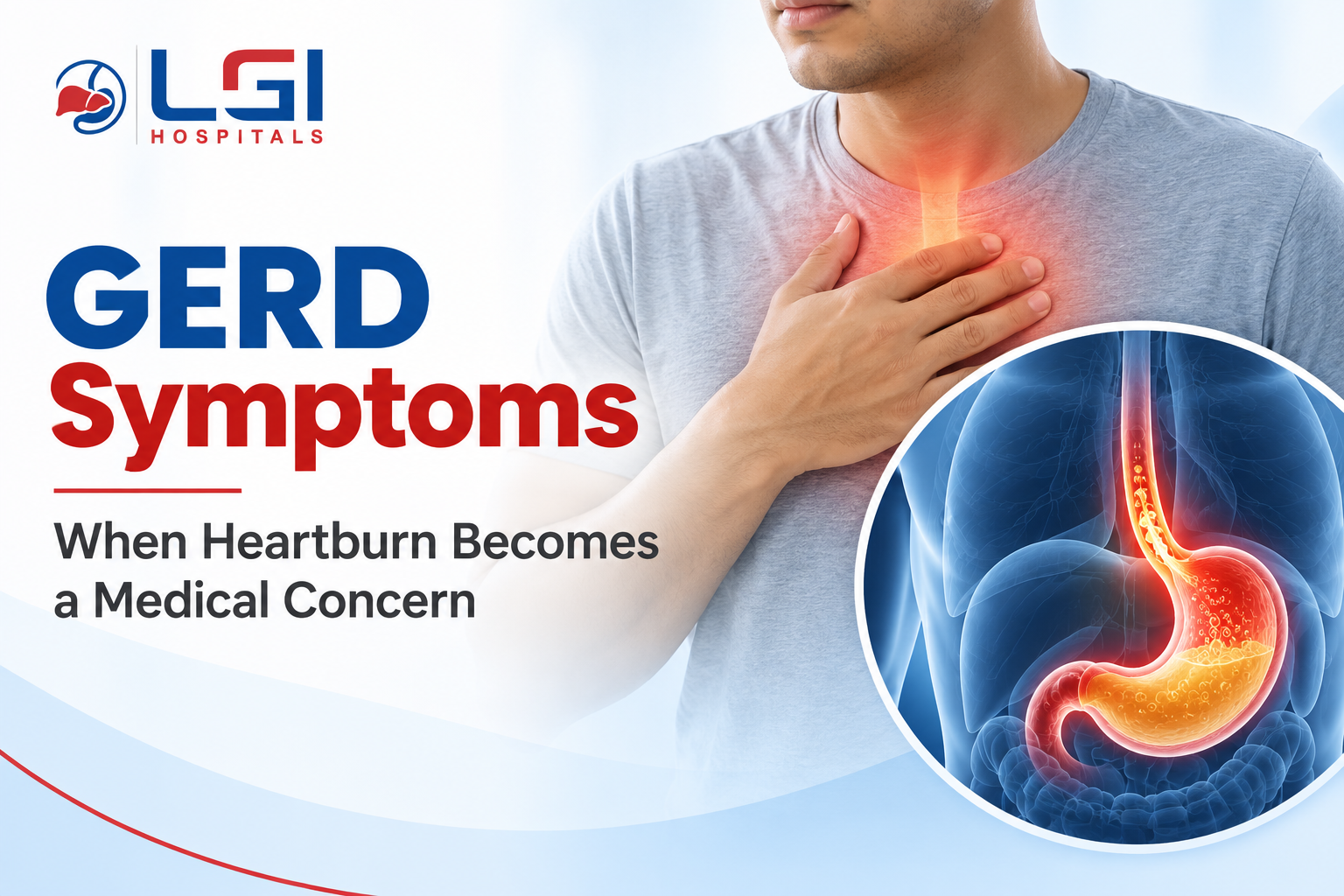
Quick Answer: Gastroesophageal Reflux Disease (GERD) occurs when stomach acid frequently flows back into the esophagus. Common GERD symptoms include persistent heartburn, acid regurgitation, and chest discomfort. If these signs disrupt your daily routine, consulting a gastroenterologist at LGI Hospitals, Nagpur can help you understand your condition and explore appropriate management options.
Occasional heartburn after a heavy or spicy meal is a common experience. However, when that burning sensation becomes a frequent occurrence, it may indicate Gastroesophageal Reflux Disease (GERD). GERD is a chronic digestive condition where the lower esophageal sphincter relaxes inappropriately, allowing stomach acid to irritate the esophageal lining. The specialist team at LGI Hospitals focuses on helping patients understand these digestive patterns and seek appropriate medical evaluation.
Recognizing the Common GERD Symptoms
Identifying the signs early is important for managing digestive comfort. The most frequently reported indicators include:
- Persistent Heartburn: A burning sensation in the chest, usually after eating, which might worsen at night or when lying down.
- Regurgitation: A sour or bitter tasting acid backing up into the throat or mouth.
- Chest Discomfort: Pain or pressure behind the breastbone that requires careful medical evaluation to differentiate from other conditions.
- Difficulty Swallowing: A sensation of food being stuck in the throat, medically known as dysphagia.
- Chronic Cough or Hoarseness: Acid irritation can affect the vocal cords and trigger a persistent cough, especially while resting.
It is important to note that upper abdominal discomfort can sometimes mimic other gastrointestinal conditions. For instance, distinguishing between standard acid reflux and other pancreatic or gastric issues requires a professional clinical assessment. You can learn more about differentiating these digestive signs in our guide on pancreatic warning signs.
Why Professional Evaluation Matters
Self-diagnosing digestive issues can be risky. While over-the-counter antacids might provide temporary relief, they do not address the underlying cause of chronic acid reflux. At LGI Hospitals, Nagpur, our diagnostic facilities allow our specialists to accurately assess the extent of esophageal irritation and determine the most suitable management plan.
You can review the credentials of our medical team to understand the expertise available for your evaluation. We offer comprehensive acid reflux management plans designed to help manage symptoms and improve digestive comfort based on individual clinical findings.
Lifestyle Adjustments and Management
Alongside medical evaluation, certain lifestyle modifications can significantly reduce the frequency of acid reflux episodes. Eating smaller, more frequent meals, avoiding trigger foods like spicy or highly fatty items, and not lying down immediately after eating are standard recommendations. Elevating the head of the bed can also help prevent nighttime acid backup.
FAQs
What can I do to relieve GERD pain?
Over-the-counter antacids can provide immediate, short-term relief for occasional symptoms. For long-term management, a gastroenterologist may recommend specific medications to reduce acid production. Additionally, avoiding trigger foods, eating smaller meals, and staying upright after eating can significantly reduce discomfort.
How do I know if I am having GERD?
If you experience heartburn or acid regurgitation two or more times a week, or if over-the-counter medications fail to provide lasting relief, it is advisable to seek a clinical evaluation. A proper diagnosis requires a thorough assessment by a qualified gastroenterologist.
Can GERD be cured?
GERD is generally considered a chronic condition, but it can be effectively managed. With the right combination of lifestyle modifications, medical therapy, and in some cases, advanced clinical interventions, patients can achieve significant symptom relief and prevent long-term complications.
How to overcome GERD naturally?
Natural management focuses on lifestyle adjustments. Maintain a healthy weight, avoid tight clothing around the abdomen, quit smoking, elevate the head of your bed, and identify and eliminate your personal dietary triggers, such as caffeine, chocolate, and citrus fruits.
To Wrap it Up
Living with constant digestive discomfort is not something you have to accept as normal. Recognizing the early GERD symptoms is the first step toward reclaiming your comfort and protecting your digestive health. Do not let chronic acid reflux dictate your daily life. Partner with the gastroenterology specialists at LGI Hospitals to get an accurate evaluation and a structured management plan. Contact LGI Hospitals to enquire about appointments and take the first step toward better digestive wellness.
Medical Disclaimer: This article is for educational and informational purposes only and does not constitute professional medical advice, diagnosis, or treatment. Always consult a qualified physician or gastroenterologist for any medical concerns. LGI Hospitals assumes no liability for health outcomes based on this content. Seek immediate medical attention in case of a medical emergency.