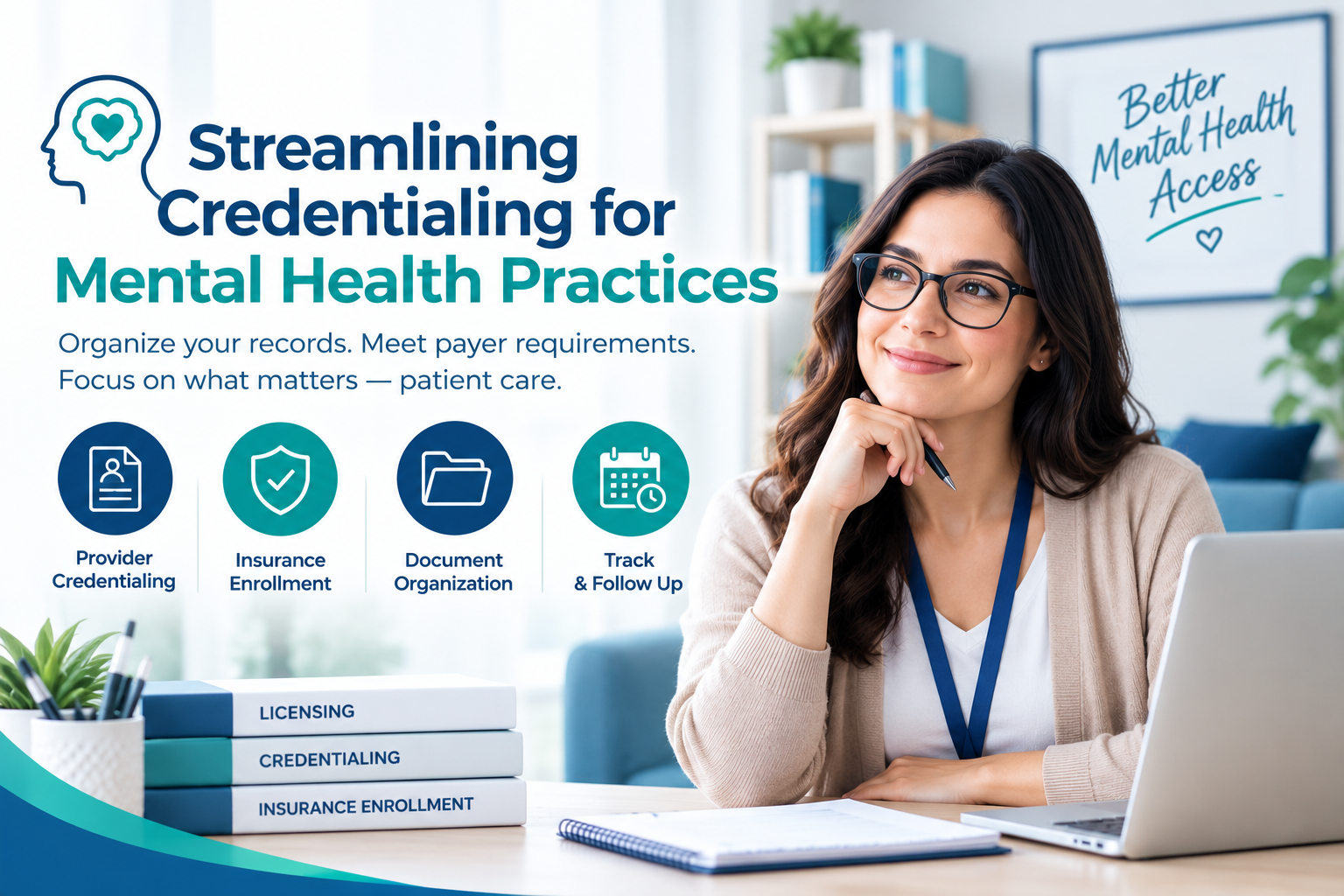
Mental health practices handle many administrative responsibilities alongside patient care. These responsibilities include maintaining provider records, verifying insurance requirements, submitting enrollment applications, and tracking application progress. When these tasks are not organized, administrative delays can affect a practice’s ability to work with insurance networks.
A clear credentialing process helps practice managers keep records accurate and identify missing information before it causes additional work.
Understanding Provider Credentialing
Provider credentialing involves reviewing a healthcare professional’s qualifications, licenses, education, training, and other required information. Insurance companies use this information to determine whether a provider meets their participation requirements.
Mental health practices may need to coordinate applications across multiple insurance companies. Each payer can have different documentation requirements and processing procedures, making it important to maintain accurate records and monitor each application separately.
Keeping Enrollment Documents Organized
A central record system can make credentialing easier to manage. Practices should maintain current copies of professional licenses, malpractice insurance certificates, education records, identification numbers, and other documents requested by payers.
Staff should also track submission dates, outstanding requests, follow-up activity, and renewal deadlines. Reviewing this information regularly helps the practice identify incomplete applications and respond to payer requests promptly.
Support for Behavioral and Mental Health Practices
Small and growing practices may not have enough administrative staff to manage every credentialing task internally. External support may help with preparing applications, organizing documentation, following up with insurance companies, and monitoring provider enrollment progress.
When comparing service providers, practices should ask about experience with behavioral health professionals, communication procedures, service scope, and reporting. They should also confirm how confidential information is handled.
Practices seeking specialized assistance can explore mental health credentialing services to learn about support for provider documentation, credentialing applications, and insurance enrollment requirements.
Choosing a Credentialing Partner
A credentialing partner should understand the administrative needs of healthcare practices and communicate clearly about application status. Before choosing a service, practice managers should review the provider’s experience, included tasks, fees, reporting process, and responsibilities.
It is equally important to establish who will supply documents, respond to requests for additional information, and monitor pending applications. Clear responsibilities help prevent missed follow-ups and duplicated work.
Healthcare practices can also learn more about Professional Credentialing Services when evaluating options for managing provider credentialing and related administrative tasks.
Maintaining an Effective Credentialing Workflow
Credentialing is an ongoing responsibility rather than a one-time administrative task. Practices should review provider information regularly, monitor expiring documents, maintain a record of payer communications, and plan ahead when adding clinicians or changing practice locations.
A consistent workflow can reduce avoidable documentation problems and help staff understand which applications require attention. Although insurance companies control their own review timelines, organized records and timely responses can make the process easier to manage.
By establishing clear procedures and seeking appropriate support when needed, mental health practices can handle credentialing responsibilities more efficiently while keeping their attention on patient care.
This article is for general informational purposes. Requirements and processing times vary by payer and provider type.