
It could be from being hit by a stray cricket ball, falling off the trampoline, or clashing with another player’s head on the football field, but all of a sudden, there is a tooth lying on the ground. Knocked-out teeth constitute one of the most time-sensitive dental emergencies, and what is done in the hour after the incident is very likely to determine whether or not the tooth will be saved.
This tutorial outlines precisely how it should be done so that you can handle this situation in a calm manner, if it happens to your kid, a teammate, or yourself.
Why Is Time Critical in This Case?
The root of the tooth has a delicate layer of cells that facilitate reimplanting the tooth into the jaw. Once it has been pulled out, these cells start dying, particularly if the tooth is dried out. The more time the tooth spends in the air, the lower the likelihood of successful treatment.
First Check for Other Injuries
Before focusing on the tooth, check if the person is otherwise okay. Call 000 or go to the nearest hospital emergency department if there is:
- Loss of consciousness, confusion, vomiting or a severe headache
- Heavy bleeding that won’t stop with pressure
- A possible broken jaw or difficulty breathing
Head injuries come first. The tooth can be dealt with once the person is safe.
Step-by-Step First Aid for an Adult Tooth
- Find the tooth and pick it up by the crown, the white part you normally see. Avoid touching the root.
- Rinse briefly if it’s dirty. Hold it under cold running water or rinse it in milk for about ten seconds. Don’t scrub it, dry it or wrap it in tissue.
- Put it back in the socket if you can. Check it’s facing the right way, then gently push it into place.
- Hold it in position by biting gently on a clean cloth or handkerchief.
- See a New Gisborne dentist immediately. Call ahead so the team can prepare.
How to Store the Tooth If It Can’t Go Back In
If replanting isn’t possible, keep the tooth moist on the way to the dentist:
- Cold milk is a good, easy option.
- Saline from a first-aid kit also works.
- Inside the cheek can work for an adult who is calm and won’t swallow it. This isn’t suitable for young children.
- Cling wrap can help briefly if nothing else is available.
Avoid storing a tooth in water, and never let it dry out.
Baby Teeth Are Different
If a young child knocks out a baby tooth, don’t try to put it back. Replanting a baby tooth can harm the adult tooth forming underneath. Instead:
- Apply gentle pressure with a clean, damp cloth to stop bleeding.
- Offer something cold, such as an icy pole, for comfort.
- Book a visit with a dentist to check the area and surrounding teeth.
If you aren’t sure whether the tooth is a baby or adult tooth, store it in milk and let the dentist decide.
What Happens at the Dentist
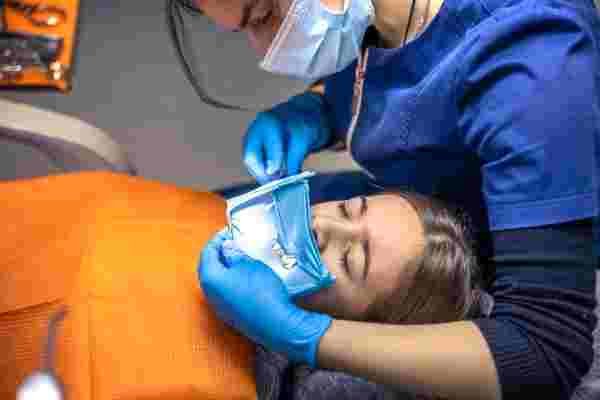
Your dentist will examine the tooth area, take an X-ray, and either realign the tooth or examine a tooth that has been replanted. The tooth will normally be secured using a flexible splint fitted to the adjacent teeth for around two weeks.
A lot of adults’ teeth that have been successfully replanted end up requiring root canal treatment at some point. Follow-up visits over the months and years ahead are necessary to check on healing. In addition, your dentist may advise a tetanus booster in case the replanted tooth has been contaminated by soil.
Not all replanted teeth can be retained in the long run. In case you lose a tooth, there are options available for replacing a lost tooth that can be discussed with your dentist once the appropriate time comes. There are individual variations in the results obtained, and you can learn more about potential complications on the treatment risks page.
Preventing Knocked-Out Teeth in Sport
Your dentist will examine the tooth area, take an X-ray, and either realign the tooth or examine a tooth that has been replanted. The tooth will normally be secured using a flexible splint fitted to the adjacent teeth for around two weeks.
A lot of adults’ teeth that have been successfully replanted end up requiring root canal treatment at some point. Follow-up visits over the months and years ahead are necessary to check on healing. In addition, your dentist may advise a tetanus booster in case the replanted tooth has been contaminated by soil.
Not all replanted teeth can be retained in the long run. In case you lose a tooth, there are options available for replacing a lost tooth that can be discussed with your dentist once the appropriate time comes.