Every Interaction Needs a Reason to Exist
Interactive experiences give people opportunities to participate rather than simply observe. Whether a customer is exploring a product, learning about a service, or discovering information through a smartphone, the quality of that experience depends on more than its visual appeal. People need to understand what they can do, why it matters, and what they gain from taking part. Without a clear purpose, even an impressive digital experience can become confusing or fail to deliver meaningful results.
Clear goals provide direction throughout the design process. They help teams decide which features deserve attention, what information should appear first, and how users should move from one action to the next. Instead of adding interactive elements simply because technology makes them possible, designers can concentrate on activities that address real customer needs. This approach makes the experience easier to understand and gives businesses a stronger reason to invest in interactive content.
For brands exploring augmented reality, goal setting is particularly important. Three-dimensional visuals, virtual product placement, and mobile interactions can create memorable moments, but these features should support a defined purpose. An experience designed to explain product dimensions will require different interactions from one intended to introduce a new collection. Identifying that distinction early helps teams create something useful instead of relying on novelty alone.
Define the Outcome Before Choosing the Technology
The first step in interactive experience design is deciding what success should look like. A business might want customers to understand a complicated product, feel more confident before purchasing, discover available options, or spend more time examining important details. Each objective creates a different set of design priorities.
For example, a furniture retailer may want shoppers to understand whether a table will fit comfortably into a dining area. In that case, the experience should emphasize scale, placement, and spatial awareness. A restaurant, however, may want guests to understand dishes before ordering. Its interactive content might prioritize food presentation, ingredient information, portion expectations, and menu navigation.
These goals should be specific enough to influence practical decisions. A statement such as improving customer engagement sounds useful, but it does not explain which behavior should change. A more focused objective could be helping customers inspect product features before contacting the sales team. The second statement gives designers something concrete to build around and makes it easier to determine whether the finished experience meets expectations.
Technology selection should follow this reasoning. Businesses that begin by choosing a tool may feel pressure to use every available feature. Teams that begin with a customer problem can evaluate technology according to its usefulness. This distinction helps prevent unnecessary complexity and keeps the final experience aligned with the original purpose.
Turn Broad Ideas Into Practical Design Decisions
Business objectives often begin as general ambitions, such as increasing confidence, improving product understanding, or making digital campaigns more engaging. Designers must translate these ambitions into actions that users can complete. This translation is where clear goals become especially valuable.
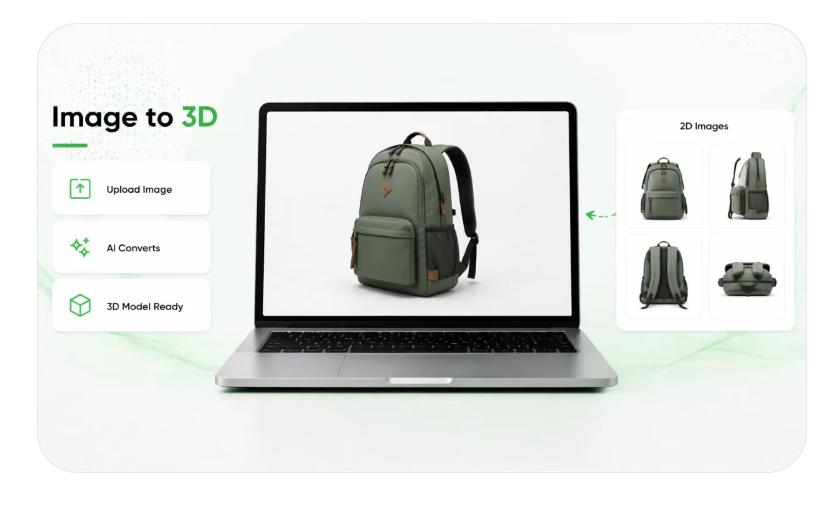
Suppose a company wants customers to understand a product’s appearance from different angles. The practical design response could include a rotatable three-dimensional model, simple viewing controls, and concise instructions. If the objective is to help customers understand how a product fits into their surroundings, the experience may need spatial placement capabilities rather than additional product descriptions.
An ar generator can contribute to this process when its capabilities match the intended outcome. However, the tool itself does not determine whether an experience is successful. The quality of the source content, the relevance of the interaction, the ease of access, and the clarity of the information all influence the result. Teams should therefore evaluate generated content against the original objective instead of assuming that a technically functioning experience is automatically useful.
Practical goals also help designers prioritize features. Every additional button, animation, instruction, or menu can introduce another decision for the user. If a feature does not improve understanding or help someone complete an important action, it may not deserve a place in the experience. Removing unnecessary elements can make an interactive product feel more polished and intuitive.
Understand What Users Need at Each Stage
People rarely approach an interactive experience with identical expectations. Someone encountering a product for the first time may need a basic introduction, while a customer comparing several options may want detailed specifications. A returning visitor might already understand the fundamentals and prefer immediate access to a particular feature.
Clear goals allow designers to account for these different stages without making the experience unnecessarily complicated. The introductory stage should establish context and explain the main benefit. The exploration stage should allow users to examine relevant details at their own pace. The decision stage should make useful information easy to locate so that customers can compare alternatives or proceed toward a purchase.
Consider an online store selling home accessories. A first-time visitor may benefit from seeing how an item looks in a room. Someone who has already selected a product might care more about dimensions, material, color variations, or maintenance instructions. Designing around these different needs can make the experience more useful than presenting every possible feature at once.
This approach also recognizes that interaction is voluntary. Users should not have to complete unnecessary steps before reaching the information they want. When the main objective is clear, designers can provide a straightforward route through the experience while still allowing curious visitors to explore additional details.
Make Instructions Feel Natural Rather Than Technical
An interactive experience can have an excellent purpose and still struggle if people do not understand how to use it. Clear instructions connect the intended outcome with the actions required to achieve it. They should explain what matters in everyday language without overwhelming users with technical terminology.
For mobile experiences, this often means presenting a short instruction at the moment it becomes relevant. A user might see a prompt to move a device slowly, tap an object to reveal details, or select an available product variation. These instructions should be concise and supported by visible interface cues.
Designers should also consider what happens when an action fails. A camera permission may be denied, a device may not support a particular feature, or a model may take longer than expected to load. Instead of leaving users uncertain, the interface should communicate the problem and offer a reasonable next step. A product image or written explanation can provide a useful alternative when a more advanced interaction is unavailable.
The objective is not to explain every technical process behind the experience. It is to help people feel capable of using it. When instructions are connected to a clear goal, they become part of the journey rather than an obstacle that users must overcome.
Apply Goal-Oriented Thinking to Restaurant Experiences
Restaurants offer a practical example of how objectives can shape interactive design. A digital menu may be intended to help guests discover unfamiliar dishes, understand portion sizes, compare options, or identify meals that suit their preferences. These purposes overlap, but each places different demands on the experience.
An ented reality restaurant menu can help guests examine a visual representation of a dish before ordering. Seeing a meal from different angles may provide context that a short written description cannot communicate on its own. This can be especially useful when guests are unfamiliar with a dish or are deciding between several options.
However, the restaurant should first determine which customer question the experience is expected to answer. If guests regularly struggle to understand portion sizes, visual scale and realistic presentation may deserve priority. If confusion comes from unfamiliar ingredients, ingredient descriptions and dietary information may be more important. A visually impressive model will not solve a problem that the design has overlooked.
The experience must also fit naturally into the dining environment. Guests should be able to open the menu quickly, understand the controls, and return to the ordering process without unnecessary delays. Restaurant staff may need simple guidance for explaining the feature, while the business should ensure that digital descriptions remain consistent with the dishes actually served.
Interactive menus work best when they complement the hospitality experience. They should help guests make informed choices without making a simple ordering decision feel like a complicated digital task.
Keep Accessibility and Convenience Within the Main Objective
Accessibility should influence interactive design from the beginning rather than being treated as a final adjustment. If an experience is intended to help a wide range of customers understand a product, it should not depend on visual effects or controls that some people cannot easily use.
Readable text, sufficient contrast, understandable labels, and straightforward navigation can make an experience more approachable. Audio or written alternatives may help communicate information that would otherwise depend entirely on visual presentation. Where appropriate, businesses should also provide a conventional product description or image for people who cannot or prefer not to use augmented reality.
Convenience is equally important. Many interactive experiences are accessed through smartphones, often while customers are shopping, attending an event, or sitting at a restaurant table. Complicated registration steps, large downloads, and lengthy instructions can interrupt the moment when someone is ready to explore.
Browser-based experiences can reduce some of these barriers by allowing users to access content through a link without installing a separate application. Yet browser access alone does not guarantee a smooth experience. Loading speed, device compatibility, camera permissions, and the quality of the mobile interface still require attention.
A clear goal helps teams decide which convenience improvements matter most. If the objective is quick product discovery, reducing unnecessary steps may be more valuable than introducing another advanced feature.
Establish Evidence That Connects to the Goal
Once an experience is available, businesses need to understand whether it is accomplishing its intended purpose. The most useful measurements depend on the original objective. Tracking every available interaction can produce large amounts of data without explaining whether the experience is helping customers.
If the goal is product education, useful indicators might include how many visitors open explanatory features, whether they explore key product details, and whether customer questions become more focused. If the objective is to improve product confidence, businesses might examine customer feedback, product comparison behavior, or changes in relevant conversion patterns.
Restaurant operators could investigate whether guests use the menu’s visual features, whether they find dish information helpful, and whether staff receive fewer questions about basic presentation details. These observations can reveal opportunities to improve the experience, although they should not automatically be interpreted as proof that the technology caused every change in customer behavior.
Measurement should combine quantitative information with direct feedback. Analytics can show what people do, while conversations and surveys can help explain why they behave that way. If users frequently open an experience but leave before examining the main content, the problem might involve loading time, unclear instructions, or a mismatch between the advertised benefit and the actual interaction.
Regular evaluation allows teams to make targeted improvements instead of redesigning everything without evidence.
Let the Design Evolve Without Losing Its Purpose
Interactive experiences rarely remain unchanged forever. Products are updated, customer expectations shift, and businesses discover new ways to present information. A useful design process must accommodate these changes while protecting the purpose that made the experience valuable in the first place.
Teams can begin by documenting the primary goal, the audience, the essential interactions, and the information that must remain accurate. This creates a reference point for future decisions. When someone proposes a new animation or additional feature, the team can ask whether it supports the objective, addresses a newly identified problem, or introduces unnecessary complexity.
Content maintenance also deserves attention. A product’s appearance, specifications, availability, or pricing may change after an interactive experience has been published. Outdated information can undermine trust, even when the underlying technology continues to function correctly. Assigning responsibility for reviewing content helps businesses keep experiences relevant.
Testing should continue after launch. Feedback from different devices, customer groups, and real-world environments may reveal problems that were not obvious during development. Improvements can then focus on the areas that interfere with the experience’s purpose rather than simply making the interface look different.
A stable objective provides continuity while allowing individual elements to improve over time.
Build Experiences Around Meaningful Customer Progress
The strongest interactive designs do more than invite people to tap, rotate, scan, or explore. They help users move from uncertainty toward understanding. That progress might involve learning how a product works, imagining an object in a room, comparing available choices, or selecting a meal with greater confidence.
Clear goals make this progress easier to design because they connect customer needs with specific interactions. They also give businesses a practical basis for deciding which technology to use, which features to develop, and which results to evaluate. Without that direction, interactive projects can become collections of attractive elements that offer little lasting value.
For companies investing in augmented reality, the central question should not be how many effects an experience can include. It should be whether those effects make the customer’s next decision easier. A well-designed experience respects people’s time, communicates information clearly, and offers interaction for a meaningful reason.
Ultimately, clear goals create a shared direction for designers, marketers, developers, and business owners. When everyone understands the intended outcome, decisions become more consistent and improvements become easier to prioritize. The result is not simply a more interactive digital experience, but one that serves customers and supports a measurable business purpose.