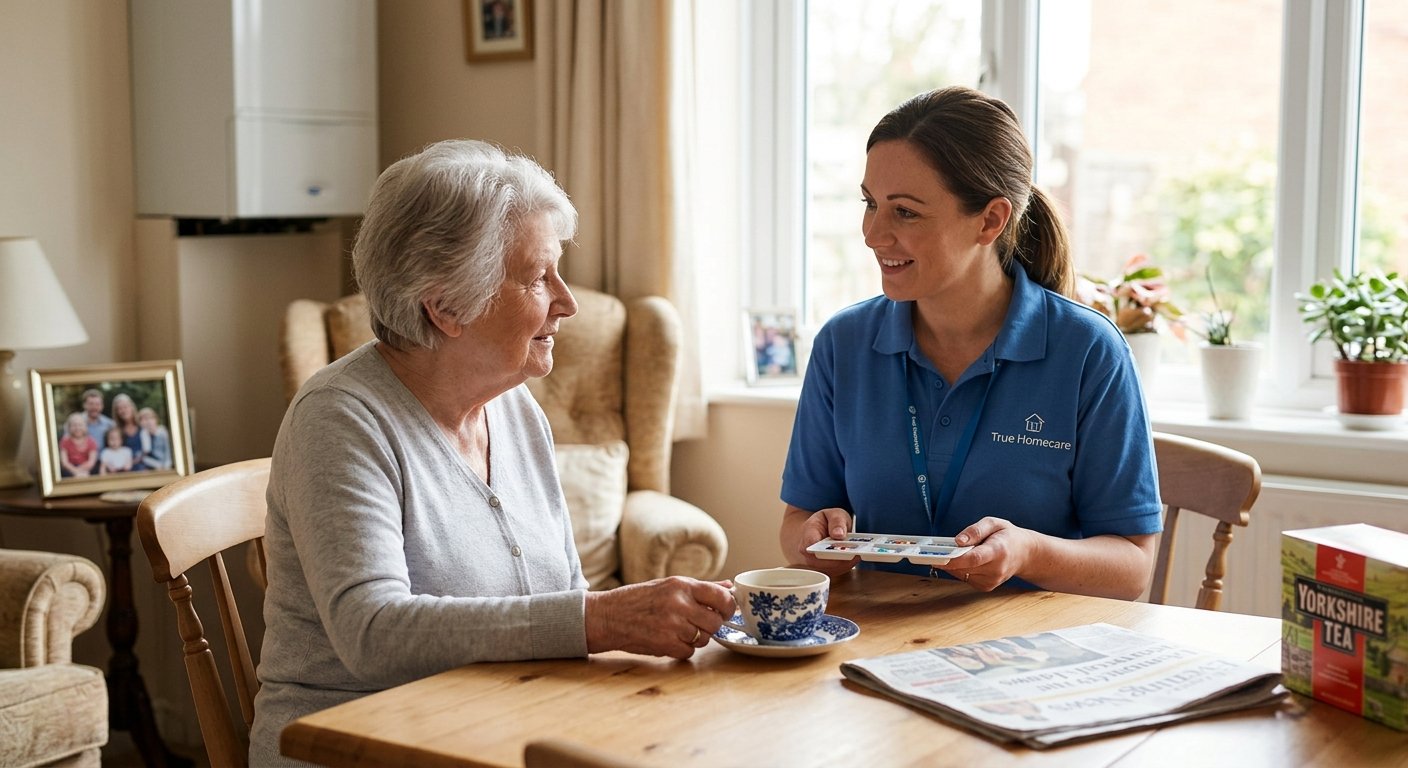
Receiving a dementia diagnosis for an aging parent or partner brings profound emotional and practical changes to everyday family life. While progressive cognitive shifts present evolving challenges, remaining in a familiar domestic environment plays a vital role in preserving personal orientation, dignity, and emotional calm. For families seeking to support a loved one safely without moving them into a residential facility, arranging specialized dementia care at home provides essential structure, daily routine consistency, and skilled safety oversight.
Dementia is not a single disease; it is an umbrella term encompassing Alzheimer’s disease, vascular dementia, Lewy body dementia, and frontotemporal disorders. As cognitive function changes, an individual’s ability to process sensory information, navigate spatial layouts, and communicate verbally fluctuates.
According to clinical guidance from the NHS dementia guide, maintaining familiar surroundings, established personal belongings, and lifelong daily habits significantly reduces anxiety, helps mitigate acute disorientation, and supports independent functioning for as long as possible.
However, providing care at home requires more than patience. It calls for an organized approach to communication, proactive environmental safety modifications, predictable daily rhythms, and a clear plan for when professional support should step in.
1. The Power of Routine: Structuring the Day for Cognitive Ease
One of the most effective non-pharmacological tools in dementia support is predictable routine. Memory loss makes the world feel unpredictable and disorienting. When every day follows a familiar sequence, individuals experience less decision fatigue, cognitive anxiety, and restlessness.
Core Principles of a Dementia-Friendly Daily Schedule
-
Anchor Points: Keep wake-up times, meals, afternoon rest periods, and bedtime consistent seven days a week. The brain relies on these physiological anchors to regulate mood and circadian rhythms.
-
Match Activities to Energy Windows: Most people living with cognitive decline experience higher mental clarity in the morning. Schedule complex tasks—such as bathing, medical appointments, and physical therapy—during mid-morning hours rather than late afternoon.
-
Incorporate Familiar Habits: If your mother always listened to BBC Radio 4 while having tea, or your father spent mornings reading the daily newspaper, protect these rituals. Lifelong procedural memories remain intact far longer than short-term recall.
-
Balance Stimulation with Rest: Overstimulation from loud televisions, multiple overlapping conversations, or cluttered rooms can trigger agitation. Build quiet pauses into the afternoon schedule.
| Time Window | Primary Focus | Recommended Daily Routine |
| Morning (8:00 AM – 11:00 AM) | Waking, Personal Care & High Engagement | Gentle rising, warm breakfast, unhurried personal hygiene, medication prompting, and cognitive activities (e.g., photo albums, gardening). |
| Midday (12:00 PM – 2:00 PM) | Nutrition, Hydration & Light Movement | Balanced, high-protein lunch, hydration check, and light physical movement (e.g., a stroll around the garden or local park). |
| Early Afternoon (2:00 PM – 4:00 PM) | Rest & Low-Stimulation Engagement | Quiet sensory rest, listening to familiar music, tactile crafts, or folding laundry to provide purposeful contribution without cognitive stress. |
| Late Afternoon / Twilight (4:00 PM – 6:00 PM) | Sundowning Management & Calm Lighting | Closing curtains, drawing warm amber lighting, providing soothing herbal tea, and engaging in calming repetitive conversation. |
| Evening (7:00 PM – 9:00 PM) | Relaxation & Bedtime Preparation | Warm dinner, unhurried evening hygiene routines, soft background music, and a calm, dimly lit transition to bed. |
2. Practical Communication Strategies That De-Escalate Frustration
As dementia progresses, verbal processing slows. Family members often make the mistake of using complex logic, rapid-fire questions, or direct contradictions, which can inadvertently trigger emotional distress.
Evidence-based recommendations from the NICE clinical guideline on dementia emphasize adopting a person-centred communication approach that prioritizes emotional connection over factual correction.
1. Validate Feelings Instead of Correcting Facts
If a parent with dementia insists that they need to leave for work or asks where their deceased spouse is, avoid blunt factual confrontation (“Dad, you retired thirty years ago” or “Mum passed away ten years ago”). Direct contradiction causes intense grief and panic anew.
Instead, enter their reality and validate the underlying emotion:
-
Factual Correction: “You don’t have a job anymore, sit down.”
-
Empathetic Validation: “You’ve always been such a hard worker, Dad. Today is a day off. Tell me about the projects you enjoyed working on.”
2. Simplify Choices Without Removing Autonomy
Open-ended questions like “What would you like for lunch today?” require complex cognitive retrieval and can trigger anxiety. Instead, present binary, visual choices:
-
“Would you prefer tomato soup or a cheese sandwich?” (Holding up both options).
-
“Would you like to wear the blue jumper or the green cardigan today?”
3. Master Non-Verbal Communication
Up to 80% of communication is non-verbal. People living with cognitive impairment are acutely sensitive to facial expressions, tone of voice, and body posture:
-
Always approach from the front at eye level; never startle someone by speaking from behind.
-
Maintain gentle, reassuring eye contact and offer a warm smile before speaking.
-
Keep your voice low, calm, and deliberate. If you feel frustrated, step away for a breath; your agitation will immediately mirror in their behavior.
3. Modifying the Living Environment for Safety and Autonomy
A home designed for healthy adults can present numerous hidden obstacles for an individual with dementia. Visual-spatial perception changes significantly: contrasting colors may appear as holes in the floor, and reflective mirrors can be misinterpreted as strangers in the house.
According to independent advice from the Alzheimer’s Society home safety guide, strategic domestic adaptations promote independence while reducing accidents:
-
Eliminate Shadowing and Dark Spots: As the brain ages, pupil dilation slows. Install high-lumen, glare-free LED lighting throughout corridors, staircases, and bathrooms. Use automated motion-sensor nightlights along the path from the bed to the toilet.
-
Color Contrast for Visual Recognition: People with dementia frequently struggle to distinguish objects of similar colors. Place a brightly colored toilet seat (e.g., blue or red) on a white toilet bowl, use contrasting handrails against neutral walls, and serve meals on plates that contrast sharply with the tablecloth.
-
Address Reflective Surfaces: Cover or relocate large mirrors if your parent begins conversing with their reflection or expresses fear that someone is watching them. Keep curtains closed at dusk to eliminate reflections on window glass.
-
Discreet Safety Locks and Technology: Install discreet slide bolts at the very top or bottom of exterior doors to prevent unsupervised nighttime wandering. Introduce wearable GPS pendants or pressure sensor mats that notify family members if someone gets out of bed at night.
-
Kitchen Precautions: Fit automatic shut-off safety valves to gas stoves, replace heavy kettles with ergonomic tippers, and store household cleaning chemicals in locked cupboards.
4. Managing “Sundowning” and Late-Day Agitation
Many individuals living with Alzheimer’s or dementia experience Sundowning—a state of heightened confusion, anxiety, restlessness, and agitation that develops in the late afternoon and early evening as natural daylight fades.
Proven Tactics to Calm Sundowning Episodes
-
Control Evening Lighting: Turn on warm indoor lights and draw the curtains by 3:30 PM before shadows begin to lengthen. This prevents sudden shifts in environmental illumination that trigger spatial disorientation.
-
Limit Stimulants and Heavy Meals: Avoid caffeine, sugary snacks, or heavy meals after 2:00 PM. Offer warm chamomile tea, warm milk, or light snacks instead.
-
Engage in Grounding, Tactile Activities: Hand your parent a basket of warm towels to fold, play soft instrumental music from their youth, or offer gentle hand aromatherapy using lavender oil.
-
Reassurance Over Rationalization: If your parent paces and says, “I want to go home,” recognize this phrase as emotional code for “I feel anxious and want to feel safe.” Offer physical reassurance: “You are safe here with me. Let’s have a warm cup of tea together.”
5. What Professional In-Home Dementia Care Entails
Supporting an aging parent through progressive dementia is a marathon, not a sprint. Family caregivers often experience severe sleep deprivation, emotional burnout, and isolation. Bringing in professional homecare does not mean stepping away from your loved one; it means building a sustainable care team so that you can remain a loving, patient family member.
Under standards set by the Care Quality Commission dementia strategy, high-quality dementia homecare focuses on person-centred principles, maintaining dignity, and respecting life history.
Key Elements of Specialist Home Support
-
Carer Continuity: High-quality providers prioritize assigning a small, consistent team of carers. Consistent faces build emotional trust, which reduces resistance to personal care routines.
-
Life Story Integration: Professional dementia carers learn about the client’s career, hobbies, family history, and musical tastes, using these details to engage the person in meaningful conversation and reminiscence therapy.
-
Medication Adherence: Ensuring that cognitive medications, blood pressure treatments, and hydration are monitored accurately according to prescribed schedules.
-
Mobility and Continence Dignity: Discreet, respectful assistance with toileting, bathing, and transfers using safe moving-and-handling techniques.
6. Frequently Asked Questions
How do we know when it is time to introduce professional dementia care?
If a family caregiver is regularly exhausted, if medication is being missed, if nighttime wandering occurs, or if personal hygiene is causing intense conflict, introducing outside professional support is critical for both the client’s safety and the caregiver’s health.
Can homecare support someone in the later stages of Alzheimer’s?
Yes. With the support of visiting nurses, occupational therapists, and dedicated 24-hour live-in care workers, individuals in advanced stages of dementia can remain safely in their own homes, avoiding the disorientation associated with hospital or nursing home admissions.
What is the best way to handle repetitive questions?
Answer the emotional tone of the question rather than focusing solely on the words. Keep your answers brief, calm, and reassuring. Once you have answered, gently pivot their attention to a pleasant activity, such as listening to music, having a snack, or looking through a photo book.
Moving Forward: Compassion, Dignity, and Sustainable Support
Caring for an aging parent with dementia is one of the most generous yet challenging responsibilities an adult child can undertake. It requires celebrating small victories—a shared laugh over an old photograph, a calm morning walk, or a quiet moment of connection over a cup of tea.
Remember that you do not have to carry every responsibility alone. By establishing predictable daily routines, adapting the living space for safety, communicating with empathy, and partnering with qualified in-home care professionals, you can protect your parent’s independence and comfort in the home they cherish for years to come.