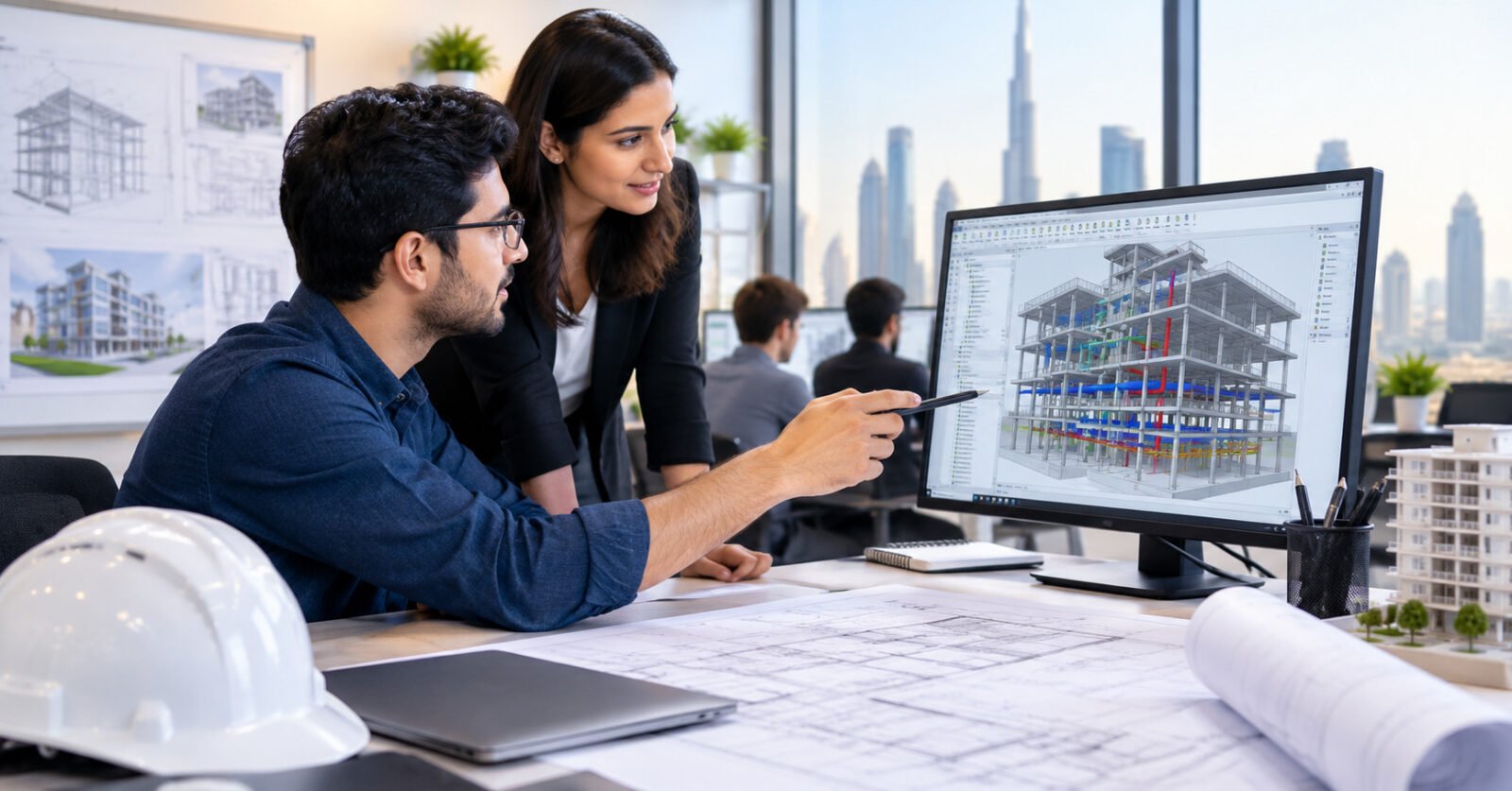
Building Information Modeling (BIM) has transformed the architecture, engineering, and construction industry by improving how projects are designed, coordinated, documented, and managed. As construction projects become increasingly complex, professionals need advanced digital skills to work efficiently with intelligent 3D models, multidisciplinary coordination, and data-driven workflows.
An Advanced BIM Course in Gurgaon can help architects, civil engineers, structural engineers, MEP professionals, interior designers, and construction specialists develop practical skills that align with modern industry requirements. With the right training, professionals can strengthen their knowledge of BIM software, project coordination, modeling standards, clash detection, documentation, and BIM project management.
Why Choose an Advanced BIM Course in Gurgaon?
Gurgaon, also known as Gurugram, has developed into a major business and commercial hub with a growing demand for skilled professionals in architecture, engineering, infrastructure, and construction. The increasing adoption of digital construction technologies has created new opportunities for professionals with BIM expertise.
An advanced course goes beyond basic 3D modeling. It focuses on using BIM as an integrated process throughout the project lifecycle. Professionals learn how architectural, structural, and MEP models can work together to reduce errors and improve project efficiency.
A well-designed BIM Course in Gurgaon can provide exposure to real-world workflows, project-based assignments, industry practices, and commonly used BIM software.
What Is BIM?
BIM, or Building Information Modeling, is a digital approach used to create and manage information about a building or infrastructure project. Unlike traditional CAD drawings, BIM models contain intelligent information about building components.
For example, a BIM model can include information about walls, doors, windows, structural elements, HVAC systems, electrical components, plumbing systems, materials, and quantities.
BIM supports multiple stages of a project, including:
- Conceptual design
- Architectural modeling
- Structural modeling
- MEP coordination
- Construction documentation
- Quantity estimation
- Clash detection
- Construction planning
- Facility management
This makes BIM an important skill for modern architecture and engineering professionals.
Who Should Enroll in an Advanced BIM Course?
An advanced BIM training program can be beneficial for professionals and students from various backgrounds, including:
- Architects
- Civil engineers
- Structural engineers
- MEP engineers
- Mechanical engineers
- Electrical engineers
- Plumbing professionals
- Interior designers
- CAD professionals
- BIM coordinators
- Construction professionals
- Project managers
- Architecture and engineering students
Professionals who already understand AutoCAD or basic 3D modeling can particularly benefit from advanced BIM training because they can build on their existing technical knowledge.
Key Skills Covered in Advanced BIM Training
A comprehensive Advanced BIM Course in Gurgaon should focus on practical skills rather than only theoretical concepts. Depending on the training program, learners may develop expertise in several important areas.
1. BIM Modeling
BIM modeling is one of the core components of BIM training. Students learn how to create intelligent 3D models containing relevant building information.
Training may cover architectural, structural, and MEP modeling workflows while explaining how different disciplines interact within a coordinated project environment.
2. Autodesk Revit Training
Revit is one of the widely used BIM platforms in the architecture, engineering, and construction industry. Advanced Revit training can help professionals understand:
- Architectural modeling
- Structural modeling
- MEP modeling
- Families and components
- Views and sheets
- Construction documentation
- Schedules
- Model coordination
- Project templates
Practical Revit skills can improve a professional’s ability to participate in BIM-based projects.
3. Navisworks and Clash Detection
Coordination problems between architectural, structural, and MEP systems can lead to expensive changes during construction.
BIM coordination tools can help identify potential conflicts before construction begins. Professionals can learn how to review models, perform clash detection, create coordination reports, and communicate design issues with project teams.
4. BIM Coordination
BIM coordination involves bringing models from different disciplines together and ensuring that they work correctly as a coordinated project.
An advanced BIM program can teach learners how to:
- Combine multidisciplinary models
- Identify coordination issues
- Review design conflicts
- Track revisions
- Communicate with project teams
- Support BIM coordination meetings
These skills are valuable for professionals aiming for BIM coordinator and BIM specialist roles.
5. BIM Documentation
BIM is not limited to creating 3D models. Professionals must also be able to generate accurate construction documentation.
Advanced training can cover drawings, schedules, annotations, sheets, quantities, and other project documentation generated from BIM models.
Benefits of Learning BIM for Architecture and Engineering Professionals
Improved Career Opportunities
BIM skills can open opportunities in architecture firms, engineering consultancies, construction companies, infrastructure organizations, and real estate development companies.
Professionals with specialized BIM knowledge may explore positions such as:
- BIM Modeler
- BIM Engineer
- BIM Coordinator
- BIM Architect
- BIM Structural Modeler
- BIM MEP Engineer
- BIM Specialist
- BIM Manager
Better Project Understanding
Working with coordinated 3D models allows professionals to visualize project components more effectively. This can make it easier to understand complex designs and identify potential problems.
Reduced Design Errors
BIM coordination helps teams identify conflicts and inconsistencies earlier in the project lifecycle. Detecting issues during design can reduce rework during construction.
Improved Collaboration
BIM allows multiple disciplines to work with connected project information. Architects, structural engineers, MEP engineers, contractors, and other stakeholders can collaborate more efficiently.
Enhanced Productivity
Automated documentation, model-based schedules, coordinated drawings, and reusable components can help reduce repetitive work and improve project productivity.
BIM Course Curriculum
A comprehensive BIM training program may include the following modules:
BIM Fundamentals
- Introduction to BIM
- BIM terminology
- BIM workflows
- BIM project lifecycle
- BIM standards and processes
Architectural BIM
- Building modeling
- Walls, floors, roofs, doors, and windows
- Families and components
- Architectural documentation
Structural BIM
- Structural elements
- Columns and beams
- Foundations
- Structural documentation
- Model coordination
MEP BIM
- HVAC modeling
- Plumbing systems
- Electrical systems
- MEP coordination
BIM Coordination
- Multidisciplinary model coordination
- Clash detection
- Model review
- Issue tracking
BIM Documentation
- Construction drawings
- Schedules
- Sheets
- Quantity information
- Project documentation
Advanced BIM Workflows
- BIM standards
- Project collaboration
- Model management
- BIM execution planning
- Coordination workflows
Why Practical BIM Training Matters
BIM is a practical profession, so simply understanding theoretical concepts may not be enough. Professionals should have opportunities to work on realistic project scenarios.
A practical BIM Training in Gurgaon can include project-based exercises that simulate the workflows used in architecture, engineering, and construction companies. Students can learn how to create models, coordinate disciplines, detect clashes, prepare documentation, and manage project information.
Working on practical assignments can also help learners build a portfolio that demonstrates their technical capabilities to potential employers.
Career Scope After BIM Training
The demand for BIM professionals is growing as organizations increasingly adopt digital construction processes. Experienced BIM professionals can work with architecture firms, engineering consultancies, contractors, developers, and infrastructure companies.
Career progression can move from entry-level modeling positions toward specialized and management-oriented roles.
For example, a professional may begin as a BIM Modeler, gain experience in multidisciplinary coordination, and progress toward BIM Coordinator, BIM Lead, or BIM Manager positions.
The career path depends on professional experience, technical expertise, software knowledge, project exposure, and organizational requirements.
How to Choose the Right BIM Course in Gurgaon
Before enrolling, professionals should evaluate several factors.
Experienced Trainers
Look for trainers with practical industry experience and knowledge of current BIM workflows.
Updated Curriculum
The course should cover relevant BIM software, modeling techniques, coordination, documentation, and project workflows.
Hands-On Projects
Practical projects are important for developing confidence and creating a professional portfolio.
Software Training
Check whether the course provides training in relevant tools such as Revit, Navisworks, and other BIM applications required for the intended career path.
Industry-Relevant Skills
A good program should focus on skills that professionals can apply to real architecture, engineering, and construction projects.
Location: Bim Courses Near Me
Frequently Asked Questions
1. What is an Advanced BIM Course?
An Advanced BIM Course is a professional training program that teaches advanced building information modeling concepts, software workflows, multidisciplinary coordination, clash detection, documentation, and BIM project processes.
2. Who can join a BIM Course in Gurgaon?
Architects, civil engineers, structural engineers, MEP professionals, interior designers, CAD professionals, construction professionals, and students from architecture or engineering backgrounds can consider BIM training.
3. Is Revit included in BIM training?
Revit is commonly included in BIM training programs because it is widely used for architectural, structural, and MEP modeling. The exact software covered depends on the institute and course curriculum.
4. What career opportunities are available after BIM training?
After gaining relevant skills and experience, candidates can explore roles such as BIM Modeler, BIM Engineer, BIM Architect, BIM Coordinator, BIM Specialist, and BIM Manager.
5. Is BIM useful for architects and engineers?
Yes. BIM can help architects and engineers improve visualization, coordination, documentation, collaboration, and project information management.
6. Does BIM training include practical projects?
Many advanced BIM programs include practical assignments and project-based training. Learners should verify the exact project work and curriculum with the training provider before enrolling.
7. What is clash detection in BIM?
Clash detection is the process of identifying conflicts between different building systems or disciplines in a digital model. For example, it can identify an HVAC duct passing through a structural beam before construction begins.
8. Can BIM skills help with career growth?
BIM skills can strengthen a professional’s technical profile and create opportunities in architecture, engineering, construction, infrastructure, and related AEC sectors. Career growth also depends on experience, specialization, and project knowledge.