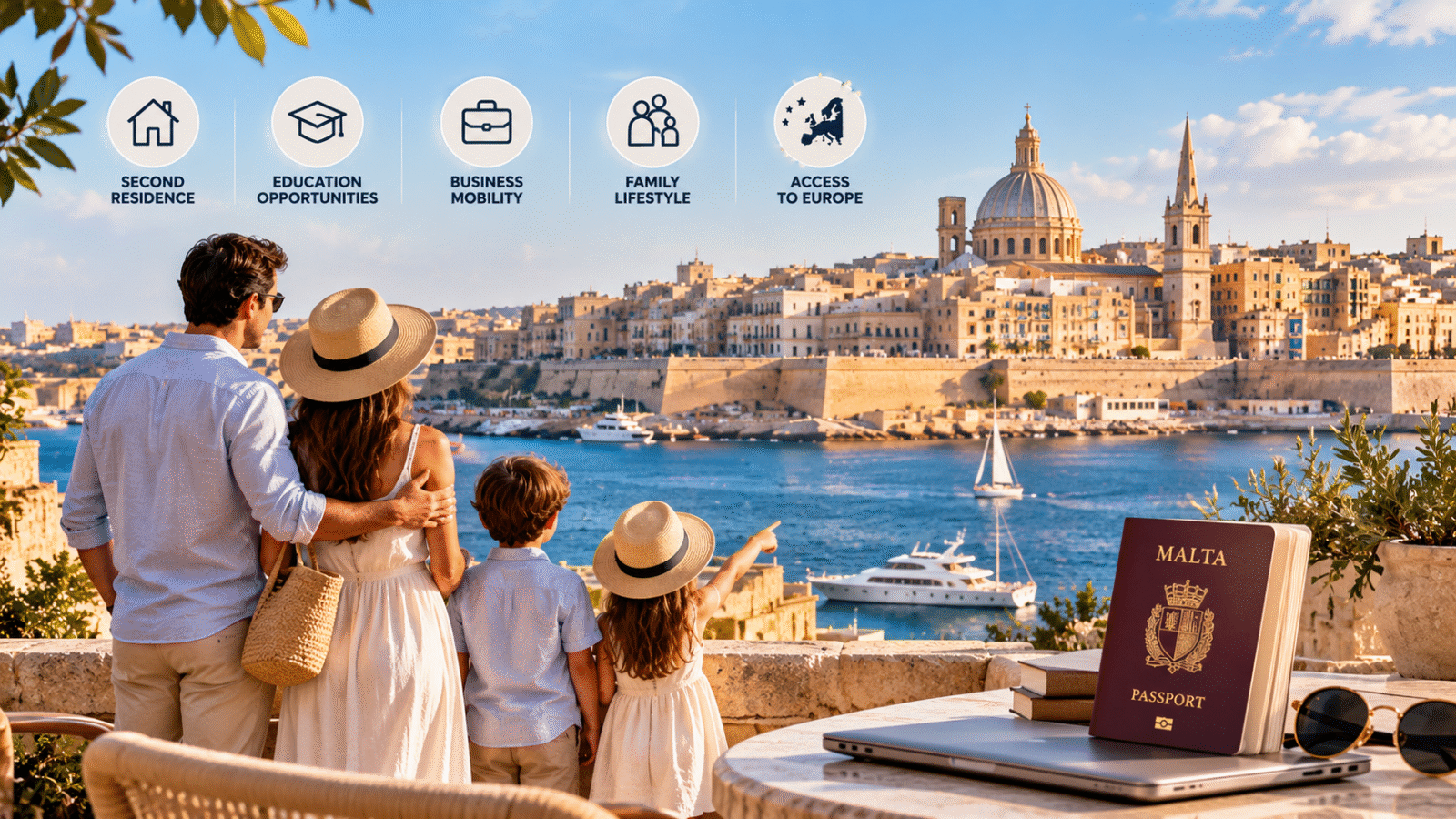
For families with international business interests, children studying overseas, or assets in multiple countries, a second home can allow greater flexibility. A second residence in Europe may provide access to education, new professional opportunities, and a different setting for family life. Malta is an option worth considering through the Malta Permanent Residence Program (MPRP) because of its Mediterranean location, English-speaking environment, and strong connections with the European Union.
The decision involves more than choosing a country. Families need to consider how they intend to use their status, who to include in the application, and what financial commitments they can maintain. Some want a place to spend part of the year, while others are planning for their children’s education or a possible future relocation.
Why Global Families Look to Malta
Malta has schools, healthcare services, and links to other parts of Europe. English is also an official language, alongside Maltese, which can help families settle in without having to learn a new language straight away.
Its location makes it easier to travel to several European business hubs. This can help people who need to travel for work but also want their family to have a home in another country.
A residence permit can also make visits to other Schengen countries easier, subject to applicable rules. However, living in Malta does not give residents the same rights as Maltese citizens. Checking what the permit allows before applying can help families decide if it suits their plans.
Choosing Between Residency and Citizenship
The choice between residence and citizenship depends on the rights a family wants to secure. These are different legal findings, and one should not be treated as an automatic route to the other.
The Malta permanent residence route may suit families who want to live in Malta without applying for citizenship. Before proceeding, applicants should check the property rules, financial requirements, and applicable fees involved. These costs vary by arrangement, so reviewing the current program conditions is a sensible first step.
The program also allows eligible family members to be included, subject to its conditions. This can matter to households planning a move together rather than making separate relocation arrangements for each family member.
The Malta citizenship program follows a different process from permanent residency. Malta’s citizenship by merit route considers factors such as a person’s achievements, philanthropic work, and contributions to the country. Meeting the requirements depends on the applicant’s individual circumstances. Buying a property or holding permanent residence does not, by itself, qualify someone for citizenship. But families who need help understanding the application process can also consult professional advisors at FRR Immigration as they explore options for settling in Malta.
Planning the Financial Commitment
Buying or renting a property is only part of the expense. Applicants also need to budget for government contributions, application fees, and legal or advisory charges. Also consider regular household bills, especially if the family plans to keep a home in Malta while living elsewhere for most of the year.
A Malta residence by investment route requires families to review the relevant eligibility criteria and financial obligations rather than focus on a headline investment figure alone. The choice between buying and renting qualifying property may also affect how much capital remains available for business, education and other family priorities.
Anyone researching a Malta residence permit by investment does not automatically decide where someone pays tax. Families may still have tax responsibilities in the countries where they live, work or hold assets. Before deciding, check Malta’s current residence rules alongside the tax laws that apply to each family member.
Thinking Beyond the Application
A second residence works best when it fits a family’s long-term plans. Parents may need to consider school calendars, healthcare availability, and the practicalities of maintaining homes in two countries. Business owners may also have questions about travel schedules, company operations, and where they will spend most of their time.
Families considering Malta residency by investment should also check which relatives can be added to the application and what paperwork each person must provide. They should also find out if any conditions remain after approval. Checking the latest program rules before paying fees or making any plans to move can help avoid unexpected issues.
Making a Decision That Fits the Family
For some families, Malta could be a practical place to own a second home and spend time in Europe. The best residency route will depend on their budget, plans for the property, and the rights they need.
Families should review the rules for each option and consider what they can afford before choosing. Speaking with an immigration adviser can also help clarify questions about eligibility, costs, and the rights they would receive before they make financial commitments.
Disclaimer: The information provided in this article is for general informational purposes only and should not be considered legal, tax, financial, or investment advice. Immigration programs, requirements, fees, and timelines are subject to change. Readers are advised to consult FRR Immigration professionals based on their individual circumstances before making any immigration or investment decision.
Frequently Asked Questions
- Why do families consider Malta for a second residence?
Families may consider Malta for its English-speaking environment, access to European destinations, education options, and Mediterranean location. The country may also suit those who want a second home while keeping their business or family commitments elsewhere.
- What is the difference between Malta permanent residence and citizenship?
Permanent residence allows eligible applicants to reside in Malta under the applicable program conditions. Citizenship is a separate legal status with different eligibility requirements and rights. Obtaining permanent residence or purchasing property does not automatically grant Maltese citizenship.
- What costs should families consider when applying for Malta residency by investment?
Families should account for qualifying property expenses, government contributions, application fees, and professional charges. They should also budget for ongoing property maintenance and household costs. Checking the latest program requirements can help them understand the financial commitment before applying.