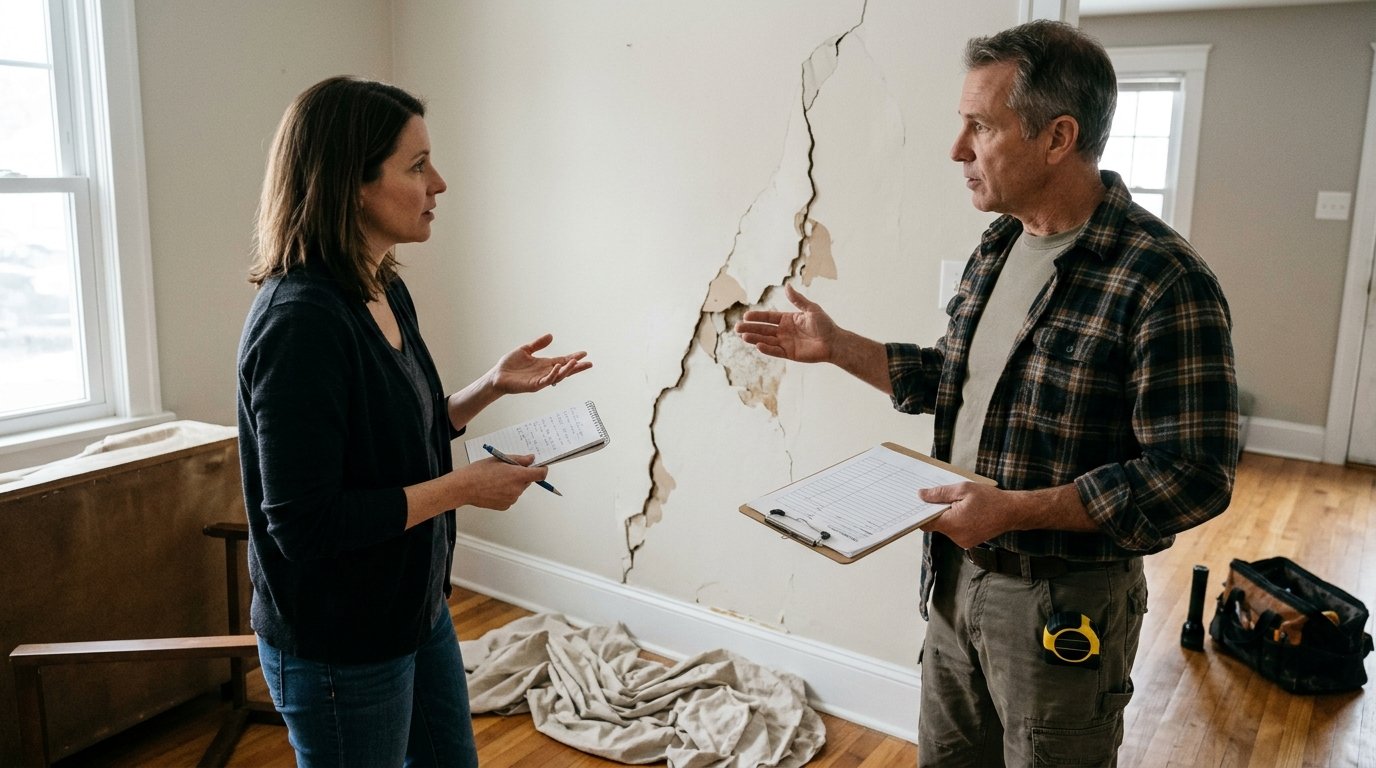
A homeowner discovers a damaged section of drywall behind a sofa and decides to arrange a repair. Several contractors offer to inspect the wall, but their descriptions of the work are different. One mentions applying patching compound, another recommends replacing the damaged panel section, and a third includes painting the entire wall. Comparing these offers can be difficult without understanding what the repair actually requires.
The problem is that drywall repairs involve more than filling an opening. Surface preparation, backing support, joint reinforcement, texture matching, priming, and painting can all affect the finished result. Asking the right questions before scheduling helps homeowners understand the scope and reduces disagreements once work begins.
Why Should the Damage Be Assessed Before Pricing?
The visible size of a hole does not always reveal the amount of work required. A shallow dent may need only surface preparation and compound, while a larger opening may require backing and replacement gypsum board. Damage near an electrical outlet, plumbing fixture, or ceiling can also require precautions beyond ordinary patching.
A useful assessment considers the depth of damage, strength of the surrounding board, existing texture, and possible hidden causes. The contractor should explain why the proposed method is appropriate. Homeowners should be cautious about estimates that treat a small cosmetic dent and a water-damaged opening as identical repairs.
Photographs can help with an initial discussion, but they may not reveal loose material, hidden moisture, or the condition of the wall cavity. More complicated repairs may need an in-person examination before the final scope can be established.
What Should a Written Repair Estimate Include?
A written estimate helps distinguish the repair itself from the finishing work needed afterward. Some proposals cover only installing and finishing the drywall, while others include texture, primer, and final painting. If the scope does not explain these differences, homeowners may expect a completed wall when the contractor has only agreed to prepare it for painting.
When comparing providers for drywall repair near me, ask what happens at each stage of the job. Clarify how damaged material will be removed, how the replacement will be supported, which finishing work is included, and how surrounding surfaces will be protected.
An estimate should also explain how unforeseen problems will be handled. For instance, opening a damaged wall might expose wet insulation or deteriorated framing. These conditions may require additional specialists and should not be covered without the homeowner’s approval.
Why Is Texture Matching Worth Discussing Early?
A drywall patch can be structurally sound and still look noticeably different from the surrounding wall. Many interior surfaces contain subtle texture patterns that become obvious when a perfectly smooth repair is placed in the middle. Lighting can make this difference more noticeable, particularly on walls near large windows or ceiling-mounted fixtures.
Ask the contractor how the existing finish will be reproduced and whether a small sample can be evaluated before the final application. The method may vary depending on the texture pattern, material buildup, and condition of the original surface. A realistic conversation should acknowledge that some finishes are easier to reproduce than others.
Paint matching introduces another issue. Even an accurate color match may look different because of paint age, sheen, or surface porosity. In certain rooms, repainting a complete wall section may provide a more consistent appearance than touching up a single spot.
How Can Homeowners Prepare for the Appointment?
A clear work area improves access and makes it easier to protect furniture and flooring. Move small belongings away from the repair location and discuss larger items that cannot be relocated. If the damage is near switches, outlets, or concealed services, inform the contractor before work begins.
Before the scheduled visit, confirm:
-
The exact damaged areas included in the estimate.
-
Any furniture or wall decorations requiring removal.
-
Dust-control and cleanup arrangements.
-
Whether primer, texture, and painting are included.
-
The likely number of visits based on material drying requirements.
These details are more useful than relying only on a quoted completion date. Joint compounds have different setting and drying characteristics, and thicker applications or humid conditions can affect the finishing schedule.
How Should the Finished Work Be Inspected?
Once the repair is complete, examine the wall under the lighting normally used in the room. Look for raised edges, visible tape, depressions, uneven texture, or obvious differences in paint sheen. Normal viewing conditions provide a more meaningful assessment than placing a bright flashlight almost parallel to every surface.
The contractor should also explain when the repaired area is ready for decoration if painting is not included. A completed patch should be properly prepared for the next finishing stage rather than left with loose sanding dust or unstable edges. Clarifying acceptance expectations beforehand helps avoid disagreements at the end of the job.
Conclusion
Choosing a repair specialist is easier when homeowners understand the work that lies between identifying damage and finishing the surface. A detailed assessment, clear written scope, realistic finishing expectations, and proper preparation all contribute to a more predictable project. The concept of quality assurance is useful here because it emphasizes establishing standards and checking the process used to meet them. Applying that approach to a small wall repair can prevent confusion and improve the final outcome.