Reliable, Precise Control in Harsh Conditions: What to Expect From a PLC
Industrial automation does not happen in clean laboratories. Controllers sit in panels beside furnaces, in pump rooms with high humidity, on rooftops under direct sun and in plants where dust settles on every surface. A programmable logic controller must keep delivering accurate, repeatable control in these conditions, because an unplanned stop can cost far more than the hardware itself.
This article explains the design features, specifications and installation practices that determine reliability and precision, with a focus on hot and demanding environments.
What Reliability Really Means
Reliability is the ability to perform the required function, without failure, for the expected life of the installation. In controllers it comes from several layers working together:
- Component quality: Industrial-grade semiconductors and capacitors rated for extended temperature ranges.
- Circuit protection: Isolation barriers, surge suppression and reverse-polarity protection on power and I/O.
- Firmware robustness: Watchdog timers, error handling and safe restart behaviour.
- Manufacturing quality: Burn-in testing, inspection and traceable production batches.
Datasheets often quote MTBF figures. These are useful for comparison, but remember they assume specified operating conditions. Running a controller beyond its rated temperature shortens life dramatically.
Temperature: The Silent Stress Factor
Heat is the most common cause of premature electronics failure. A controller rated for 0 to 55 °C is not guaranteed to perform well inside a sealed panel where internal temperature climbs 15–20 °C above ambient. Extended-range models, rated for –20 to 60 °C or higher, provide extra margin.
Good practice includes:
- Sizing the panel so that heat dissipation is calculated, not guessed.
- Using filtered fans, heat exchangers or air conditioning where needed.
- Mounting controllers in vertical orientation with clear airflow space.
- Keeping power supplies and drives separated from the controller where possible.
- Reviewing derating curves, since some modules reduce allowable load at higher temperatures.
Dust, Humidity and Contamination
Fine dust acts as an insulator and traps heat, while humidity promotes corrosion and leakage currents. Protect controllers with enclosures rated IP54 or higher, use gasketed doors and cable glands, and schedule filter cleaning. In high-humidity or coastal settings, conformal-coated boards and corrosion-resistant terminals extend service life. Anti-condensation heaters stop moisture forming during temperature swings.
Electrical Noise and Power Quality
Factories are electrically noisy. Variable-speed drives, welders and large motors generate interference that can corrupt signals. A robust programmable logic controller includes filtering and isolation, but installation matters just as much. Use shielded cables for analog and communication lines, ground the shield at one end, separate power and signal wiring, and install line reactors or filters on drives. A stable, well-regulated power supply with sufficient hold-up time prevents nuisance resets during voltage dips.
Precision: Accuracy, Resolution and Repeatability
Precision has three parts. Resolution is the smallest change the controller can detect, such as a 16-bit analog input dividing a range into 65,536 steps. Accuracy is how close the measured value is to the true value, usually expressed as a percentage of full scale. Repeatability is the consistency of results over time and under changing conditions.
For process control, factors that improve precision include:
- Higher-resolution analog modules and stable reference voltages.
- Input filtering and averaging to reduce noise.
- Fast, deterministic scan times for tight control loops.
- Built-in PID functions with auto-tuning and anti-windup.
- Temperature compensation for thermocouple and RTD inputs.
For motion and counting, high-speed inputs and pulse outputs support accurate positioning and speed control.
Diagnostics and Preventive Maintenance
Reliable systems are maintained systems. Choose controllers with clear status indicators, event logs and remotely accessible diagnostics. Track panel temperature, power supply health and communication errors. Replace backup batteries, if used, on schedule, and keep firmware and project backups current. A simple quarterly inspection routine covering filters, terminals, cooling fans and earthing connections prevents most avoidable failures.
Redundancy and Fail-Safe Design
Critical processes such as water supply, power distribution or continuous production may require redundant CPUs, power supplies or networks. Even without full redundancy, design the system so that outputs move to a safe state on communication loss or controller fault. Separate safety functions should use certified safety relays or safety controllers rather than standard logic alone.
Where Rugged Controllers Make the Biggest Difference
- Outdoor pumping stations and remote telemetry units
- Process plants with high ambient temperatures
- Cement, mining and materials handling, where dust is constant
- Food and beverage lines subject to washdown and humidity
- Energy and utility installations running 24/7
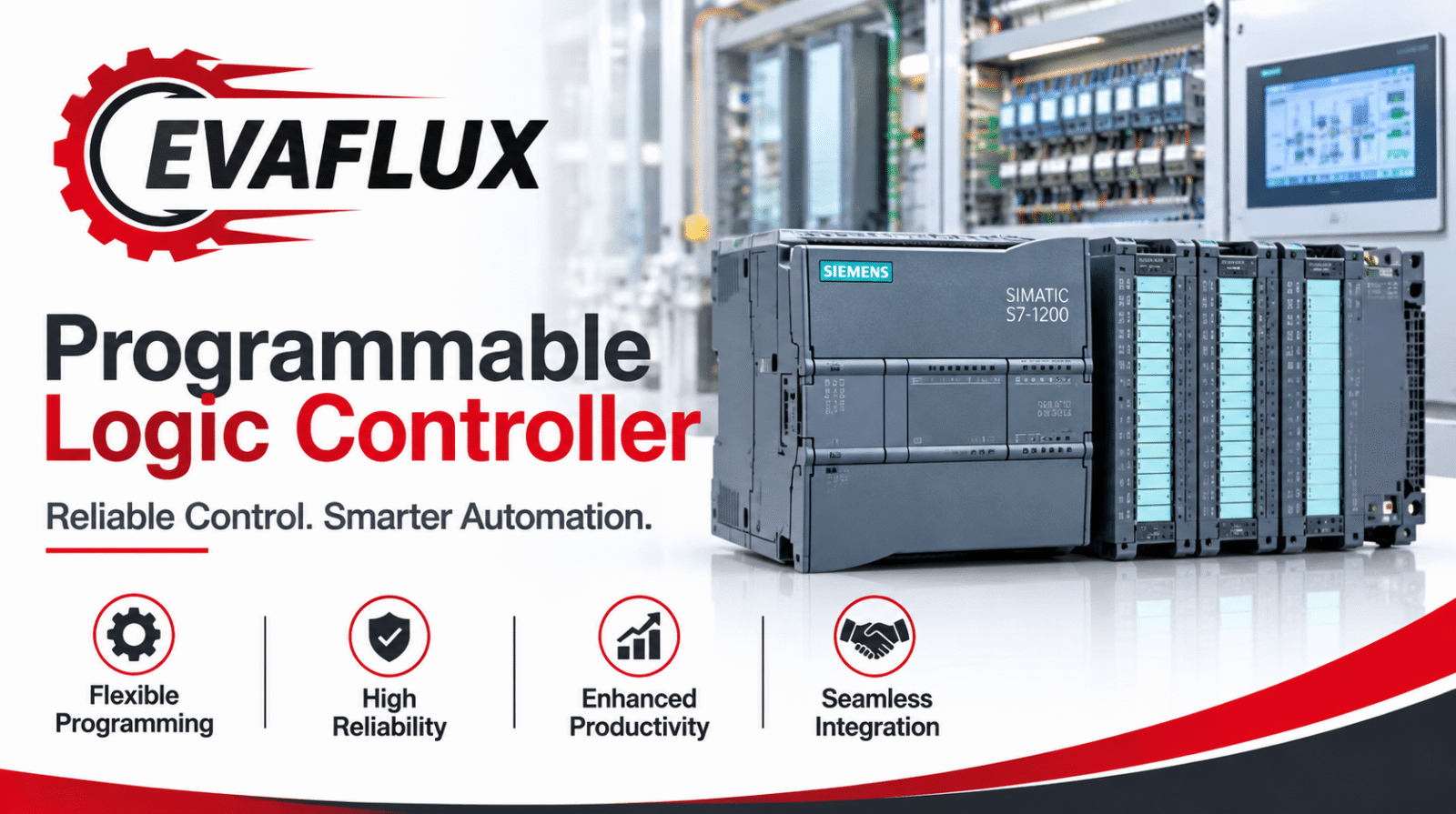
Browse the programmable logic controller options in our category to compare temperature ratings, I/O capability and communication features for these environments.
Installation Checklist
- Verify temperature and IP ratings against site conditions.
- Calculate panel heat load and cooling.
- Apply correct grounding and cable segregation.
- Provide stable, protected power.
- Label terminals and document the design.
- Commission with documented tests and keep backups.
Frequently Asked Questions
What temperature can a PLC withstand?
Standard models usually operate from 0 to 55 °C, while extended-range versions go lower and higher. Check each datasheet.
How does dust affect controllers?
Dust traps heat and can cause short circuits. Use sealed, filtered enclosures and regular cleaning.
What affects PLC accuracy?
Analog resolution, input filtering, noise, calibration and temperature compensation all play a role.
How long does a PLC last?
Many operate reliably for 15 to 20 years if kept within rated conditions and maintained.
Is redundancy always necessary?
No, only where downtime would be costly or unsafe. Many applications are well served by a single, properly protected controller.