Sjögren’s syndrome is an autoimmune condition that most commonly affects the glands responsible for producing tears and saliva. Persistent dry eyes and dry mouth are classic symptoms, but the condition can also cause fatigue, joint discomfort, swollen glands, skin problems, nerve symptoms, and other systemic complications.
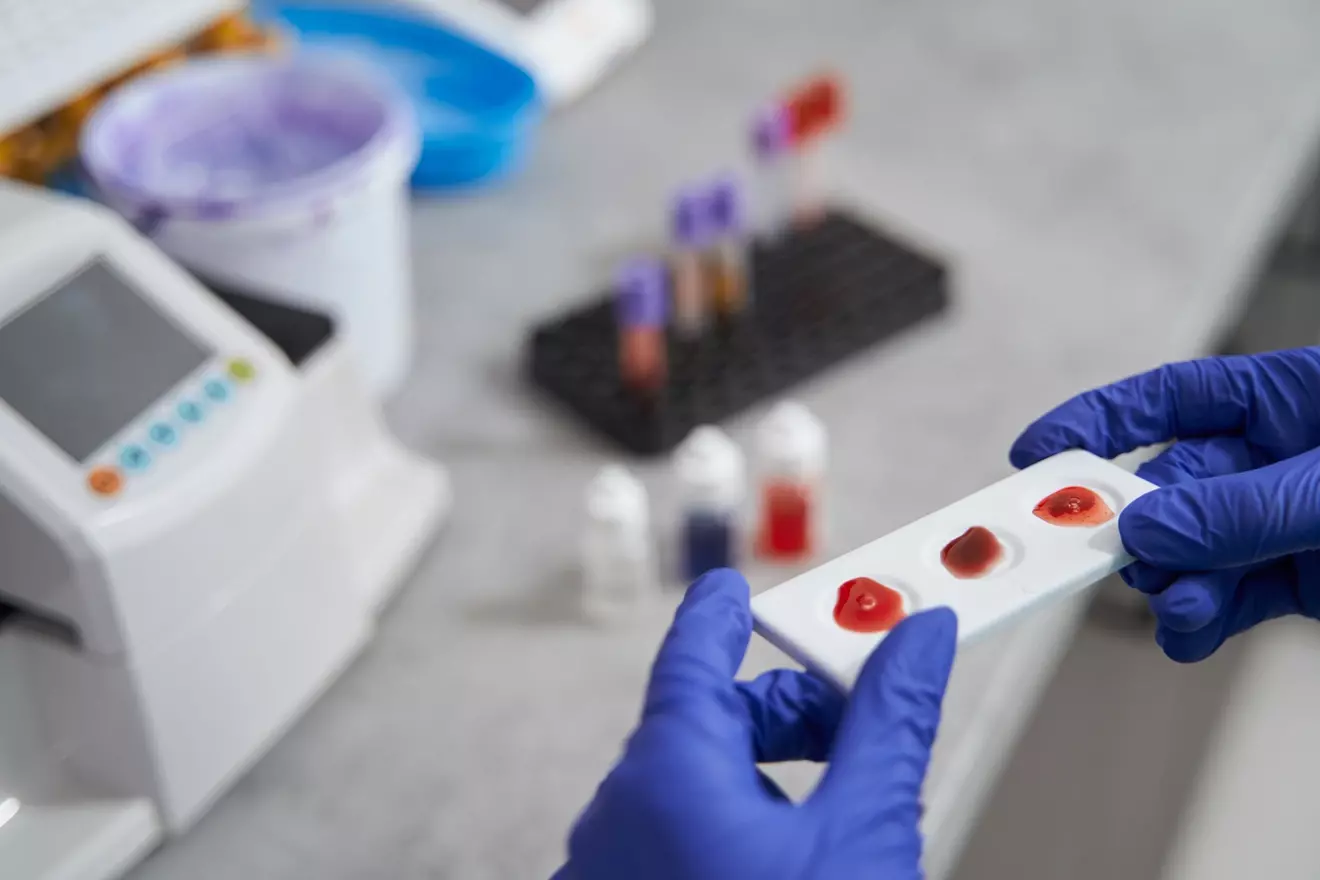
Because Sjögren’s syndrome can develop gradually and overlap with other autoimmune diseases, blood tests are often part of the diagnostic evaluation. One of the tests that may be included is an Anti-Nuclear Antibodies ANA Test Dubai, which detects antinuclear antibodies.
But what does an ANA result actually tell you about Sjögren’s syndrome? Can a positive ANA confirm the condition? What if the ANA is negative? And which tests are more specific?
Understanding the role of ANA testing can make a Sjögren’s workup much easier to follow.
Where Does the ANA Test Fit Into Sjögren’s Diagnosis?
The ANA blood test is primarily a screening and supportive test. It detects antinuclear antibodies rather than identifying Sjögren’s syndrome directly.
A positive ANA can occur in people with Sjögren’s syndrome, but it can also occur with lupus, systemic sclerosis, mixed connective tissue disease, autoimmune thyroid disorders, certain infections, some medications, and even in healthy individuals.
For this reason, doctors do not diagnose Sjögren’s syndrome based on ANA positivity alone.
Instead, ANA results are considered alongside:
-
Dry eye and dry mouth symptoms
-
Medical and medication history
-
Physical examination
-
Anti-SSA/Ro and anti-SSB/La antibodies
-
Tear production and eye surface testing
-
Salivary gland function
-
Sometimes a minor salivary gland biopsy
-
Other blood and urine tests
The ANA result is therefore one piece of a much larger diagnostic picture.
What Does a Positive ANA Mean in Sjögren’s Syndrome?
A positive ANA means antinuclear antibodies were detected using the laboratory’s testing method and threshold.
In someone experiencing symptoms strongly suggestive of Sjögren’s syndrome, a positive ANA can support the possibility of an autoimmune connective tissue disease. However, it does not establish that Sjögren’s is the cause.
This distinction is important because ANA positivity is relatively nonspecific.
For example, someone with dry eyes and a positive ANA could potentially have Sjögren’s syndrome, another autoimmune disorder, medication-related dryness, thyroid disease, age-related dryness, or another condition entirely.
The next step is usually to determine whether the symptoms and more specific antibody tests point toward Sjögren’s syndrome.
The Most Important Sjögren’s Antibodies: SSA/Ro and SSB/La:
When Sjögren’s syndrome is suspected, doctors may order antibodies directed against specific cellular proteins.
Anti-SSA/Ro antibodies:
Anti-SSA/Ro antibodies are particularly important in the evaluation of Sjögren’s syndrome. Their presence can provide stronger evidence for an autoimmune process than a general positive ANA.
Anti-SSA/Ro antibodies are also found in other autoimmune diseases, particularly systemic lupus erythematosus, so they are not completely exclusive to Sjögren’s syndrome.
Anti-SSB/La antibodies:
Anti-SSB/La antibodies may also occur in Sjögren’s syndrome. They can provide additional information when evaluated alongside symptoms and other findings.
However, not everyone with Sjögren’s syndrome has both SSA/Ro and SSB/La antibodies.
This means that negative specific antibody testing does not automatically eliminate the possibility of Sjögren’s syndrome.
ANA Titer: Does a Higher Number Mean Sjögren’s Is More Likely?
ANA results may be reported using titers such as:
-
1:80
-
1:160
-
1:320
-
1:640
The titer describes how much the blood sample can be diluted while ANA reactivity remains detectable.
A higher ANA titer can attract more clinical attention, especially when a person has symptoms associated with autoimmune disease. However, an ANA titer is not a Sjögren’s disease severity score.
A high ANA titer does not prove Sjögren’s syndrome, and a lower titer does not necessarily mean that symptoms are unimportant.
The laboratory’s reference range and testing method should also be considered when interpreting the result.
What Can the ANA Pattern Reveal?
Some ANA tests performed using indirect immunofluorescence report a staining pattern. This describes how antibodies interact with cellular structures during testing.
Common ANA patterns include homogeneous, speckled, nucleolar, and centromere patterns.
For Sjögren’s syndrome, a speckled ANA pattern may be seen and can occur alongside antibodies such as SSA/Ro or SSB/La. However, a speckled pattern is not specific to Sjögren’s syndrome. It can also occur in lupus and other autoimmune connective tissue disorders.
This is why the ANA pattern should be treated as a clue rather than a diagnosis.
The combination of ANA pattern, antibody profile, symptoms, and clinical examination is much more informative than the pattern alone.
Can You Have Sjögren’s Syndrome With a Negative ANA?
Yes.
Although ANA positivity is common in Sjögren’s syndrome, a negative ANA does not completely rule out the condition.
Sjögren’s syndrome is diagnosed using a combination of clinical features and objective tests. If someone has persistent dry eyes, dry mouth, salivary gland problems, or other characteristic symptoms, a doctor may continue the evaluation even if ANA testing is negative.
Specific antibodies and objective tests of tear and saliva production can be particularly useful in this situation.
This is one reason patients should not interpret an ANA result in isolation.
Symptoms That Make ANA Results More Meaningful:
The clinical context is especially important when evaluating possible Sjögren’s syndrome.
Dry eyes:
People may experience a gritty or burning sensation, redness, blurred vision, light sensitivity, or a feeling that something is stuck in the eye.
Dry mouth:
Reduced saliva can cause difficulty swallowing dry foods, frequent thirst, changes in taste, difficulty speaking for long periods, and an increased risk of dental cavities.
Swollen salivary glands:
Some people develop enlargement or tenderness around the major salivary glands, particularly near the jaw or in front of the ears.
Fatigue and joint symptoms:
Persistent fatigue and joint pain or stiffness can occur and may overlap with other autoimmune diseases.
Symptoms beyond the glands:
Sjögren’s syndrome can affect areas beyond the eyes and mouth. Some people experience skin changes, nerve symptoms, lung involvement, kidney problems, or other systemic manifestations.
When these symptoms occur alongside supportive laboratory findings, the possibility of Sjögren’s syndrome may become more clinically relevant.
What Tests May Be Ordered After an ANA Result?
An ANA test is often only an early part of the evaluation.
Depending on the person’s symptoms, a healthcare professional may consider:
Autoantibody testing:
Anti-SSA/Ro and anti-SSB/La are especially relevant. Other antibodies may be tested when lupus, rheumatoid arthritis, systemic sclerosis, or another autoimmune disease is also being considered.
Blood cell testing:
A complete blood count can help identify anemia or other blood count abnormalities that may contribute to the overall assessment.
Inflammation and organ function tests:
Tests such as ESR or CRP may be considered, along with kidney and liver function tests when appropriate.
Urinalysis:
A urine test can help look for abnormalities that might suggest kidney involvement or another systemic condition.
Eye testing:
An ophthalmologist or other qualified eye-care professional may evaluate tear production and damage to the ocular surface. Tests such as the Schirmer test can help objectively assess tear production.
Salivary gland evaluation:
Salivary flow measurements, imaging, or a minor salivary gland biopsy may sometimes be considered when the diagnosis remains uncertain.
No single test confirms every case. The evaluation is tailored to the person’s symptoms and clinical findings.
Why a Positive ANA Does Not Automatically Mean Sjögren’s Syndrome?
A positive ANA can be alarming, especially when you search for autoimmune diseases online. But ANA positivity has many possible explanations.
Consider three hypothetical situations:
Person A: Has a positive ANA but no dryness, joint symptoms, abnormal examination findings, or other concerning laboratory results.
Person B: Has a positive ANA, severe dry eyes and mouth, and positive anti-SSA/Ro antibodies.
Person C: Has a positive ANA, joint inflammation, photosensitive rash, and anti-dsDNA antibodies.
All three people have a positive ANA, but the clinical interpretation can be very different.
This illustrates why an ANA result cannot be used as a stand-alone diagnosis.
Does ANA Testing Tell You How Severe Sjögren’s Syndrome Is?
Generally, no.
ANA positivity and ANA titer are not reliable measures of how active or severe Sjögren’s syndrome is.
If someone has an established diagnosis, doctors assess disease activity and complications using symptoms, physical examination, objective glandular testing, blood tests, imaging when needed, and evaluation of affected organs.
The goal is not simply to make the ANA number higher or lower. The goal is to understand whether autoimmune disease is present, which organs may be affected, and whether treatment or monitoring is appropriate.
When Should You Discuss a Positive ANA With a Doctor?
A positive ANA is especially worth discussing when you have persistent symptoms that could indicate an autoimmune condition.
Consider medical evaluation for ongoing:
-
Dry eyes or a gritty sensation
-
Dry mouth or difficulty swallowing dry foods
-
Recurrent dental problems related to reduced saliva
-
Swollen salivary glands
-
Persistent fatigue
-
Joint pain or inflammatory stiffness
-
Unexplained rashes
-
Raynaud phenomenon
-
Numbness or tingling without an obvious cause
-
Other unexplained systemic symptoms
The appropriate next step depends on the full clinical picture.
Frequently Asked Questions:
Is ANA positive in Sjögren’s syndrome?
ANA can be positive in Sjögren’s syndrome and is commonly included in an autoimmune evaluation. However, ANA is not specific enough to diagnose Sjögren’s by itself.
Which ANA pattern is associated with Sjögren’s syndrome?
A speckled pattern may occur in Sjögren’s syndrome, particularly when specific antibodies such as SSA/Ro are present. However, ANA patterns can overlap between autoimmune diseases.
Can you have Sjögren’s with a negative ANA?
Yes. A negative ANA does not completely exclude Sjögren’s syndrome. Other clinical and objective tests may still be appropriate when symptoms are strongly suggestive.
Is anti-SSA more important than ANA for Sjögren’s?
Anti-SSA/Ro provides more disease-specific information than a general ANA result, although it is also not completely exclusive to Sjögren’s syndrome. It must be interpreted in context.
Does a high ANA titer mean severe Sjögren’s syndrome?
No. ANA titer does not directly measure Sjögren’s disease severity or organ involvement.
Final Perspective: What Should You Take From Your ANA Result?
If you are being evaluated for Sjögren’s syndrome, an ANA test can provide a useful clue, but it is only one part of the diagnostic process.
A positive ANA may support suspicion of an autoimmune disorder, while the titer and staining pattern can provide additional information. More specific tests, particularly anti-SSA/Ro and anti-SSB/La antibodies, may help clarify the possibility of Sjögren’s syndrome.
At the same time, a positive ANA does not prove that you have Sjögren’s, and a negative ANA does not completely rule it out.
The most reliable interpretation comes from combining laboratory findings with symptoms such as persistent dry eyes, dry mouth, salivary gland swelling, fatigue, and joint symptoms, along with objective eye and salivary gland testing when appropriate.
If your ANA Lab tests result is abnormal or you have ongoing symptoms of dryness or other unexplained autoimmune-type symptoms, discuss the complete laboratory report with a qualified healthcare professional rather than relying on the ANA result alone.
Medical disclaimer: This article is intended for general educational purposes and does not provide a diagnosis or replace individualized medical advice. Laboratory results should be interpreted by a qualified healthcare professional using the appropriate reference ranges and the patient’s complete clinical history.