Traditional genealogy often begins with names, dates, documents, and family stories. You may search birth records, trace marriages, examine census documents, or compare old family photographs to build a picture of previous generations.
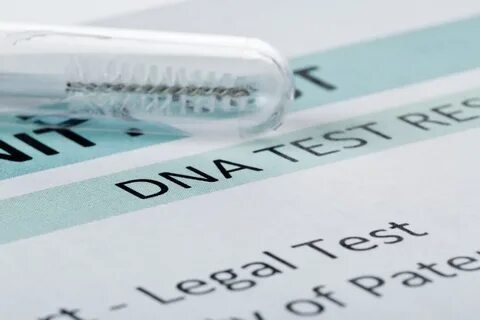
An Ancestry DNA Test UAE adds another type of evidence to this process: genetic information.
DNA cannot replace historical records or automatically create a complete family tree. Instead, it can support genealogy research by identifying potential biological relatives, strengthening possible family connections, and providing clues when traditional records are incomplete.
Used carefully, genetic testing can turn an unanswered genealogy question into a focused research project.
Start With a Question, Not a DNA Report:
The most effective genealogy research usually begins with a specific question.
Instead of simply asking, “Where does my family come from?” consider a more focused problem.
You might want to discover the biological parents of a great-grandparent, investigate an unfamiliar surname, confirm whether two family branches are connected, or understand where an undocumented ancestor fits into your family tree.
A clear research question gives your DNA results a purpose.
Once the results arrive, you can evaluate your genetic matches based on how they may help answer that particular question.
This prevents the process from becoming an overwhelming search through hundreds or thousands of DNA matches.
Build Your Known Family Tree First:
Before using DNA for genealogy, document what you already know.
Start with yourself and work backward through your parents, grandparents, and great-grandparents.
Record names, approximate dates, locations, marriages, and known relationships.
Include spelling variations and alternative versions of surnames when relevant.
Historical information can come from birth certificates, marriage records, census documents, immigration records, military files, wills, newspapers, cemetery records, family letters, and other sources.
The purpose is not to create a perfect family tree before testing.
Instead, you want a reliable framework against which your genetic results can be compared.
What an Ancestry DNA Test Adds to Genealogy?
A traditional family tree tells you who your documented ancestors were.
DNA can provide evidence about biological relationships.
Many ancestry tests analyze autosomal DNA, which is inherited from both parents and can provide information across multiple branches of your recent family tree.
The testing system can compare your genetic markers with those of other participants.
When sufficient genetic material is shared, the other person may appear as a DNA match.
According to MedlinePlus Genetics, ancestry testing can be used to estimate genetic ancestry and identify potential biological relationships.
This creates an additional layer of evidence for family history research.
DNA Matches Are Clues to Biological Connections:
A DNA match indicates that you and another tested individual share enough genetic material to suggest a possible biological relationship.
The amount of shared DNA can help estimate how closely you may be related.
Shared DNA is commonly measured in centimorgans, or cM.
Close relatives usually share more DNA than distant relatives, but genetic inheritance varies. Consequently, a particular amount of shared DNA may fit several possible relationships.
For genealogy purposes, the goal is often not to accept the suggested relationship immediately.
Instead, use it as a starting point for determining how the person may fit into your family tree.
The Power of Shared Matches:
One unfamiliar DNA match may provide limited information.
Several related matches can provide a much stronger research direction.
Shared matches are people who appear as genetic matches to both you and another individual.
Suppose you have an unknown DNA match. You examine the people you both match and recognize several relatives from your mother’s side.
This can suggest that the unknown match may also be connected through your maternal family.
By organizing DNA matches into groups, researchers can begin separating maternal and paternal family lines.
This can be particularly useful when a specific branch of the family tree is missing.
Match Clusters Can Help Solve Difficult Questions:
DNA match clusters are especially valuable when you are investigating an unknown ancestor.
Imagine that you cannot identify the biological parents of your great-grandfather.
Several DNA matches appear connected to one another. Their family trees contain overlapping surnames and ancestral locations.
You may be able to identify a common family group among those matches.
The next step is to determine how that group connects to your known family.
This can lead to a research hypothesis about the identity of the missing ancestor.
DNA does not provide the final answer by itself. It provides a pattern that can direct your genealogy research.
How Shared DNA Supports Relationship Research?
The amount of shared genetic material can help narrow possible relationships.
For example, a relatively large amount of shared DNA may suggest a close family connection, while a smaller amount may point toward a more distant relationship.
However, shared DNA should never be interpreted in isolation.
Consider the person’s age, known family structure, shared matches, family tree, and geographical history.
The objective is to find a relationship scenario that fits the genetic evidence and the documented genealogy at the same time.
Use Family Trees to Connect Genetic and Historical Evidence:
When a DNA match has a public or shared family tree, examine it carefully.
Look for:
-
Common ancestors
-
Repeated surnames
-
Matching ancestral locations
-
Migration patterns
-
Overlapping dates
-
Connections between known family branches
One matching surname is not enough to establish a relationship.
However, several independent clues can create a strong research lead.
For example, if a DNA match shares a significant amount of DNA with you, has ancestors from the same area as your great-grandparents, and belongs to a family branch supported by historical records, the combined evidence becomes much more meaningful.
DNA Can Help Find Missing Family Branches:
Historical genealogy records are not always complete.
Records may have been lost, destroyed, never created, incorrectly indexed, or difficult to access.
DNA can sometimes provide clues where documentation is limited.
An unexpected cluster of genetic matches may point toward a branch of your family that was absent from your existing tree.
This is particularly useful when investigating adoption, undocumented parentage, surname changes, migration, or other gaps in family history.
The genetic evidence can help you decide where to direct your documentary research.
Ethnicity Estimates Can Provide Supporting Context:
Ancestry DNA tests may also provide ethnicity estimates or regional ancestry information.
These results can help provide a broad picture of genetic population connections.
However, ethnicity estimates should not be treated as proof of a specific ancestor or exact birthplace.
An estimate associated with a region can support a genealogy hypothesis, but it should ideally be considered alongside DNA matches and historical documents.
For example, if your family records point toward a particular region and your DNA results show a compatible ancestry estimate, the result may provide additional context.
It does not independently prove the documented family history.
Why DNA and Genealogy Sometimes Disagree?
Unexpected DNA results do not automatically mean that your genealogy records are wrong.
There are several possible explanations.
A family tree may contain an incorrect relationship. A biological parent may differ from the parent recorded in historical documents. An adoption may not have been documented. A surname may have changed. Or a family story may have simplified an older event.
There can also be errors in genetic interpretation, particularly with distant relationships.
When DNA and traditional genealogy disagree, investigate both sources rather than immediately assuming one must be correct.
Understand Genetic Inheritance Before Drawing Conclusions:
You do not inherit exactly the same amount of DNA from every ancestor.
Your parents each contribute roughly half of your autosomal DNA, but the specific segments you inherit are shaped by genetic recombination.
As you move further back through generations, some ancestors may contribute little or no detectable DNA to your current profile.
This explains why your DNA matches cannot represent every person in your genealogical family tree.
It also explains why a known distant relative may not appear in your results.
Genetic genealogy works with the DNA that remains detectable, not every ancestral relationship that has ever existed.
Why Siblings Can Produce Different Genetic Evidence?
Siblings share parents but inherit different combinations of their parents’ DNA.
As a result, siblings can have somewhat different ethnicity estimates and different sets of detectable DNA matches.
This does not mean they have different ancestors.
It means that each sibling received a different genetic combination.
If you are investigating a difficult family-history question, testing or comparing results from additional close relatives may sometimes provide more genetic evidence than relying on one person’s profile alone.
DNA Triangulation Can Strengthen a Research Hypothesis:
Researchers sometimes use a technique known as DNA triangulation.
The basic concept involves comparing multiple DNA matches to determine whether they share the same ancestral segment and potentially connect through a common ancestor.
This can be more informative than relying on one match.
For example, if three or more matches share the same relevant DNA segment and their documented family trees point toward the same ancestral family, the combined evidence may support a particular genealogical hypothesis.
Triangulation requires careful interpretation and should not be confused with simply having several people with similar surnames.
Verify Genetic Clues With Historical Records:
DNA can point you toward a possible family connection, but records help establish the historical story.
Once you have a hypothesis, search relevant documents.
Birth and marriage records may confirm relationships. Census records can show household structures. Immigration documents can establish movement between countries or regions. Probate records can reveal family members and inheritance relationships.
The strongest genealogy conclusions often come from agreement between genetic evidence and documentary evidence.
Be Careful With Unexpected Discoveries
Genetic genealogy can uncover information that affects more than your own family tree.
An unexpected DNA match may reveal an unknown relative, adoption, previously unknown parentage, or another family event that was not widely known.
These discoveries can be emotionally sensitive.
If you encounter surprising evidence, avoid making immediate assumptions. Review the genetic data, investigate multiple explanations, and verify the relationship as carefully as possible.
Responsible genealogy involves respecting both evidence and the people connected to it.
Protect Your Genetic Data:
DNA testing involves highly personal biological information.
Before using genetic testing for genealogy, understand how your data may be stored, analyzed, used for research, and shared for matching purposes.
Review privacy settings and relevant policies before submitting a sample.
If you download your raw DNA data and upload it to another service, remember that the new platform may have separate privacy terms.
Because DNA can reveal biological relationships involving relatives, your decision may have implications beyond your individual results.
A Practical Genealogy Workflow Using DNA:
A simple research workflow can keep the process organized.
1. Define the Research Problem
Choose one specific family-history question.
2. Document Known Evidence
Build the most reliable version of your existing family tree.
3. Review Your DNA Matches
Start with closer matches and work toward more distant connections.
4. Identify Shared Match Groups
Use known relatives to separate likely maternal and paternal clusters.
5. Examine Family Trees
Look for common ancestors, surnames, locations, and migration patterns.
6. Create a Hypothesis
Develop a possible explanation for how the genetic matches connect to your family.
7. Verify the Hypothesis
Use historical documents and additional genetic evidence to test your theory.
8. Record Confirmed Findings
Clearly distinguish verified relationships from possibilities that still require research.
This method turns DNA testing into a structured genealogy tool rather than a collection of interesting but disconnected results.
Frequently Asked Questions:
Can an ancestry DNA test help with genealogy?
Yes. It can provide DNA matches and ancestry information that may support traditional family history research.
Does DNA prove a family relationship?
DNA can provide strong evidence of a biological relationship, but the exact relationship may require additional analysis and documentary research.
Can DNA find unknown ancestors?
It can provide clues through DNA matches and match clusters, particularly when previously unknown relatives have also tested.
Are ethnicity estimates useful for genealogy?
They can provide broad context about genetic ancestry, but they should not be treated as definitive proof of a specific ancestor or birthplace.
Why might a known relative not appear as a DNA match?
They may not have tested, may use another database, or may be distant enough that you do not share sufficient detectable DNA.
Should DNA evidence be combined with genealogy records?
Yes. Combining genetic evidence with historical documentation generally provides a stronger basis for family-history conclusions.
Let DNA Strengthen the Story Behind Your Family Tree:
An Ancestry DNA Lab tests can add an important dimension to genealogy by providing biological evidence that traditional records cannot always offer.
DNA matches can reveal potential relatives. Shared matches can help identify family branches. Genetic clusters can provide clues about missing ancestors, while ethnicity estimates can add broad context about ancestral populations.
But DNA is most valuable when it is treated as evidence rather than an instant answer.
Start with a clear research question, document your known family history, analyze your matches carefully, and verify promising connections with historical records.
When genetic genealogy and traditional genealogy work together, a small amount of DNA can become a powerful research clue, helping transform uncertain family stories into better-supported family history.