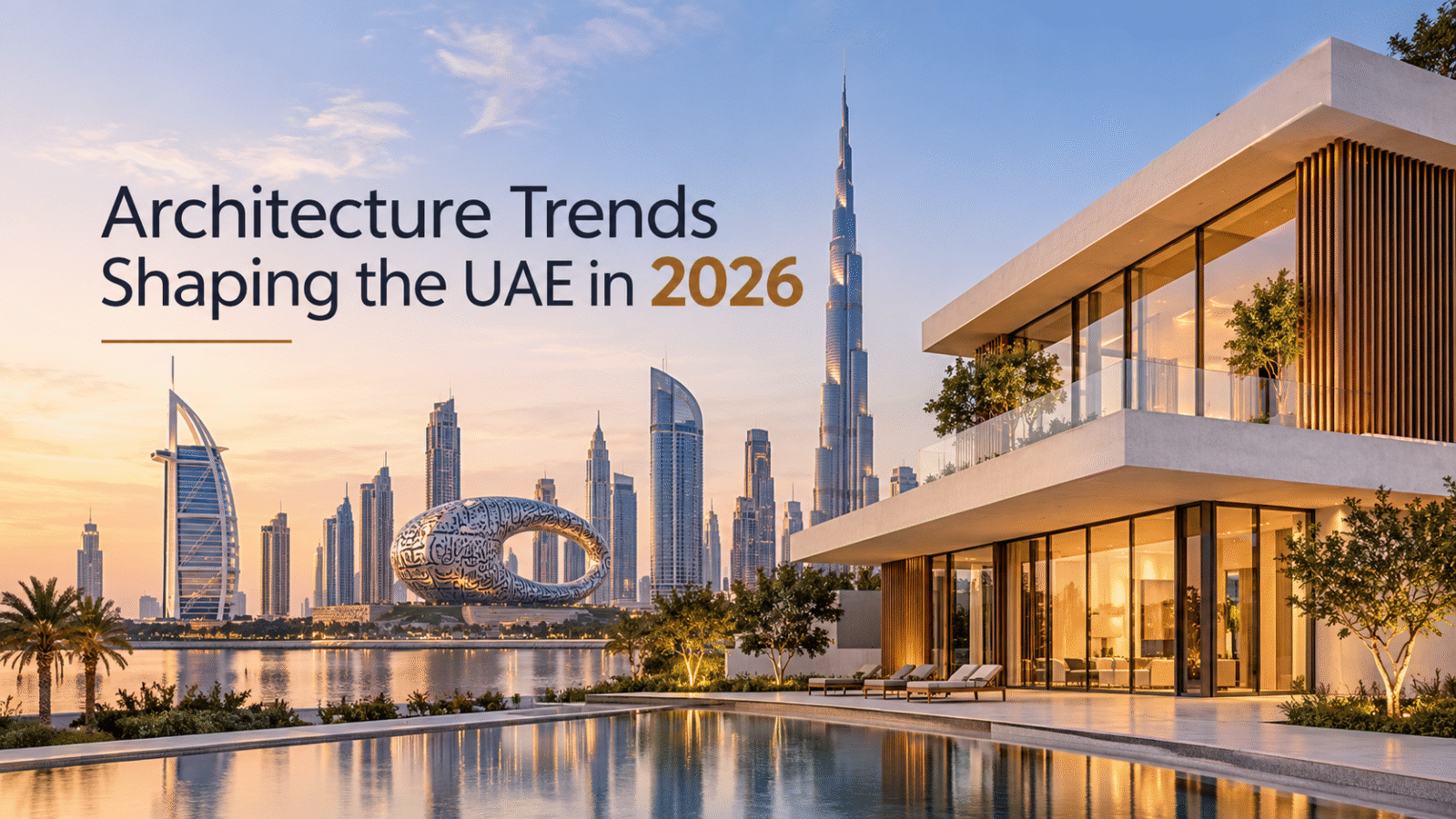
The UAE continues to be one of the most active construction markets in the world. As clients, regulators and technology evolve, several trends are changing how buildings are designed and delivered.
1. Sustainability Becomes Standard
Energy efficiency, water saving and low-carbon materials are moving from optional extras to core requirements. Developers and owners increasingly see sustainable design as a way to lower operating costs, meet regulations and appeal to tenants and buyers who care about performance.
2. Climate-Responsive Design
Designers are paying closer attention to the local climate: shading, orientation, natural ventilation where practical and high-performance building envelopes. Modern reinterpretations of traditional features, such as screens and courtyards, continue to influence contemporary projects.
3. Digital Design and BIM
Building information modelling lets teams build a detailed digital model of a project, coordinate disciplines and detect clashes before construction. It improves accuracy, supports cost planning and can help during facility management after completion. Dubai authorities have encouraged BIM use on certain projects.
4. Smart and Connected Buildings
Sensors, building management systems and automation allow buildings to adjust lighting, cooling and security based on use. Smart systems can reduce energy consumption and give owners better data about how the building performs.
5. Biophilic and Wellness-Focused Spaces
People want buildings that support health and comfort. Biophilic design brings natural light, greenery, natural materials and views into interiors and shared spaces. Wellness-focused features, such as better air quality and comfortable outdoor areas, are becoming selling points in residential and commercial developments.
6. Mixed-Use and Community-Oriented Developments
Projects increasingly combine living, working, retail and leisure in walkable environments. Shaded public spaces, pedestrian routes and community facilities help create places that remain active throughout the day.
7. Advanced Construction Methods
Prefabrication, modular construction and 3D printing are being explored to improve speed, reduce waste and lift quality. Dubai has publicly set ambitions to expand the use of 3D printing in construction, signalling long-term interest in these methods.
8. Adaptive Reuse and Longevity
There is growing interest in making buildings flexible and extending the life of existing structures. Designs that can adapt to new uses reduce waste and protect long-term value.
What This Means for Clients
If you are planning a project, ask your design team how these trends apply to your site and goals. Not every innovation suits every project, but early conversations help you decide where investment will deliver real value.
For more architecture insights and project stories, follow industry blogs and review recent completed work to see how ideas translate into real buildings.
Final Thoughts
The UAE’s architecture is moving toward buildings that are more sustainable, more connected and more people-focused. Teams that combine local climate knowledge with digital tools and thoughtful design will be best placed to deliver the next generation of projects.