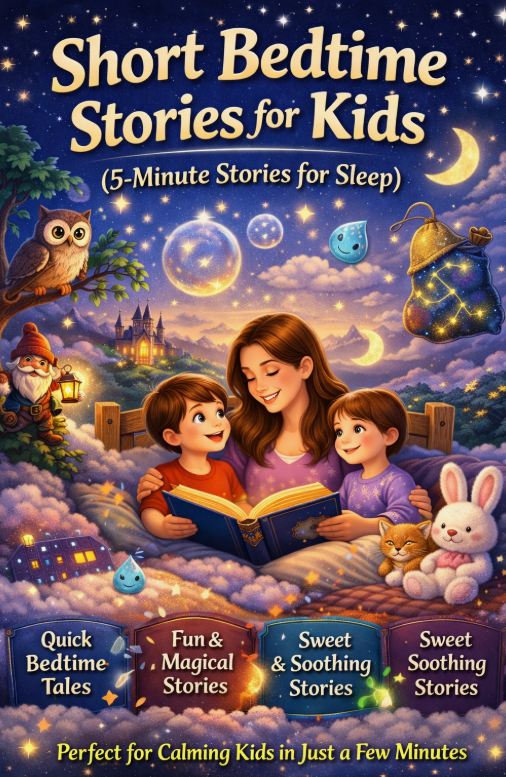
There is something special about a story told at the end of the day.
For a young child, it may be a funny tale about a talking animal. For a teenager, it could be a mystery, adventure, romance, or thoughtful story that stays in their mind long after the book is closed. The age may change, but the comfort of a good story remains.
As someone who has always loved books, I have seen how a simple bedtime story can change the feeling of an entire evening. A child who was restless can become calm. A teenager who spent the day surrounded by screens can finally slow down. Sometimes, a few pages are all it takes to create a quiet moment between a parent and child.
That is why bedtime stories for teenagers and bedtime stories for kids deserve more attention. They are not only about helping someone fall asleep. They can encourage reading, imagination, conversation, emotional growth, and a lasting love of books.
Websites such as LitsLib are part of this wider reading experience, giving families and young readers opportunities to discover stories suited to different ages and interests.
Why Bedtime Stories Still Matter
Bedtime reading may sound like an old-fashioned habit, but its value has not disappeared.
A story creates a natural pause at the end of the day. Instead of moving from homework to television, games, or social media and then suddenly trying to sleep, a child can have a few quiet minutes with a book.
For younger children, repetition can be comforting. They may ask for the same story again and again. Adults sometimes wonder why a child never gets tired of the same book, but children often enjoy knowing what comes next.
For teenagers, bedtime reading can work differently. They may want stories that match their changing interests and emotions. They may enjoy fantasy worlds, realistic characters, mysteries, science fiction, adventure, or stories about friendship.
The goal is not to force every young reader into the same routine.
The goal is to help them find a story they actually want to read.
Bedtime Stories for Kids: Building a Love of Reading
Children are naturally curious. A story gives that curiosity somewhere to go.
Imagine a six-year-old listening to a story about a small fox who gets lost in a forest. The child may wonder where the fox will sleep, who will help it, and whether it will find its way home.
Those questions are valuable.
The child is not simply hearing words. They are predicting, imagining, remembering, and connecting ideas.
That is one reason bedtime stories for kids can be such a useful part of a reading routine.
Keep the Stories Age-Appropriate
A three-year-old and a ten-year-old may both love stories, but they usually need very different experiences.
Younger children often respond well to:
- Short stories
- Repetition
- Simple vocabulary
- Friendly characters
- Gentle adventures
- Bright imagination
- Clear endings
Older children may prefer:
- Mysteries
- Adventure stories
- Fantasy
- Funny stories
- Historical fiction
- Science fiction
- Superhero stories
- Stories about friendship and courage
Choosing the right level makes reading more enjoyable. A story that is too difficult can feel like homework, while a story that is too simple may not hold an older child’s attention.
Bedtime Stories for Teenagers Are Just as Valuable
Teenagers sometimes get left out of conversations about bedtime stories.
People often assume that once a child becomes a teenager, bedtime reading should disappear. I disagree.
The format may change, but the need for stories does not.
A teenager might not want a parent reading aloud every night. They may prefer reading independently for 15 or 20 minutes before sleeping. That still counts.
A good teenage bedtime story can provide a break from school pressure, notifications, social expectations, and the constant stream of online content.
It can also give teenagers something that short social media posts rarely provide: time to stay with one idea.
Give Teenagers Freedom to Choose
One of the best ways to encourage teenage reading is to give them control.
Let them choose the genre.
Maybe one teenager loves a detective story while another wants fantasy. Someone else might enjoy romance, historical fiction, comedy, or science fiction.
There is no single “correct” type of book for teenagers.
A useful reading selection might include:
- Short mystery stories
- Fantasy adventures
- Science fiction
- Superhero stories
- Historical fiction
- Funny stories
- Emotional stories about friendship
- Light romance suitable for their age
When teenagers discover that reading can match their personality, books become less like an assignment and more like entertainment.
The Difference Between Kids’ and Teenagers’ Bedtime Stories
The basic purpose of bedtime reading can remain similar, but the experience changes with age.
For younger children, the story often focuses on comfort, imagination, and simple lessons.
For teenagers, stories can explore more complicated ideas.
A children’s story might ask, “Will the character find their lost puppy?”
A teenage story might ask, “What happens when the character discovers that the person they trusted has been hiding something?”
Both questions can be engaging. They simply meet readers at different stages of development.
This is why age-based reading collections are useful. They help parents, teachers, and young readers discover material that feels appropriate without removing the fun of exploration.
A Small Story Can Create a Big Family Memory
Some of my favorite reading memories are not connected to famous books.
They are connected to ordinary moments.
A parent sitting beside a child.
A lamp glowing beside the bed.
A book opened to a familiar page.
A child saying, “Just one more story.”
These moments may seem small, but they can stay with a person for years.
Even when children become teenagers, reading together can continue in a different form. Perhaps a parent and teenager discuss a mystery they are both reading. Maybe they recommend books to each other. Maybe they simply sit in the same room reading different books.
The activity changes, but the connection remains.
How to Make Bedtime Reading Easier
Families do not need an elaborate reading system.
A simple routine can work surprisingly well.
- Choose a Regular Time
Try reading at roughly the same time each evening.
It does not need to be perfect. The purpose is to create a familiar transition toward bedtime.
- Keep the Reading Time Short
You do not need to finish an entire story.
For younger children, ten minutes may be enough. Older children and teenagers may prefer 15 to 30 minutes.
The habit matters more than the number of pages.
- Let Children Choose Sometimes
Give children a chance to pick the story.
If a child chooses a book about dinosaurs every night, there is no need to panic. Repeated reading can help build confidence and familiarity with language.
For teenagers, choice becomes even more important.
- Do Not Turn Every Story Into a Lesson
This is a mistake adults can easily make.
After every story, asking, “What did you learn?” can make reading feel like school.
Sometimes it is better to simply enjoy the story.
If a meaningful conversation naturally develops, follow it.
- Talk About Characters
A simple question such as “Would you have trusted that character?” can lead to a surprisingly interesting conversation.
With teenagers especially, stories can become an easy way to discuss difficult subjects without making the conversation feel like an interrogation.
Where LitsLib Can Fit Into a Family Reading Routine
Finding suitable stories can sometimes be difficult. Parents may know that they want their children to read more but may not know where to begin.
This is where a children’s reading platform such as LitsLib can be useful.
LitsLib focuses on Literature, Books, Reading, Education, Children’s Stories, Storytelling, and Self-Improvement, bringing different types of reading content together for young readers and families.
Its age-based approach can also make it easier to look for stories that fit a child’s stage.
For younger readers, families can explore children’s stories designed around simple themes and engaging characters. Older children can move toward adventure, mystery, fantasy, historical fiction, comedy, and other genres.
Teenagers can also benefit from having stories that recognize their changing interests rather than treating them like very young children.
Why Five or Ten Minutes Can Be Enough
One thing I have learned as a reader is that people often make reading harder than it needs to be.
A parent might think, “We don’t have time to read tonight.”
But perhaps there is time for five minutes.
Five minutes can mean a few pages.
A few pages can become a chapter.
A chapter can become a habit.
And a habit can eventually become a genuine love of reading.
The same applies to teenagers. They do not need to read for hours every night. Starting with a manageable amount can remove the pressure.
The key is to make reading feel possible.
Stories Can Help Children Understand Feelings
Stories also provide a safe way to explore emotions.
A child may recognize themselves in a character who feels nervous about starting school.
A teenager may connect with a character who feels misunderstood by friends.
The reader can think about these situations from a little distance.
They can ask themselves:
- Why did the character behave that way?
- What would I have done?
- Was the character treated fairly?
- What could the character have done differently?
These questions can build empathy without turning the reading experience into a formal lesson.
Choosing Stories Without Making Reading a Chore
If you want children to read more, pressure is rarely the best starting point.
Instead, create choices.
Keep several types of stories available. Let children explore. If one book does not work, try another.
For teenagers, respect their preferences while encouraging variety over time.
A teenager who begins with superhero stories might eventually discover science fiction. A child who loves funny stories might later become interested in mystery. A reader who starts with short bedtime stories may eventually want longer novels.
Reading journeys do not always follow a straight line.
That is part of the fun.
A Better Question Than “Did You Read Today?”
Instead of repeatedly asking children whether they have read, try asking about the story.
“What happened to your favorite character?”
“Was the ending what you expected?”
“Who was the funniest character?”
“What do you think will happen next?”
These questions show genuine interest.
For teenagers, you might even ask them to recommend something to you.
There is something wonderful about a teenager saying, “You should read this.”
Suddenly, the roles are reversed. They are no longer simply the young person being encouraged to read. They become the person sharing a reading experience.
Making Bedtime Stories Part of a Bigger Reading Life
Bedtime reading does not have to remain limited to the bedroom.
A child who enjoys bedtime stories may become interested in visiting a library, choosing books at a bookstore, writing their own stories, or listening to storytelling podcasts.
A teenager who discovers a favorite author may begin exploring an entire genre.
That is how a small reading habit can grow.
The bedtime story is only the beginning.
Final Thoughts
Bedtime stories for teenagers and bedtime stories for kids may look different, but they share the same simple idea: stories give us a reason to slow down and imagine.
For children, they can create comfort, curiosity, and early reading confidence.
For teenagers, they can offer escape, reflection, entertainment, and a quiet break from the noise of everyday life.
Most of all, stories create opportunities for connection.
You do not need an expensive reading program or a perfect schedule. Start with one story. Read for a few minutes. Let the child choose sometimes. Give the teenager freedom to explore different genres. Talk about the characters when a conversation naturally appears.
And if you are looking for a place to discover age-appropriate stories, LitsLib can be one more useful stop on that journey.
A good bedtime story does not always end when the last page closes. Sometimes, the best part is the thought it leaves behind.