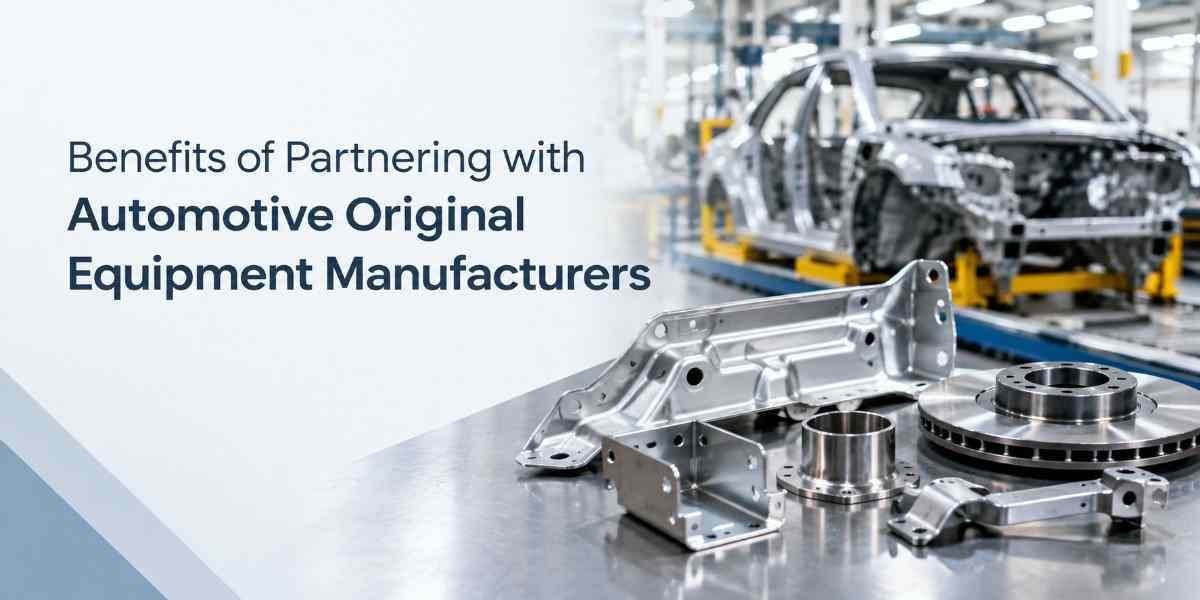
The automotive industry depends on a large network of manufacturers, suppliers, and component makers to develop and produce vehicles. While vehicle manufacturers handle the final assembly and production, many components are sourced from specialised suppliers and original equipment manufacturers (OEMs).
For automotive businesses, choosing the right OEM manufacturing partner can affect product quality, production timelines, cost, and long-term supply. A reliable OEM partner can manufacture components according to specific drawings, material requirements, dimensions, and quality standards.
This is especially important when components require precision, consistent quality, and production at scale. From sheet metal fabrication and precision forming to welding and surface finishing, automotive OEM manufacturers can support different stages of component production.
Here are some of the key benefits of partnering with automotive original equipment manufacturers.
1. Access to Manufacturing Expertise
Automotive OEM manufacturers have experience in producing components for demanding applications. They understand the importance of material selection, dimensional accuracy, production consistency, and quality control.
Instead of developing every manufacturing capability internally, automotive companies can work with an OEM that already has the required equipment, processes, and technical knowledge.
This can make it easier to move from product requirements to finished components while maintaining the required specifications.
2. Consistent Component Quality
Consistency is one of the most important factors in automotive manufacturing. A component may need to meet the same dimensions, material specifications, and finish across thousands of units.
OEM manufacturers follow defined production and quality control processes to maintain consistency from one batch to another. Depending on the component and application, this can include inspections of dimensions, material quality, welding, surface finish, and other production parameters.
Working with an experienced OEM partner can therefore help automotive businesses maintain consistent component quality throughout production.
3. Cost-Effective Production
Setting up an in-house manufacturing facility requires investment in machinery, tooling, production space, skilled workers, maintenance, and quality systems.
Partnering with an automotive OEM can reduce the need for businesses to make all of these investments themselves. The OEM already has manufacturing infrastructure and can produce components based on the customer’s requirements.
For businesses that need specialised components or production in specific volumes, outsourcing manufacturing to an experienced OEM can be a practical way to manage production costs.
4. Ability to Manufacture Custom Components
Automotive components are not always standard products. Manufacturers often require parts designed for a particular vehicle, system, or application.
An OEM manufacturing partner can produce components based on engineering drawings, specifications, material requirements, and design needs. This allows businesses to source custom components instead of modifying standard products to fit their application.
For example, processes such as laser cutting, sheet metal fabrication, precision forming, welding, and surface finishing can be combined to manufacture components according to a specific design.
5. Better Production Scalability
Automotive production volumes can change based on demand, new product launches, and production schedules. An OEM partner with established manufacturing capabilities can help businesses manage these changing requirements.
The same supplier can potentially support different production volumes while maintaining established processes and quality requirements.
This is useful for businesses that need to move from smaller production runs or prototypes to larger-scale manufacturing without completely changing their supply chain.
6. Faster Product Development and Production
Time is an important consideration in the automotive industry. Delays in component production can affect assembly schedules and product launches.
An experienced OEM manufacturer can support the production process with established machinery, skilled teams, and manufacturing systems. When the design and specifications are finalised, the supplier can focus on producing the required components according to the agreed requirements.
Early involvement of the OEM can also help identify manufacturing-related issues before production begins. This can reduce avoidable changes later in the process.
7. Access to Advanced Manufacturing Processes
Modern automotive components often require accurate cutting, forming, joining, and finishing. OEM manufacturers invest in equipment and production processes to meet these requirements.
Depending on their capabilities, automotive OEM suppliers may offer processes such as:
- Laser cutting
- Sheet metal fabrication
- Precision forming
- CNC-based manufacturing
- Welding and joining
- Surface finishing
- Assembly and component integration
Having several processes available through one manufacturing partner can simplify sourcing and coordination.
8. Stronger Supply Chain Support
Automotive production relies on dependable component supply. A delay in one part can affect several stages of the production process.
A capable OEM partner can become an important part of the automotive supply chain by supporting planned production schedules and maintaining consistent manufacturing processes.
Long-term partnerships can also improve communication between the automotive company and supplier. When the supplier understands the product, specifications, production volumes, and quality requirements, it becomes easier to plan future manufacturing requirements.
9. Focus on Core Automotive Operations
Manufacturing every component internally can require significant time and resources. By outsourcing selected components to an experienced OEM, automotive companies can focus more on areas such as product development, vehicle design, engineering, assembly, and customer requirements.
The OEM takes responsibility for the agreed manufacturing activities while the automotive company manages the final product and its broader business objectives.
This division of responsibilities can make the overall production process more efficient.
10. Long-Term Manufacturing Partnership
The value of an automotive OEM relationship is not limited to individual orders. A reliable manufacturing partner can support a company through different stages of a product’s lifecycle.
As requirements change, the OEM can work with the customer on design updates, production volumes, materials, finishing requirements, and other manufacturing needs.
A long-term partnership can also create better communication and a clearer understanding of quality expectations. This is particularly useful for automotive businesses that require repeat production and consistent component supply.
What Should Automotive Companies Look for in an OEM Partner?
Selecting an OEM manufacturer requires more than comparing prices. Businesses should consider the supplier’s manufacturing capabilities, experience, quality systems, production capacity, material expertise, and ability to meet delivery requirements.
It is also important to check whether the manufacturer can support the complete production requirement or only specific processes. Clear communication about drawings, tolerances, materials, inspection requirements, production volumes, and delivery schedules can help avoid issues later.
For automotive businesses, the right OEM partner should be able to combine manufacturing capability with consistent quality and reliable production support.
Partner with Jindal Lifestyle for Automotive OEM Manufacturing
Jindal Lifestyle supports businesses looking for reliable OEM manufacturing solutions for automotive components. With capabilities in sheet metal fabrication, laser cutting, precision forming, welding, and surface finishing, the company can support different component manufacturing requirements.
For automotive businesses, working with an experienced OEM manufacturing partner can provide access to established production capabilities while helping maintain quality, consistency, and production efficiency.
As automotive products continue to require more precise and application-specific components, choosing the right manufacturing partner becomes an important part of building a dependable supply chain.