In today’s fast-paced law enforcement environment, communication goes beyond mere luxury and becomes your primary resource. No matter whether you handle regular calls or participate in hot pursuits, the ability to transmit your information and receive commands quickly may determine much more than just your success in work. While attention to the radio is always great, many pay little heed to the security of RSMs.
A microphone that bounces around during a foot chase or comes unclipped during a struggle is more than just annoying; it’s a safety risk. Making sure your communication gear stays exactly where it needs to be means understanding tactical placement, gear compatibility, and the limitations of standard equipment.
Why Mic Stability Matters in the Field
When an officer is in action, the ‘fumble factor’ is the enemy. In stressful situations, fine motor skills go out the window, and the brain focuses on immediate threats instead of adjusting equipment. That’s why a stable radio microphone is so important. If a mic isn’t properly secured, it can slide under your arm, dangle by the cord, or fall behind your shoulder, forcing you to take your eyes off a suspect to find your comms.
Tactical communication depends on three things:
- Accessibility
- Audio Clarity
- Retention
How Tactical Mic Clips Have Evolved
Historically, officers relied on the simple metal or plastic clips that come with most radio microphones. While these are okay for desk duty, they often fail in tactical situations.
Modern solutions have come a long way to address these shortcomings. Now, there are many specialized attachment methods designed to work with modern uniforms and load-bearing vests:
- Epaulet Sliders: These slide over the shoulder strap of your uniform shirt, providing a more stable base than a simple fabric pinch.
- MOLLE-Compatible Mounts: Made for external tactical vests, these mount to the webbing so the mic can’t be pulled off your chest.
- Magnetic Mounting Systems: These use strong magnets for quick attachment and detachment, but they require specific mounting plates.
- Mechanical Locking Clips: These provide a secondary lock or a deeper ‘bite’ into the uniform fabric to keep the mic from sliding up or popping off.
Common Issues with Standard Radio Attachments
Most basic radio clips are designed for general use, not for the demands of a 12-hour patrol shift or tactical operations. Officers often run into the same problems:
1. Fabric Fatigue and ‘The Sag.’
The standard clip relies on consistent fabric tension. With continued use of the RSM, the fabric will eventually sag under the added weight, lowering the microphone further from your mouth. You may experience distorted transmission and appear less than professional.
2. The Snagging Risk
Radio wires hanging around or even loose microphones pose a significant risk of snags. The moment a fight ensues, the suspect may just grab hold of the microphone wire to use his advantage against you. A good clip keeps the cord close to your body, reducing the loop area that may snag on anything.
3. The Risk of Impact Displacement
When physical contact is unavoidable or you need to move quickly, there is a risk that your clip may be thrown by the impact. Once the mic is on the ground, you’re effectively ‘dark’—unable to call for backup or hear important warnings.
Expert Tips for Getting Your Mic Placement Just Right
Where you put your microphone is just as important as how you clip it on. While everyone has their own preferences, tactical experts generally suggest sticking to these best practices:
- The Center-Chest Mount: If you’re wearing an external vest, a popular choice is to mount the mic in the center of your chest, right below your chin. This lets you transmit ‘hands-free’ simply by tilting your chin down. Plus, it makes the mic easy to reach with either hand.
- The ‘V’ of the Neck: If you’re wearing a standard uniform shirt, clipping the mic to the second button or the placket edge works better than the epaulet. It keeps the cord shorter, so you don’t have to turn your head as much to speak.
- Cord Routing: Always run the radio cord under an epaulet or through the vest’s internal channels. This stops someone from using the cord as a handle during a fight and keeps your profile looking ‘clean.’
- The Vertical Rule: Make sure your mic is pointing straight up. Most RSMs are designed to pick up sound in a specific direction. If you mount them sideways or upside down, you might end up with ‘tinny’ audio or more wind noise.
Maintenance and Gear Integration
Your tactical setup is only as strong as its weakest point. Regularly check your mounting hardware for wear and tear. Plastic clips can develop stress fractures, and metal springs can lose their springiness over time.
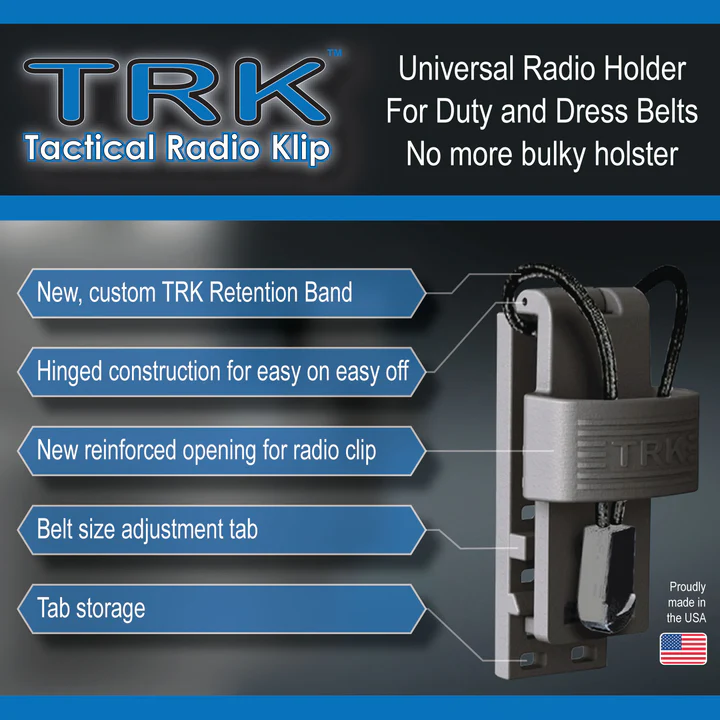
When you’re adding new gear, like a tactical mic clip for police radios, test the whole setup while wearing all your equipment. A clip that feels secure in the locker room might get in the way of your rifle sling, body-worn camera, or seatbelt when you’re out on the road. Professional-grade hardware from TacticalKlips is made to bridge the gap between standard-issue gear and the intense demands of active duty.
Conclusion
Good communication is essential for officer safety. You cannot speak without a radio, and you cannot talk through a radio without a microphone clip. Upgrading to clips that are more robust and made specifically for tactical use will make your communications more secure, give you that professional look, and allow you to focus on the task at hand.
Taking the time to learn about gear retention and the benefits of proper placement isn’t just about equipment—it’s about keeping that crucial link to help and information open when seconds matter.