Information
When choosing a massage, it is helpful to understand how different techniques work and what kind of experience each one provides. Swedish massage and deep tissue massage are two well-known options, but they are designed with different approaches in mind. One generally emphasizes relaxation and flowing movements, while the other focuses more closely on areas of muscle tension.
Understanding the difference between deep tissue and Swedish massage can make it easier to select a massage that suits your preferences. Although both techniques involve manipulating muscles and soft tissues, their pressure, movements, and primary goals can vary considerably.
Understanding Swedish Massage
Swedish massage is commonly associated with relaxation and a comfortable, flowing experience. A therapist may use long strokes, kneading, gentle circular movements, and controlled pressure during a session.
The techniques are usually performed across broader areas of the body rather than concentrating entirely on one specific muscle group. The rhythm of the movements can help create a peaceful atmosphere, making Swedish massage a popular option for people who want to relax.
Another feature of Swedish massage is its flexibility. The therapist can often adjust the pressure according to the client’s preferences. Someone who prefers a gentle session can communicate that preference before and during the massage.
Understanding Deep Tissue Massage
A more focused approach is used in deep tissue massage. The therapist generally concentrates on areas where muscle tightness or tension is present and may use slower, more deliberate movements.
The pressure can be firmer than what is commonly used during a traditional Swedish massage. However, deep tissue massage should not simply be about applying as much pressure as possible. A qualified therapist should work within a comfortable range and communicate with the client throughout the session.
Because the approach is more focused, a deep tissue session may spend additional time on particular areas instead of treating the entire body in the same way.
The Distinction Between Swedish and Deep Tissue Massage
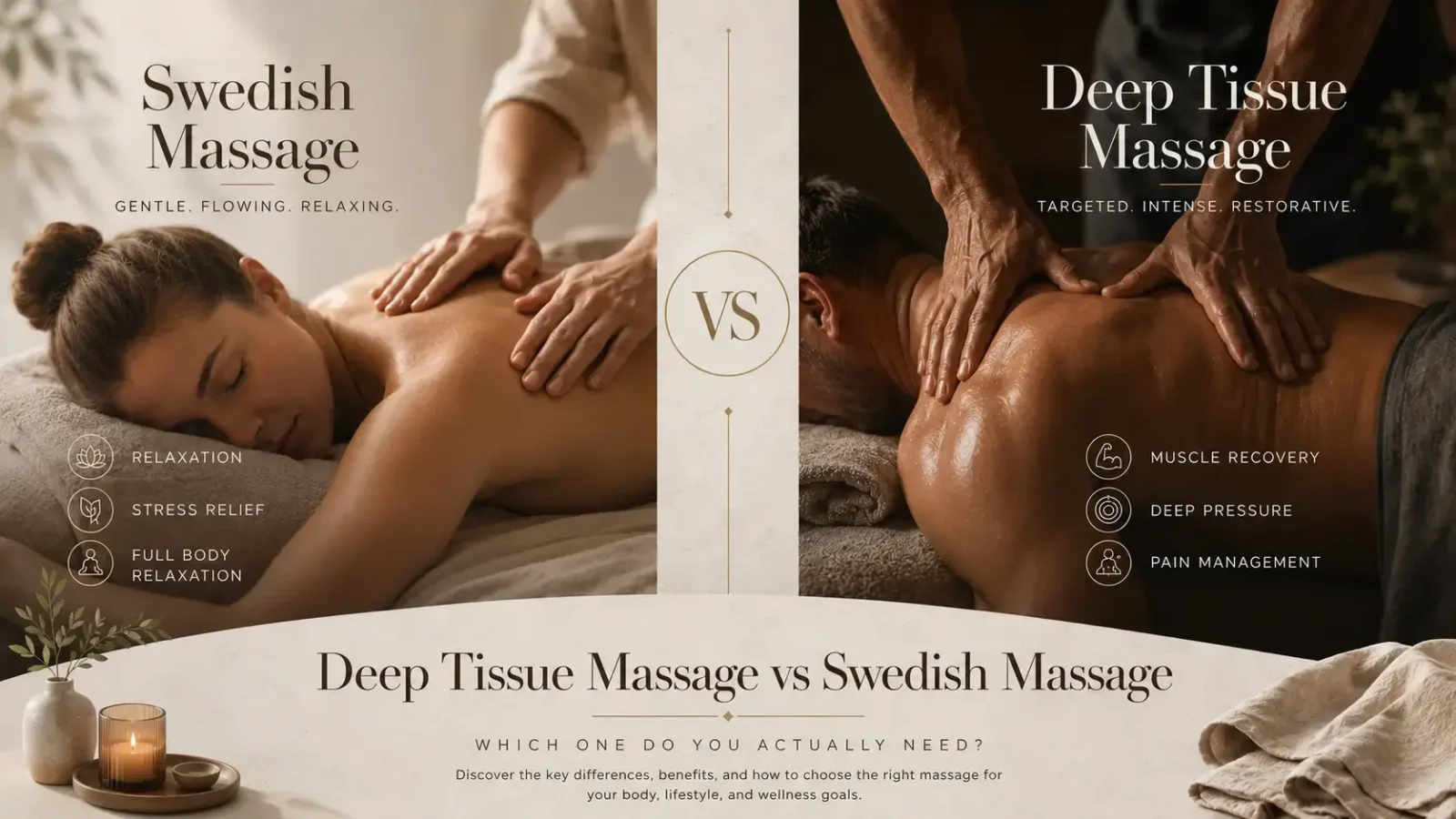
The main difference between deep tissue and Swedish massage comes down to pressure, technique, and focus.
Swedish massage generally uses flowing strokes and moderate pressure to promote relaxation. Deep tissue massage uses slower and more targeted movements, often with firmer pressure, to focus on areas of muscle tension.
Some key differences include:
- Pressure: Swedish massage usually involves light to moderate pressure, while deep tissue massage may use stronger pressure.
- Movement: Swedish massage features flowing strokes and kneading, whereas deep tissue techniques tend to be slower and more concentrated.
- Focus: Swedish massage commonly covers larger areas, while deep tissue massage may concentrate on specific areas.
- Purpose: Swedish massage is often selected for relaxation, while deep tissue massage is commonly chosen for focused muscle work.
- Session experience: Swedish massage can feel soothing and rhythmic, whereas deep tissue massage may feel more intense because of its targeted approach.
Which Is Better: Swedish Massage or Deep Tissue?
When comparing Swedish vs deep tissue massage, your personal needs and comfort level should guide your decision.
If you are mainly looking for relaxation after a busy day, Swedish massage may be the more suitable choice. Its gentle and flowing movements can provide a calm experience without requiring intense pressure.
If you prefer focused attention on areas that feel particularly tight, you may want to consider deep tissue massage. Because this style can involve firmer pressure, communicating with your therapist is especially important.
There is no universal answer to which massage is better. Different people may enjoy different techniques depending on their preferences and expectations.
Pressure Does Not Always Mean Better Results
A common misconception is that a massage must be intense to be effective. In reality, greater pressure is not automatically better. The right level of pressure depends on the person, the technique being used, and the purpose of the session.
A massage therapist should be able to modify pressure when necessary. If something feels excessively uncomfortable, let the therapist know. Good communication helps create a more suitable and enjoyable experience.
Can Techniques Be Combined?
In some sessions, therapists may use techniques from more than one massage style. For example, a therapist might begin with broader, relaxing movements and then spend more time working on a particular area.
Combining techniques can provide a customized experience based on the client’s preferences. However, the exact approach depends on the therapist, the client’s goals, and the type of massage session being offered.
Preparing for Your Massage
Before your appointment, consider what you want from the experience. If relaxation is your priority, tell the therapist that you prefer a calm session with comfortable pressure. If you want focused work on certain areas, mention those areas before the massage begins.
It is also useful to communicate during the session. Pressure preferences can change as the massage progresses, and letting the therapist know what feels comfortable can help create a better experience.
Final Thoughts
Knowing the difference between deep tissue and Swedish massage can help you make a more informed choice. Swedish massage generally emphasizes flowing movements, relaxation, and moderate pressure, while deep tissue massage takes a more targeted approach and may use firmer pressure.
When considering Swedish vs deep tissue massage, think about whether you want a relaxing full-body experience or more focused work on areas of muscle tension. Neither choice is inherently superior to the other. The best choice is the one that matches your personal comfort level, preferences, and goals.
Taking a little time to understand each technique can help you approach your massage appointment with greater confidence and choose a session that feels right for you.
For more Information: Click here