Commercial properties rely on electrical systems for lighting, computers, HVAC equipment, security devices, machinery, refrigeration, communications, and daily operations. When electrical problems interrupt those systems, the effect can go beyond inconvenience. A single failure may affect employees, customers, production schedules, equipment, or business operations.
Electrical planning for a commercial property therefore needs to consider both immediate needs and future growth. The electrical system should support the building’s current use while leaving enough flexibility for upgrades, new equipment, and changing demands. Careful planning can also make maintenance and troubleshooting easier over time.
Understand the Property’s Electrical Demands
Every commercial building has a different electrical load based on its layout and purpose. A small office may have very different requirements from a restaurant, warehouse, retail location, workshop, or industrial facility.
Before electrical work begins, identify the equipment that consumes significant power and determine when those loads operate. Seasonal changes and future additions should also be considered. Understanding the property’s real electrical demand provides a better starting point than making decisions based only on the number of rooms or the building’s square footage.
Build Around Current and Future Needs
A commercial electrical system should not be planned only around what the business uses today. New equipment, additional workstations, lighting changes, charging equipment, and building expansions can increase demand over time.
Leaving appropriate room for future needs can reduce the need for repeated modifications. This does not mean installing unnecessary capacity without purpose. Instead, the design should consider realistic growth and make future upgrades easier to integrate without disrupting normal business activity.
Protect Critical Equipment
Some commercial equipment is essential to daily operations. Refrigeration, network systems, security equipment, production machinery, and specialized devices may need dependable electrical service.
The electrical system should be designed with those priorities in mind. Critical loads may require dedicated circuits, appropriate protective devices, or other system considerations depending on the property. The right approach depends on the equipment and operating environment, so the electrical design should be reviewed as a complete system.
Do Not Ignore Recurring Electrical Problems
Frequent breaker trips, flickering lights, warm outlets, repeated equipment shutdowns, and unexplained electrical interruptions can all indicate a problem that deserves attention. In a commercial setting, recurring faults can also make it harder for staff to work efficiently.
Rather than treating each event as a separate inconvenience, look for patterns. If the same circuit, room, machine, or time period is repeatedly affected, the underlying cause should be identified. Fixing symptoms without understanding the source can result in repeated service calls and continued disruption.
When Commercial Expertise Is Needed
Commercial electrical services can support businesses with electrical work that requires planning around larger loads, multiple circuits, commercial equipment, and operating schedules. Commercial environments often have different demands from typical residential properties.
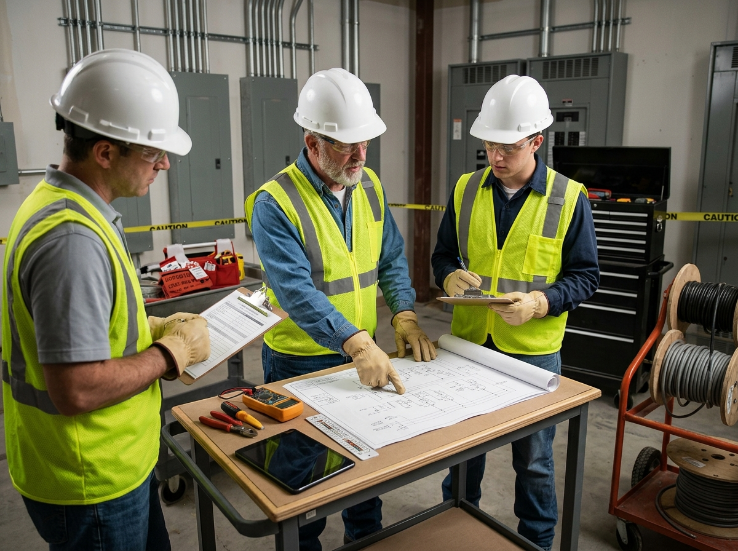
The scope may include troubleshooting, installation, repairs, upgrades, lighting, equipment connections, and other electrical work depending on the building. A professional assessment helps determine which parts of the system need attention and how the work can be completed with minimal disruption to normal operations.
Plan Work Around Business Operations
Electrical work can sometimes require shutting down a circuit, area, or piece of equipment. For a business, scheduling matters because downtime can affect customers, employees, inventory, or production.
A well-planned project identifies what will be affected before work starts. Businesses can then schedule the work during lower-traffic periods where practical. Clear planning also helps staff prepare for temporary changes to power, lighting, equipment access, or workspace availability.
Inspect Electrical Panels and Distribution
Commercial buildings may have multiple panels, circuits, and distribution points serving different areas. These components should be clearly identified and maintained so that future troubleshooting does not become unnecessarily difficult.
Accurate labeling can save time during repairs and maintenance. The condition of breakers, connections, enclosures, and accessible wiring should also be monitored. Any signs of overheating, corrosion, physical damage, or unusual electrical behavior should be addressed through appropriate evaluation.
Consider Lighting as Part of the Electrical System
Lighting affects more than appearance. It influences visibility, work conditions, customer experience, security, and energy use across the property.
When a business updates lighting, the project should account for circuit capacity, fixture compatibility, controls, operating patterns, and maintenance access. New fixtures should be integrated into the electrical system rather than treated as isolated decorative additions.
Prepare for New Equipment
Businesses often add equipment as operations change. New refrigeration units, computers, machinery, HVAC equipment, charging systems, and other electrical loads may require dedicated circuits or system upgrades.
Before installing new equipment, review its electrical specifications and compare them with the existing system. This can help identify whether additional circuits, panel work, wiring changes, or other electrical modifications are necessary before the equipment arrives.
Keep Maintenance Records
A commercial property’s electrical history can provide useful information when troubleshooting future problems. Keep records of major repairs, equipment additions, panel changes, recurring faults, and inspections.
Good documentation makes it easier for electrical professionals to understand previous work. It can also help business owners recognize patterns in maintenance costs and identify systems that may be approaching the point where a larger upgrade should be considered.
Think About Safety During Maintenance
Electrical safety should remain a priority even when equipment appears to be operating normally. Workers may interact with equipment, temporary wiring, extension cords, machinery, and other electrical components as part of daily operations.
Businesses should have clear procedures for reporting damaged electrical equipment and unusual conditions. Employees should not be encouraged to perform electrical repairs simply because a problem seems minor. Properly directing issues to qualified personnel can reduce avoidable hazards and interruptions.
Final Thoughts
Commercial electrical planning works best when safety, current demand, future growth, equipment needs, maintenance, and business operations are considered together. A reliable system is easier to manage when its components are properly planned, clearly identified, and maintained over time.
This broader planning is closely connected with power distribution, the process of delivering electricity from a supply system to the locations where it is used. Understanding how electrical power moves through a commercial property helps explain why proper distribution, protection, and planning are essential.