
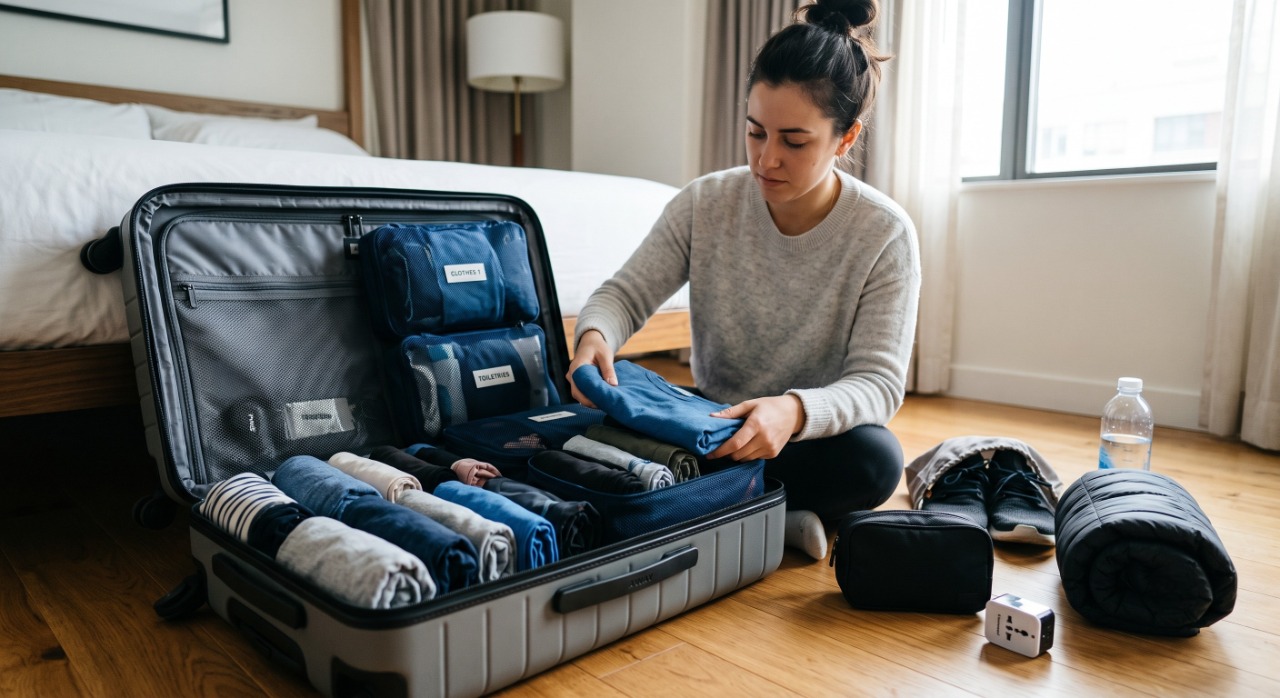
Packing a suitcase may seem simple, but doing it efficiently can make every trip smoother and more enjoyable.
Whether you’re traveling for business, a family vacation, or an international adventure, learning how to pack a suitcase the right way helps you maximize space, protect your belongings, and reduce travel stress.
This comprehensive guide from My Good Movers shares expert advice, practical techniques, and proven packing strategies to help you travel smarter.
How Do You Pack a Suitcase Without Wasting Space?
Travel is exciting, but packing often feels overwhelming. Many travelers either overpack or struggle to fit everything into one suitcase. Fortunately, learning how to pack a suitcase efficiently is easier than most people think.
At My Good Movers, we’ve helped thousands of families and individuals relocate and prepare for travel.
Through years of experience handling belongings safely and efficiently, we’ve learned that smart packing isn’t about squeezing everything into a bag—it’s about planning strategically.
Whether you’re heading out for a weekend getaway or a month-long vacation, the techniques in this guide will help you:
- Save valuable suitcase space
- Keep clothing wrinkle-free
- Stay organized throughout your trip
- Reduce baggage fees
- Make unpacking much easier
Instead of stuffing items randomly, you’ll learn professional methods that maximize every inch of available space.
Why Efficient Packing Matters
Packing efficiently offers benefits beyond simply fitting more items into your luggage.
First, organized luggage saves time. Instead of digging through messy piles of clothing, you can quickly locate exactly what you need.
Second, lighter luggage makes traveling easier. Whether you’re walking through airports, climbing hotel stairs, or loading your car, a well-packed suitcase reduces physical strain.
Another major advantage is financial savings. Airlines increasingly charge for checked baggage and overweight luggage. Knowing how to pack a suitcase wisely helps avoid unnecessary fees.
Additional benefits include:
- Better clothing protection
- Less wrinkling
- Improved organization
- Easier airport security checks
- Faster hotel unpacking
Professional movers at My Good Movers always emphasize planning because preparation prevents last-minute packing mistakes.
Choose the Right Suitcase
Your suitcase itself plays a significant role in how efficiently you pack.
Many travelers focus entirely on what goes inside without considering whether the luggage matches their trip.
Choosing the correct suitcase makes organization much simpler.
Hard Shell vs. Soft Shell
Each suitcase style offers distinct advantages.
| Hard Shell | Soft Shell |
|---|---|
| Better protection | More flexible |
| Water resistant | External pockets |
| Durable | Slightly expandable |
| Excellent for electronics | Easier to squeeze into tight spaces |
Business travelers often prefer hard-shell luggage because it protects laptops and delicate items.
Vacation travelers frequently appreciate soft-shell luggage because it offers greater flexibility when packing souvenirs.
Selecting the Correct Size
Avoid bringing oversized luggage for short trips.
General recommendations include:
| Trip Length | Recommended Suitcase |
|---|---|
| 1–3 Days | Carry-on |
| 4–7 Days | Medium suitcase |
| 8–14 Days | Large suitcase |
| Extended Travel | Extra-large luggage |
A properly sized suitcase naturally encourages efficient packing.
Make a Packing Checklist
Planning before packing dramatically improves organization.
Instead of tossing random items into your luggage, create categories.
Examples include:
- Clothing
- Shoes
- Toiletries
- Electronics
- Medications
- Travel documents
- Chargers
- Entertainment
- Emergency supplies
A checklist minimizes forgotten essentials while preventing unnecessary duplicates.
Clothing Essentials
Choose clothing that mixes and matches easily.
Neutral colors allow multiple outfit combinations.
For example:
- Two pairs of pants
- Four shirts
- One jacket
- Comfortable walking shoes
These pieces create numerous outfit possibilities while taking up minimal space.
Think about your destination’s weather rather than packing “just in case” items.
Toiletries and Accessories
Travel-sized toiletries save substantial space.
Pack only:
- Toothbrush
- Toothpaste
- Shampoo
- Conditioner
- Body wash
- Deodorant
- Sunscreen
- Skincare essentials
Store liquids inside leak-proof travel bottles and place them inside waterproof bags.
Accessories should remain minimal.
A few versatile items often complement every outfit.
Best Clothing Folding Methods
One of the biggest secrets behind how to pack a suitcase effectively is choosing the correct clothing-folding technique.
Professional organizers use several proven methods depending on clothing type.
The next section explores these techniques in detail and explains how to maximize every inch of your suitcase while keeping clothes neat and wrinkle-free.
Best Clothing Folding Methods
The way you fold your clothing can determine whether your suitcase closes easily or becomes overstuffed before you’ve packed everything.
While many travelers simply stack folded clothes on top of each other, experienced travelers and moving professionals know there are far better methods.
Learning how to pack a suitcase using the right folding techniques helps maximize space, reduce wrinkles, and keep your belongings organized throughout your trip.
At My Good Movers, we recommend selecting a folding method based on the type of clothing you’re bringing. Some garments benefit from rolling, while others are better suited to bundle packing or packing cubes. Combining these techniques often produces the best results.
Let’s explore the most effective methods.
Rolling Clothes
Rolling clothes has become one of the most popular travel hacks, and for good reason. Instead of folding garments into thick stacks, rolling creates compact cylinders that fit neatly together.
Rolled clothing also allows you to see everything in your suitcase without disturbing other items. Rather than lifting several folded shirts to find one item, you can simply remove the roll you need.
Rolling works especially well for:
- T-shirts
- Jeans
- Shorts
- Casual dresses
- Pajamas
- Athletic wear
- Leggings
- Lightweight sweaters
Benefits of Rolling Clothes
The rolling method offers several advantages.
- Saves valuable suitcase space
- Minimizes wrinkles in many fabrics
- Keeps clothing organized
- Makes unpacking easier
- Allows better visibility inside luggage
- Helps distribute weight evenly
To roll clothes correctly:
- Lay the garment flat.
- Smooth out wrinkles.
- Fold sleeves inward if necessary.
- Fold the garment lengthwise.
- Roll tightly from the bottom upward.
- Place rolled items side by side inside your suitcase.
This creates a compact arrangement with very little wasted space.
Bundle Packing
Bundle packing is another highly effective technique, especially for business travelers carrying wrinkle-prone clothing.
Instead of folding garments individually, you wrap multiple pieces around one central core. Softer items, such as socks or underwear, often form the center.
Each garment wraps around the bundle in layers.
Typical order includes:
- Jackets
- Dresses
- Shirts
- Pants
- Sweaters
Because the clothing bends gradually rather than forming sharp folds, wrinkles are significantly reduced.
Bundle packing works best for:
- Dress shirts
- Blazers
- Business attire
- Formal dresses
- Slacks
- Lightweight jackets
Although this method requires a little more time, many travelers find the wrinkle reduction well worth the effort.
Packing Cubes
Packing cubes have become one of the most valuable travel accessories available today.
These lightweight zippered organizers separate clothing into categories while compressing items slightly.
Instead of one large pile of clothing, you can dedicate individual cubes for:
- Shirts
- Pants
- Underwear
- Workout clothes
- Swimwear
- Children’s clothing
- Accessories
Packing cubes make hotel stays especially convenient because you can transfer the cubes directly into drawers without unpacking every item.
Advantages of Packing Cubes
Packing cubes offer numerous practical benefits.
| Benefit | Why It Matters |
|---|---|
| Better organization | Items stay grouped together |
| Faster packing | Categories simplify preparation |
| Easy unpacking | Remove one cube at a time |
| Space management | Compresses soft clothing |
| Cleaner luggage | Dirty clothes remain separate |
| Reduced stress | Everything has its place |
Many frequent travelers combine rolled clothing with packing cubes for maximum efficiency.
Which Method Is Best?
Each packing style serves a different purpose.
| Method | Best For |
|---|---|
| Rolling | Casual clothing and vacations |
| Bundle Packing | Business attire and wrinkle reduction |
| Packing Cubes | Organization and family travel |
There’s no single “perfect” method. In fact, experienced travelers often combine all three depending on what they’re packing.
For example:
- Roll T-shirts and jeans.
- Bundle business clothing.
- Store everything inside packing cubes.
This hybrid approach helps maximize space while keeping everything organized.
Utilize Every Inch of Space
Many travelers overlook the unused spaces inside their luggage. Once the main compartment is full, they assume there’s no room left. However, smart packing means taking advantage of every available inch.
Professional movers at My Good Movers often emphasize that small spaces add up quickly. The empty gaps around your belongings can easily accommodate smaller essentials, reducing the need for an extra bag.
Pack Inside Your Shoes
Shoes occupy a surprising amount of suitcase space, but their interiors shouldn’t go to waste.
Fill shoes with items such as:
- Socks
- Belts
- Charging cables
- Jewelry pouches
- Sunglasses in soft cases
- Small toiletries
Stuffing shoes also helps them maintain their shape during travel.
To protect clothing from dirt, place shoes inside reusable shoe bags or plastic bags before packing.
Use Corners and Edges
The corners of a suitcase are often ignored.
These spaces are ideal for:
- Underwear
- Rolled socks
- Chargers
- Travel adapters
- Small accessories
- Reusable shopping bags
Because these items naturally conform to irregular spaces, they help stabilize larger items while maximizing capacity.
Wear Your Bulkiest Items
If you’re bringing heavy clothing, don’t pack it.
Instead, wear:
- Jackets
- Hoodies
- Hiking boots
- Heavy sneakers
- Winter coats
Although it may feel slightly warmer during travel, wearing bulky items can free a remarkable amount of suitcase space and may even help keep your luggage below airline weight limits.
Protect Fragile Items
If you’re carrying delicate belongings, surround them with soft clothing.
For example:
- Wrap shoes in T-shirts.
- Cushion electronics with sweaters.
- Place fragile souvenirs between layers of clothing.
This creates natural padding without requiring additional packing materials.
Separate Clean and Dirty Laundry
One mistake many travelers make is mixing worn clothes with clean garments.
Instead, bring:
- A laundry bag
- Compression bag
- Plastic zip bag
- Lightweight fabric pouch
Keeping dirty laundry separate helps maintain freshness and simplifies unpacking when you return home.
Balance the Weight
An uneven suitcase is harder to roll and more likely to tip over.
Pack heavier items near the wheels when using upright luggage.
Distribute weight evenly by placing medium-weight items in the center and lighter clothing on top.
Balanced luggage is easier to handle and places less strain on the suitcase itself.
Avoid Common Packing Mistakes
Even experienced travelers occasionally make packing mistakes that waste valuable space or create unnecessary stress during a trip. Understanding these common errors can help you refine how to pack a suitcase more effectively and enjoy a smoother travel experience.
At My Good Movers, we’ve seen firsthand how thoughtful preparation makes packing easier, whether you’re traveling across the country or relocating to a new home. Avoiding the following mistakes will help you pack smarter and travel with confidence.
Packing Too Many Clothes
One of the most common mistakes is overpacking clothing.
Many travelers prepare for every possible scenario instead of focusing on what they’ll realistically wear. As a result, they return home with several unworn outfits.
A simple way to avoid this is by planning outfits in advance. Choose versatile clothing pieces that can be mixed and matched to create multiple looks.
For example:
- Three tops can pair with two pairs of pants to create six different outfits.
- A lightweight jacket can work for casual outings and cooler evenings.
- Neutral-colored shoes often complement several outfits.
When deciding whether to pack an item, ask yourself:
- Will I definitely wear this?
- Can it match more than one outfit?
- Can I buy it easily if needed?
If the answer is no, leave it behind.
Ignoring Airline Baggage Rules
Airline baggage restrictions vary, and overlooking them can lead to unexpected fees.
Before packing, check your airline’s limits for:
- Carry-on dimensions
- Checked luggage size
- Maximum weight
- Personal item allowances
- Restricted items
Using a luggage scale before leaving home can help you avoid unpleasant surprises at the airport.
Forgetting Travel Essentials
It’s easy to focus on clothing while overlooking important travel documents or everyday necessities.
Create a separate pouch for essentials such as:
- Passport
- Identification
- Boarding passes
- Wallet
- Prescription medications
- Phone charger
- Power bank
- Travel insurance information
Keeping these items together ensures they’re always within easy reach.
Packing Liquids Incorrectly
Leaking toiletries can quickly ruin clothing and electronics.
To prevent spills:
- Use travel-sized containers.
- Tighten all lids securely.
- Place bottles inside resealable plastic bags.
- Store liquids upright whenever possible.
This extra step takes only a few minutes but can save hours of frustration later.
Leaving Empty Spaces
Random gaps between clothing often represent wasted storage.
Instead of leaving empty pockets of air:
- Fill them with socks.
- Store belts around the suitcase edges.
- Place charging cables inside shoes.
- Use small pouches for accessories.
Every small space contributes to better organization.
Waiting Until the Last Minute
Packing in a hurry almost always results in forgotten items or unnecessary extras.
Try packing at least one day before departure.
This gives you time to:
- Review your checklist.
- Remove unnecessary items.
- Double-check travel documents.
- Weigh your luggage.
- Purchase anything you’ve forgotten.
Early preparation also reduces travel-day stress.
Final Packing Tips from My Good Movers
Packing efficiently is a skill that improves with practice. While every trip is different, a few timeless principles apply to nearly every traveler.
Here are some of the top recommendations from My Good Movers to help you pack like a pro.
Choose Quality Travel Accessories
Investing in a few reusable accessories can make a significant difference.
Helpful travel items include:
- Packing cubes
- Compression bags
- Shoe bags
- Travel toiletry bottles
- Luggage scale
- Waterproof document holder
- Cable organizer
- Laundry bag
These accessories keep your belongings protected and organized trip after trip.
Keep Frequently Used Items Accessible
Avoid placing essential items at the very bottom of your suitcase.
Instead, keep these near the top or in an exterior pocket:
- Phone charger
- Snacks
- Travel pillow
- Water bottle (when empty through airport security)
- Medications
- Book or tablet
- Travel documents
Easy access makes long travel days much more comfortable.
Leave Room for Souvenirs
Many travelers forget they’ll likely bring something home.
Leaving approximately 15–20% of your suitcase empty gives you space for:
- Gifts
- Clothing purchases
- Local crafts
- Snacks
- Souvenirs
If you completely fill your suitcase before departure, you’ll struggle to fit new purchases on the return journey.
Keep Valuables With You
Never place important valuables inside checked luggage.
Carry items such as:
- Passport
- Laptop
- Camera
- Jewelry
- Prescription medication
- Cash
- Important documents
Keeping valuables in your carry-on provides additional security and peace of mind.
Review Your Packing One Last Time
Before closing your suitcase, perform one final inspection.
Ask yourself:
- Have I packed only what I need?
- Are liquids properly sealed?
- Are chargers included?
- Are travel documents accessible?
- Is the suitcase under the airline weight limit?
- Have I locked the luggage if necessary?
This final review helps prevent last-minute problems.
Frequently Asked Questions
1. What is the best way to pack clothes to save space?
Rolling clothes is one of the most effective methods for saving space. Combining rolled clothing with packing cubes creates excellent organization while maximizing suitcase capacity.
2. How can I prevent clothes from wrinkling?
Bundle packing works particularly well for wrinkle-prone garments. You can also place tissue paper between delicate fabrics and avoid overstuffing your suitcase.
3. Should I use packing cubes?
Yes. Packing cubes help organize clothing, simplify unpacking, and make it easier to locate specific items during your trip.
4. How far in advance should I pack?
Ideally, begin packing one or two days before departure. This allows time to review your checklist, purchase forgotten items, and avoid rushed decisions.
5. What items should always go in a carry-on bag?
Keep passports, identification, medications, electronics, valuables, chargers, and travel documents in your carry-on luggage whenever possible.
6. How do I avoid overpacking?
Plan outfits instead of individual clothing items, choose versatile pieces that work together, and follow a packing checklist. If an item doesn’t serve a clear purpose, consider leaving it behind.
Conclusion
Learning how to pack a suitcase efficiently is one of the most valuable travel skills you can develop. Smart packing isn’t about bringing more—it’s about bringing the right items in the most organized way possible.
From selecting the right suitcase and creating a thoughtful packing checklist to using rolling techniques, bundle packing, and packing cubes, every small improvement contributes to a smoother travel experience.
Taking advantage of unused spaces, avoiding common mistakes, and preparing ahead of time can help you maximize luggage space while protecting your belongings.
At My Good Movers, we believe that successful travel starts with careful preparation. Whether you’re heading on a weekend getaway, a business trip, or a long vacation, these practical strategies will help you stay organized, reduce stress, and make the most of every journey.