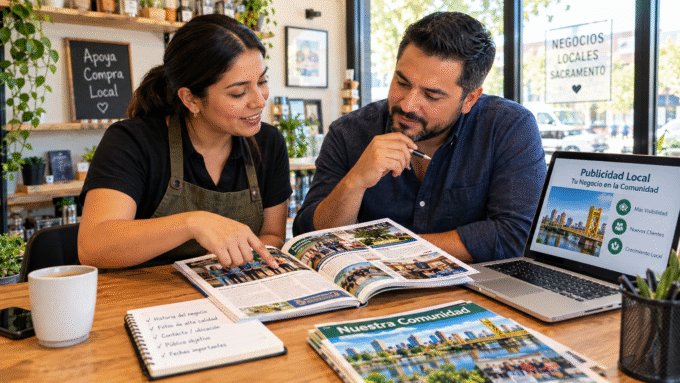
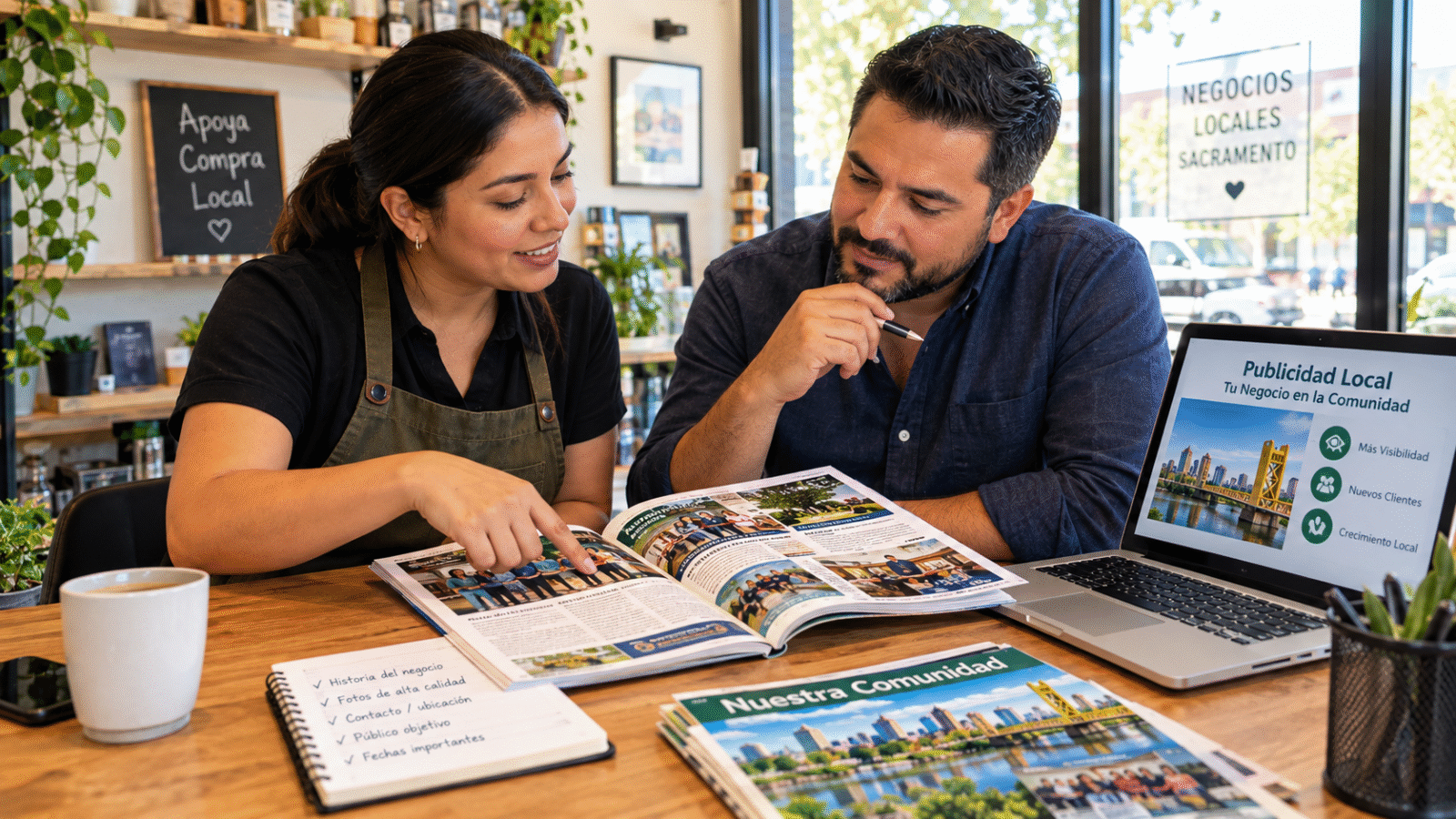
There are two separate paths, and most advertising content online blurs them together on purpose. Paid advertising is guaranteed: a business pays for space, and the placement runs. Editorial coverage, a business profile, an event mention, a food feature, isn’t guaranteed at all. It depends on outreach, timing, and whether an editor decides it’s a genuine story for readers rather than a promotional favor. Knowing which path a business is actually on changes what to expect.
Two Different Paths, Not One
- Paid advertising: a business pays for placement, in print, digital, or both, and the ad runs as agreed. This is the reliable, predictable path.
- Earned editorial coverage: unpaid mentions in news, community, events, or food sections, decided by editorial judgment about what’s useful or interesting to readers. There’s no fee, and there’s no guarantee.
Most “how to get featured” content skips this distinction entirely, which leaves business owners assuming a press release or a phone call works the same way an ad purchase does. It doesn’t.
The Advertising Path
For dprimeramano specifically, the confirmed entry point for paid placement is Anuncia Con Nosotros. Community publications in this format typically offer a mix of print ad space, digital placements like web banners or newsletter inclusion, and ad design support for businesses that don’t already have print-ready artwork.
Exact rates, package sizes, and current offerings change over time, so a business owner’s fastest accurate answer comes directly from that page or a direct inquiry, rather than from any third-party description, including this one.
What Kind of Editorial Coverage Actually Exists
dprimeramano’s editorial coverage spans several categories, which matters because a pitch aimed at the right section is more likely to land than a generic “cover my business” request:
- Local news: community developments, civic issues, and stories affecting Sacramento’s Spanish-speaking residents.
- Events: community celebrations, festivals, and organized gatherings, generally covered ahead of or around the event date.
- Food: restaurant features and food-related community stories, one of the more natural fits for a business with a genuine local angle.
- Real estate: coverage relevant to the local housing and property market.
- Business: profiles and coverage of local businesses tied to a real story, not a placement request.
A business pitching a food-related angle to the events section, or vice versa, is starting from a weaker position than one that matches its story to where it actually fits.
Common Mistakes That Slow This Down
A few patterns show up repeatedly when a pitch or inquiry doesn’t get the response a business owner expected:
- Sending a generic press kit instead of a specific story angle. A boilerplate company description with no local hook reads the same as dozens of others an editor sees.
- Confusing an editorial inquiry with an advertising inquiry. Asking to “be featured” without clarifying whether the goal is a paid placement or a story pitch makes it harder for anyone on the other end to route the request correctly.
- Reaching out after an event instead of before. Coverage tied to a specific date is far more useful to readers, and more likely to run, when it arrives with enough lead time.
- Assuming a first inquiry guarantees a response. Both the advertising and editorial sides are handled by a small team covering the whole region, so a follow-up is often necessary rather than a sign the first attempt failed.
The Editorial Path, and Why It’s Different
Earned coverage works closer to how local journalism generally works than to how advertising works. A few patterns hold up across community publications broadly, not just this one:
- A specific angle beats a general announcement. “We’re open” rarely becomes a story on its own. A new location, a milestone anniversary, a partnership with a local organization, or a connection to a cultural event gives an editor something concrete to write about.
- Direct outreach still works. The U.S. Small Business Administration lists offering editors and journalists direct expertise on a relevant topic as one of the more effective, low-cost ways small businesses get local media attention, a pattern that applies to community and ethnic publications as much as general-market ones.
- Press releases and event details help, but timing matters. A submission that arrives after an event happened, or with no clear local relevance, is easy to pass on regardless of how good the business is.
- There’s no fee attached, but there’s also no promise. Editorial decisions come down to what an editor judges useful to readers, which is a different standard than what a business is willing to pay for.
Why Editorial Coverage Isn’t Guaranteed or Fast
Part of the honest answer is capacity. Research on Latino news media has repeatedly pointed to a shortage of bilingual reporters and editors with deep local knowledge, the CUNY Newmark J-School’s coverage of the industry notes this as a persistent, industry-wide constraint rather than something specific to any one publication. A small editorial team covering an entire region’s news, events, food, and community stories has to make choices about what gets written up, which means good pitches sometimes still don’t make it in, not because they weren’t worthwhile, but because something else filled that space first.
Timing adds another layer. dprimeramano runs on a monthly print cycle alongside a website that can publish on a faster schedule. A pitch tied to a specific date, an event, an opening, a seasonal promotion, has a better chance of landing on the website in time than in the next print issue, simply because of how far in advance a print issue typically closes.
The Local Business Audience This Actually Serves
Sacramento County has a substantial base of businesses that fit this exact audience: U.S. Census Bureau data counted 9,968 minority-owned employer firms in the county as of the most recent reporting year. That’s the scale of business ownership a Spanish-language publication’s advertising and editorial coverage is realistically reaching, well beyond a handful of long-standing advertisers. A full look at Sacramento’s Spanish-language magazine options shows how the active publications in the market compare on format and coverage.
Frequently Asked Questions
Is advertising the only guaranteed way to get featured? Yes. Editorial coverage is never guaranteed, regardless of how strong the pitch is, because it depends on an editor’s judgment about newsworthiness, not on payment.
What makes a pitch more likely to get picked up editorially? A specific, timely angle, a new location, an anniversary, a community partnership, works better than a general promotional announcement. Reaching out before an event happens, not after, also matters.
Does a mention in a community roundup or event listing cost anything? Not typically. Earned mentions in news, events, or community coverage aren’t paid placements, but they’re also not something a business can request and expect automatically.
Where do I start if I want to advertise? Anuncia Con Nosotros is the confirmed starting point for current advertising options and rates.
Does it matter which section I pitch my story to? Yes. A pitch matched to a real section, food, events, business, real estate, gives an editor a clearer reason to run it than a general request to be mentioned somewhere.
Final Insight
Getting featured in a Sacramento Spanish-language magazine comes down to which path a business is actually pursuing. Advertising is a transaction with a predictable outcome. Editorial coverage is closer to a pitch than a purchase, dependent on timing, specificity, and an editorial team’s limited capacity to cover everything happening across the region. Businesses that understand the difference tend to get further with either one than businesses treating them as the same request.