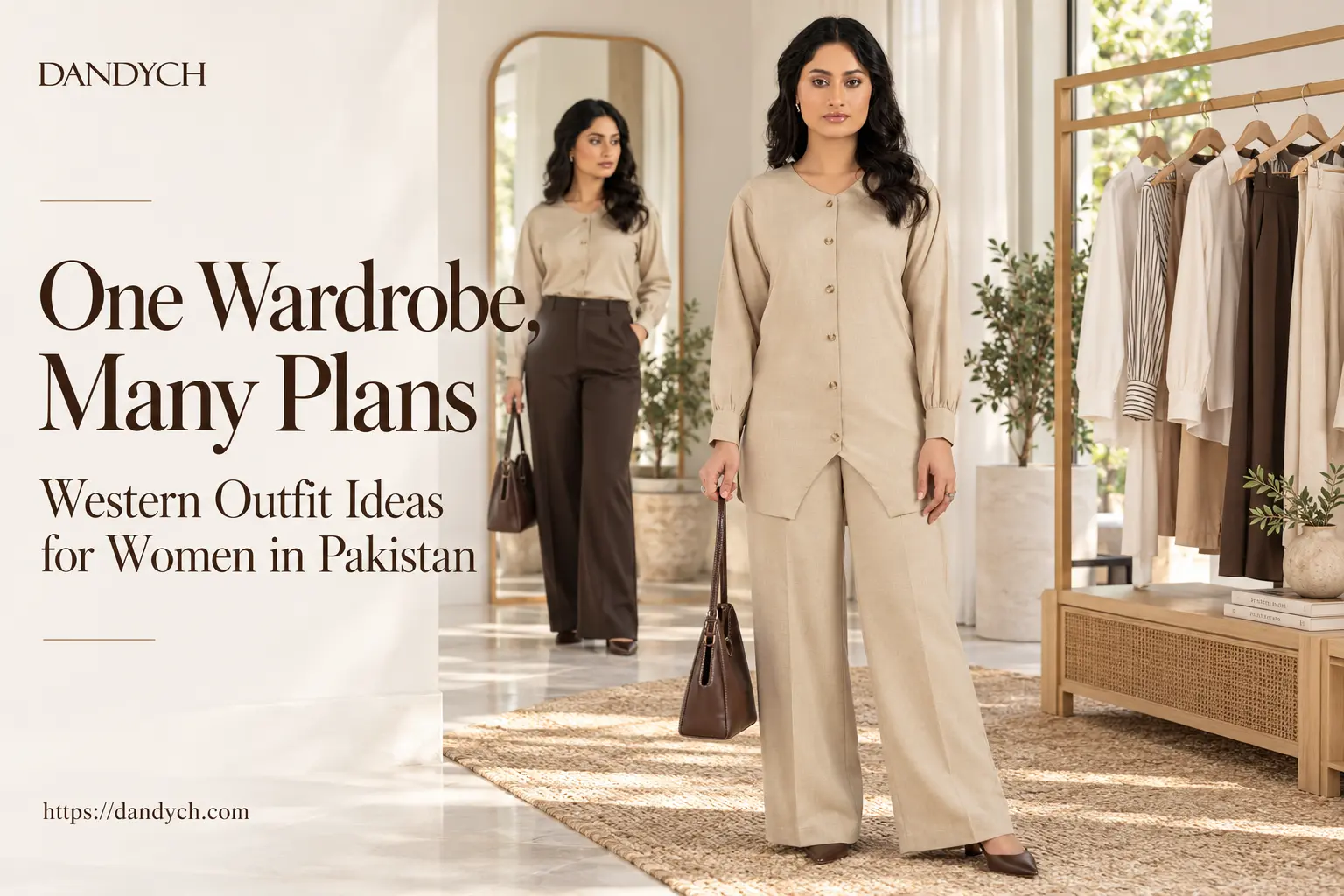
Tucking a shirt feels like a small decision until it’s suddenly not. Wide-leg trousers have enough volume on their own that whatever happens up top either balances that out or fights against it.
There’s no universal right answer here, full tuck, half tuck, left loose, each one solves a different kind of outfit. Most women’s western wear styled with wide-leg trousers comes down to matching the right one to the shirt in front of you.
Why Wide-Leg Changes the Math
A fitted trouser does a lot of the work on its own. There’s not much volume to balance, so almost any tuck looks fine by default.
That safety net disappears with wide leg trousers women actually wear day to day. All that fabric at the hip and leg needs something to answer it up top, otherwise the outfit ends up looking bottom-heavy or shapeless.
The Full Tuck
This one’s the simplest to explain. The entire shirt goes into the trouser, all the way around, nothing left hanging out anywhere.
It’s the cleanest option, and usually the most formal-reading of the three. Office settings, meetings, anything where the outfit needs to read sharp rather than relaxed, this is generally the safer call.
The Half Tuck, or French Tuck
This is the one most people get slightly wrong on their first few tries, so it’s worth walking through properly.
Only the front of the shirt goes in, not the sides, not the back. Start by undoing the bottom button if there is one. Take the front panel, usually the side with the buttons on it, and tuck just that section into the trouser, leaving everything else to hang loose around it.
The effect is a defined waist up front, with the rest of the shirt still moving and draping naturally. That drape is part of why this tuck pairs so well with long shirts for women specifically, there’s enough extra length at the back and sides to actually create it instead of just looking uneven.
A slightly longer hem tends to work best here. A shirt that’s too short doesn’t leave enough fabric to hang loose in a way that looks deliberate.
Leaving It Loose
Sometimes the right call is no tuck at all. A shorter, boxier shirt usually looks better worn loose than forced into any kind of tuck, there’s just not enough length to work with otherwise.
Right at the hip is usually the ideal length here, enough to cover the waistband of a wide-leg trouser cleanly without any bunching underneath.
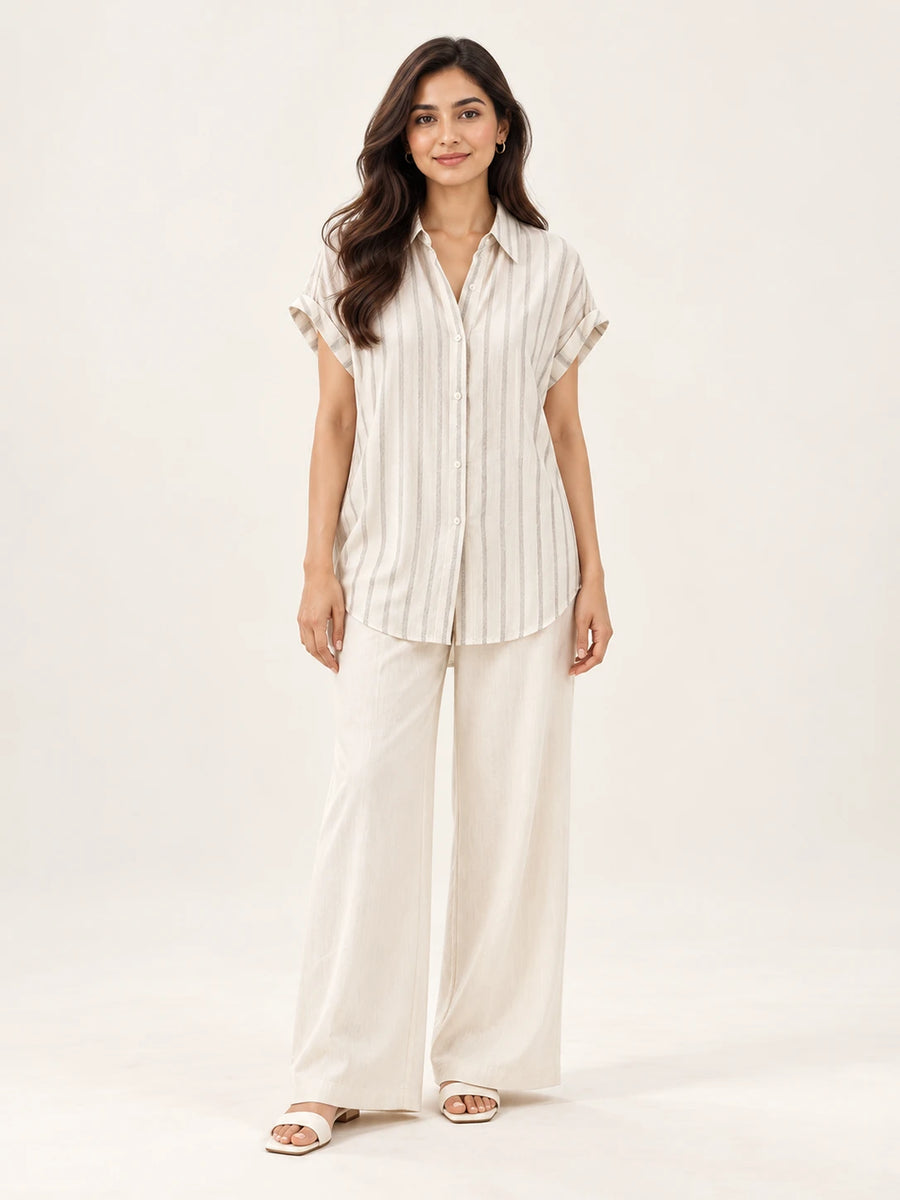
Casual shirts for women cut to this length tend to work best left completely alone, no tuck, no adjustment. The shirt does its own thing and the trouser does its own thing, and together they still read as one outfit.
A quick way to decide which option fits:
- Shirt hits mid-thigh or longer: half tuck usually works best
- Shirt hits right at the hip: leave it loose
- Shirt is fitted through the body: full tuck reads cleanest
- Unsure: half tuck is the safest default for most lengths
Tops That Actually Tuck Well
Not every top is built for tucking, and the ones that aren’t tend to bunch or ride up no matter how carefully it’s done. Fabric weight matters a lot here, something too thick adds bulk right at the waist exactly where you don’t want it.
Enough body to stay put, not so much fabric that it bulks up under the waistband, that’s usually the sweet spot among tops for women that actually tuck cleanly. Button placement matters too, a button sitting too close to the hem can dig in or shift once tucked.
Finer fabrics handle a full tuck especially well, cotton poplin, lighter linen blends, since they fold down flat instead of adding visible bulk at the waist. This is where western blouses for women tend to outperform heavier knits by a noticeable margin.
When a Top Doesn’t Need Tucking at All
Some shapes are built to skip the whole decision. A fitted top that already follows the body’s shape doesn’t need tucking to create a defined waist, the shape’s already built in.
The neckline does a lot of that work on ladies v neck tops specifically, drawing the eye up while the fitted shape balances out the volume below, no tuck required.
Matching Rise to Tuck Choice
Trouser rise and tuck choice are more connected than people usually realize. A higher-rise trouser generally pairs best with a full tuck, there’s enough room up top for the shirt to sit cleanly without the waistband interfering.
Lower-rise trousers work differently though. A full tuck here can look slightly off, too much fabric compressed into too little space. Loose or half-tucked tends to balance it better instead, which is exactly where western tops for women cut with extra length have an advantage.
A few pairings worth trying, based on rise and shirt length:
- Fitted blouse with a high-rise trouser: works well fully tucked, the rise gives it somewhere clean to sit
- Longer, looser shirt with a mid-rise trouser: suits a half tuck best
- Boxy, cropped shirt with any rise: usually works left loose, tucking something that short tends to look forced
- Structured shirt with a very low-rise trouser: half tuck softens the gap better than a full tuck would
Buying With Tucking in Mind
Shirt length matters more than size alone when shopping specifically for pieces meant to tuck. A size that fits well through the shoulders can still run too short to actually tuck properly, which only shows up once it’s already purchased.
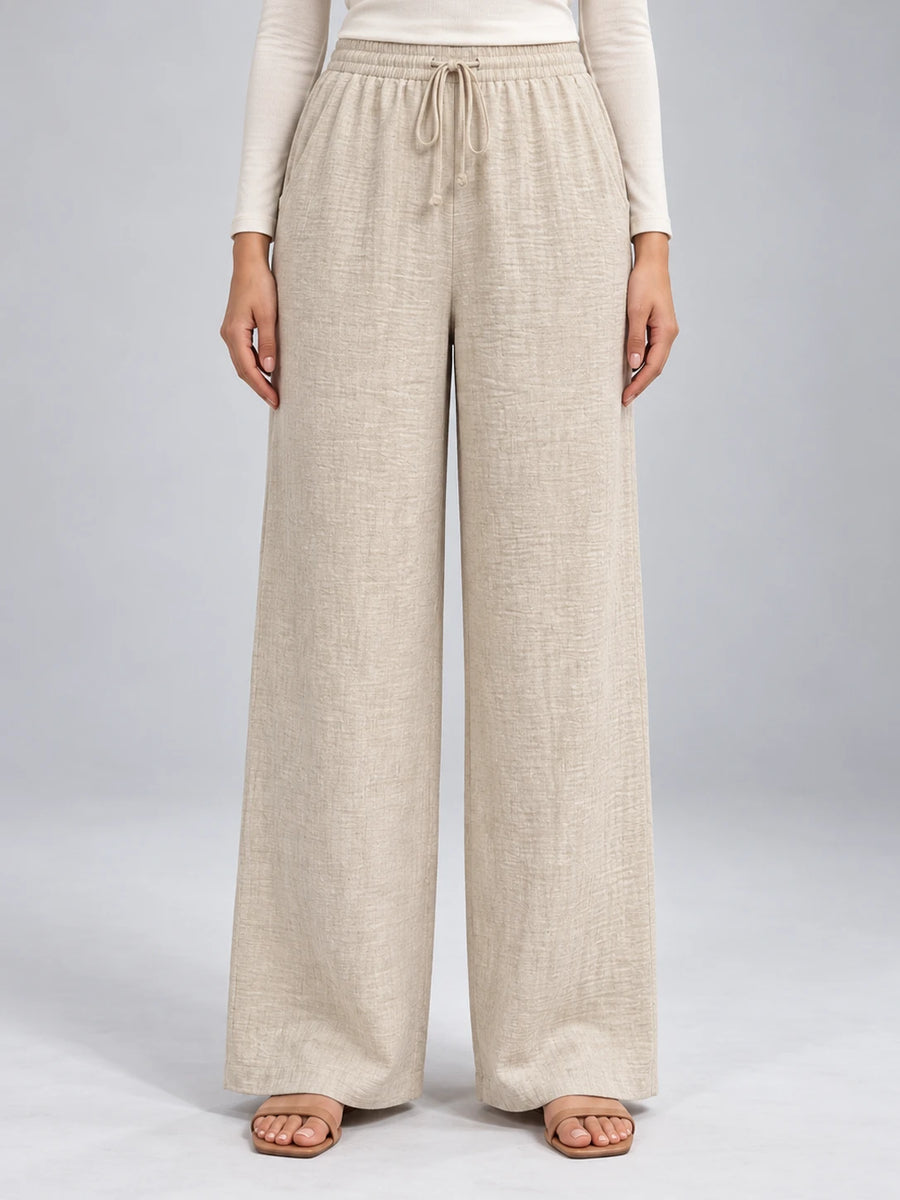
A lot of guessing gets avoided by checking actual garment length against what a tuck style needs. That’s especially useful advice when buying women trousers online, since product photos rarely show how a piece behaves once it’s actually tucked in.
Where This Leaves the Decision
The tuck is probably the cheapest styling change available, nothing bought, nothing altered, just a different few seconds spent getting dressed. The same shirt and trouser combination can read three completely different ways depending on which one gets chosen.