Female hair transplant is a surgical procedure that moves healthy hair follicles from a donor area of the scalp to regions affected by thinning or permanent hair loss. It is designed to improve hair density and create a natural-looking appearance when the patient is an appropriate candidate. Female Hair Transplant in Dubai may be considered by women experiencing hairline thinning, traction alopecia, or selected cases of female pattern hair loss. The procedure generally involves assessing the cause of hair loss, planning the recipient area, extracting healthy follicles, and carefully placing them to match the natural direction of hair growth. Results develop gradually over several months, and the final outcome depends on donor hair quality, surgical technique, scalp health, and whether the underlying cause of hair loss continues to progress.
Initial Assessment and Hair Loss Diagnosis
The process begins with a consultation to identify the cause and pattern of hair loss. A specialist reviews medical history, family history, previous treatments, medications, and the duration of symptoms. The scalp is examined to assess hair density, the condition of the donor area, and whether thinning is concentrated around the hairline, temples, or crown. Some women experience diffuse thinning across the scalp, which can make transplantation less suitable because donor hair may also be affected. Depending on the findings, the clinician may recommend blood tests or other investigations to check for conditions such as iron deficiency or thyroid disorders. Accurate diagnosis is essential because treating a reversible cause may be more appropriate than proceeding directly to surgery.
Planning the Hair Transplant Procedure
Once a woman is considered a suitable candidate, the surgeon develops an individual treatment plan. This includes selecting the recipient areas, estimating the number of grafts needed, assessing donor hair availability, and deciding which extraction technique is appropriate. The design should account for facial features, existing hair direction, hair thickness, and the possibility of future thinning. Women with diffuse hair loss may require a more conservative approach to avoid overharvesting the donor area or placing grafts where the surrounding hair could later become sparse. The surgeon should explain the expected coverage, limitations, recovery period, and potential complications before obtaining informed consent. Careful planning helps create a realistic goal rather than promising a particular density or guaranteed result.
Preparing the Scalp for Surgery
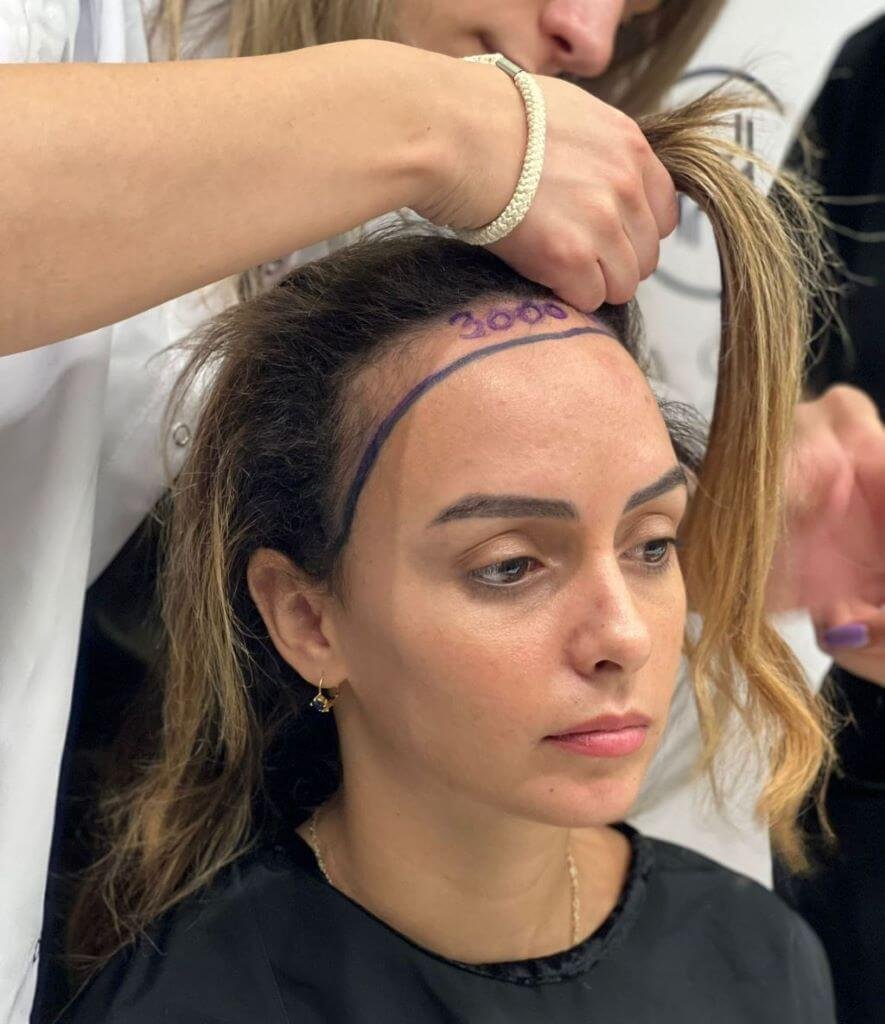
Before the procedure, the medical team provides instructions based on the patient’s health, medications, and the planned technique. Women may be asked to avoid certain medicines or supplements that increase bleeding, but these should only be changed under medical guidance. Smoking and other factors that affect healing should be discussed with the surgeon. On the day of treatment, the donor and recipient areas are marked according to the agreed plan. The scalp is cleaned, and local anaesthesia is usually administered to numb the areas being treated. The patient generally remains awake during the procedure. Preparation also includes confirming the number of grafts planned and reviewing aftercare instructions so that the patient understands how to protect the transplanted follicles during recovery.
Follicular Unit Extraction Technique
Follicular Unit Extraction, commonly called FUE, involves removing individual follicular units from the donor area using a small specialised instrument. These units naturally contain one or more hair follicles. The surgeon selects follicles from suitable parts of the scalp while aiming to preserve the overall appearance of the donor region. The extracted grafts are examined and prepared for placement into the recipient area. FUE does not usually create a single long linear scar, but it can leave numerous tiny scars that may be visible with very short hairstyles or if excessive harvesting occurs. The method can be useful for women who want to avoid a linear scar, although its suitability depends on donor density, hair characteristics, and the surgeon’s assessment.
Follicular Unit Transplantation Technique
Follicular Unit Transplantation, or FUT, involves removing a narrow strip of scalp from the donor area, usually at the back of the head. The strip is then carefully divided into individual follicular units under magnification before transplantation. This technique leaves a linear scar that may be concealed by longer hair, although scar visibility varies with healing and hairstyle. FUT may be appropriate for selected women who need a particular number of grafts and have suitable donor characteristics. However, it is not automatically better than FUE, and the choice should depend on the patient’s goals, scalp flexibility, donor supply, and tolerance for different types of scarring. A qualified surgeon can explain the advantages and limitations of each method.
Creating Recipient Sites and Placing Grafts
After the grafts are prepared, the surgeon creates small recipient sites in the areas requiring additional density. The direction, angle, spacing, and distribution of these sites are important because natural hair does not grow straight out of the scalp. Around the hairline and temples, careful placement helps avoid an artificial or overly dense appearance. The prepared follicles are then inserted into the recipient sites using appropriate instruments. The number of grafts depends on the size of the treatment area, the available donor hair, and the desired coverage. The surgeon must balance the goal of improving density with the need to protect existing hair and preserve the donor area for possible future needs.
What Happens After the Transplanted Follicles Are Placed
Following surgery, the scalp may have mild redness, swelling, tenderness, or small scabs. The medical team provides instructions for washing the scalp, sleeping comfortably, avoiding friction, and protecting the grafts from accidental injury. Some patients are advised to avoid strenuous exercise for a short period while the scalp heals. The transplanted hair shafts commonly shed during the first few weeks, which can be an expected stage of the growth cycle. This temporary shedding does not necessarily mean the follicles have failed. The follicles may remain in place and later produce new hair. Patients should follow the surgeon’s specific instructions and seek medical advice if they develop increasing pain, spreading redness, fever, or other concerning symptoms.
Hair Growth and Expected Results
Hair transplant results appear gradually rather than immediately. After the initial shedding phase, new hair growth often becomes noticeable over the following three to six months, although individual timelines vary. Hair may initially appear fine before becoming thicker as growth continues. A more complete assessment of the result is commonly possible around nine to twelve months, and some patients may need longer. The final density depends on the number of viable grafts, hair thickness, scalp characteristics, healing, and the size of the area being treated. Transplantation cannot guarantee the density of naturally thick hair, and women with ongoing female pattern hair loss may continue to lose untreated hair. Follow-up appointments help monitor progress and identify whether additional treatment is needed.
Recovery and Aftercare Requirements
Proper aftercare supports healing and helps protect the transplanted follicles. Patients should wash the scalp only as instructed and avoid scratching, picking scabs, or rubbing the recipient area. The surgeon may recommend temporarily avoiding intense exercise, swimming, direct sun exposure, or activities that could cause scalp injury. Mild discomfort or swelling can occur, but severe or worsening symptoms should be reported. Recovery time varies depending on the technique, the extent of surgery, and individual healing. Women should also understand that the visible recovery period is different from the time needed for new hair to grow. Attending follow-up visits allows the surgeon to check the donor and recipient areas, review healing, and answer questions about expected growth.
Factors That Influence the Procedure’s Success
Several factors affect how well a female hair transplant works. These include the cause and stability of hair loss, donor hair density, follicle quality, scalp health, the surgeon’s experience, and the care taken during graft extraction and placement. Active inflammatory scalp conditions may interfere with success, while diffuse thinning can limit the amount of suitable donor hair. The patient’s healing response and adherence to aftercare instructions also matter. In some cases, medical treatment may be recommended to help manage ongoing hair loss and preserve existing hair. A thorough assessment is therefore more important than selecting a technique based on popularity alone. Women should discuss likely outcomes and limitations openly before deciding whether surgery is the right choice.
Conclusion
Female hair transplant works by relocating healthy hair follicles from a suitable donor area to regions affected by thinning or permanent hair loss. The process includes diagnosis, treatment planning, graft extraction, recipient-site creation, and careful placement, followed by a recovery period during which new hair grows gradually. Female Hair Transplant in Dubai may be an option for selected women, but the right technique depends on the cause of hair loss, donor supply, scalp health, and personal goals. A qualified hair restoration specialist can explain the likely benefits, possible risks, and alternative treatments so that women can make an informed decision and develop realistic expectations.
Frequently Asked Questions
1. Is Female Hair Transplant a Surgical Procedure?
Yes. It is a surgical procedure that relocates hair follicles from one part of the scalp to another. It is generally performed under local anaesthesia, with the technique and number of grafts determined during assessment.
2. How Long Does a Female Hair Transplant Take?
The procedure may take several hours, depending on the number of grafts, the technique, and the size of the recipient area. The surgeon can provide a more specific estimate after evaluating the treatment plan.
3. Are FUE and FUT Both Used for Women?
Yes. FUE extracts individual follicular units, while FUT removes a strip of scalp that is divided into grafts. The most suitable method depends on donor hair characteristics, treatment goals, and the patient’s preferences.
4. Does Transplanted Hair Fall Out After Surgery?
The transplanted hair shafts commonly shed during the first few weeks. This is often an expected part of the growth cycle. New hair generally develops over the following months, although results vary between individuals.
5. When Will I See the Final Results?
New growth may become noticeable within three to six months, while a fuller result is often assessed around nine to twelve months or later. Hair growth varies depending on healing, graft survival, and individual characteristics.
6. Is Female Hair Transplant Painful?
Local anaesthesia is used to numb the treatment areas, helping reduce pain during surgery. Some tenderness, swelling, or discomfort may occur afterwards and can usually be managed according to the surgeon’s instructions.
7. Can a Hair Transplant Stop Future Hair Loss?
No. A transplant moves follicles into selected areas but does not stop the underlying cause of hair loss. Women may need ongoing medical treatment or monitoring to help preserve their remaining natural hair.
8. Who Should Consider Female Hair Transplant?
Women with a confirmed cause of hair loss, suitable donor hair, a healthy scalp, and realistic expectations may be candidates. A specialist should assess suitability and consider non-surgical alternatives before recommending surgery.