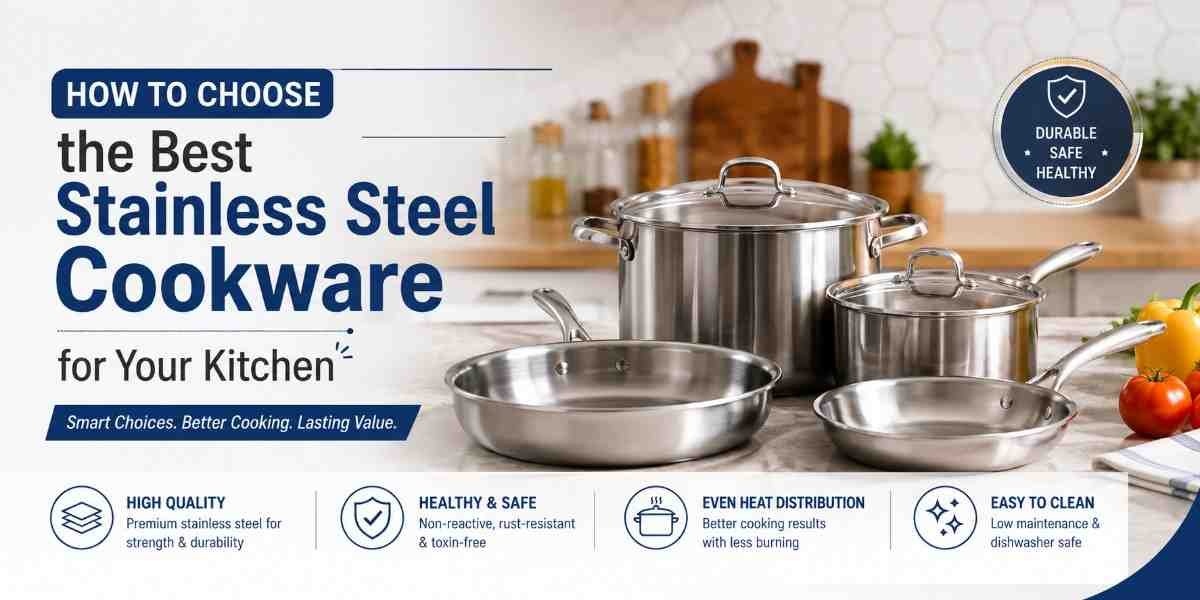
Choosing cookware for your kitchen can be confusing, especially with so many materials, designs, sizes, and construction types available today. Stainless steel cookware is one of the most popular choices for modern kitchens because it offers durability, easy maintenance, and versatility.
However, not every stainless steel cookware set offers the same performance. Factors such as stainless steel grade, construction, thickness, heat distribution, handle design, compatibility, and maintenance can affect your cooking experience.
If you are planning to buy stainless steel cookware, this guide will help you understand what to look for before making a decision.
Why Choose Stainless Steel Cookware?
Stainless steel is widely used for cookware because of its strength, durability, and resistance to corrosion. Good-quality stainless steel cookware can handle regular cooking and maintain its appearance for years with proper care.
It is also suitable for different cooking methods, including boiling, sautéing, frying, simmering, and preparing curries.
Unlike cookware that depends on a surface coating for its cooking properties, stainless steel cookware has a durable cooking surface. This makes it a practical option for everyday cooking.
1. Check the Stainless Steel Grade
One of the first things to consider when choosing stainless steel cookware is the grade of stainless steel used.
Different grades have different compositions and properties. For cookware, food-contact safety, corrosion resistance, durability, and ease of maintenance are important considerations.
Look for cookware manufactured using appropriate food-grade stainless steel and check the manufacturer’s product specifications. A reliable manufacturer should provide clear information about the material used.
The quality of the raw material can have a direct impact on the durability and overall performance of the cookware.
2. Understand the Cookware Construction
The construction of cookware is just as important as the stainless steel itself.
Single-layer cookware generally consists of one primary layer of metal. Multi-layer cookware, on the other hand, combines different metals to improve cooking performance.
Tri-ply cookware typically uses three layers. A stainless steel cooking surface can be combined with a heat-conductive core and an outer stainless steel layer.
This construction helps distribute heat more evenly across the cookware and can reduce the risk of concentrated hot spots.
For people who cook frequently, tri-ply stainless steel cookware can be worth considering because it combines the durability of stainless steel with improved heat distribution.
3. Look for Even Heat Distribution
Uneven heating can affect cooking results. Food may cook faster in certain areas while remaining undercooked in others.
This is why heat distribution is an important factor when selecting cookware.
Multi-layer cookware with a suitable conductive core can help distribute heat more evenly. Better heat distribution can make it easier to sauté vegetables, prepare sauces, cook curries, or simmer food.
When comparing cookware, don’t focus only on appearance. Consider how the construction is designed to manage and distribute heat.
4. Choose the Right Cookware Types and Sizes
Your cookware should match the way you normally cook.
A basic kitchen may need several different cookware types, such as:
- Frypan for sautéing and shallow frying
- Saucepan for sauces, boiling, and reheating
- Kadhai for frying and Indian cooking
- Casserole for slow cooking and serving
- Stockpot for soups, pasta, and larger quantities
- Cookware sets for a combination of everyday requirements
Consider your household size and cooking habits before choosing the size.
A smaller saucepan may be suitable for preparing sauces or heating food, while a larger pot may be more practical for family meals.
Buying cookware based on actual usage can help avoid unnecessary pieces while ensuring you have the right tools for everyday cooking.
5. Consider Induction and Cooktop Compatibility
If you use an induction cooktop, make sure the cookware is designed to work with induction technology.
Not all cookware performs the same way across different cooktops. Check the manufacturer’s specifications to confirm whether the cookware is suitable for induction, gas, electric, or ceramic cooktops.
If you have more than one type of cooking surface at home, choosing cookware compatible with multiple cooktops can provide greater flexibility.
6. Pay Attention to Handles and Design
Cookware should not only perform well but also be comfortable and practical to use.
Check whether the handles provide a secure grip and are properly attached to the cookware. Handle design can make a significant difference when lifting, moving, or serving food.
Also consider the overall balance of the cookware. A well-balanced pan or pot should feel stable while cooking.
For households where cookware is frequently moved between the stovetop and serving area, ergonomic design becomes particularly useful.
7. Look at the Finish and Build Quality
The finish of stainless steel cookware can affect both appearance and maintenance.
A well-finished surface should be smooth and easy to clean. Pay attention to the quality of edges, handles, joints, lids, and other components.
For long-term use, look beyond the visual appearance. The overall construction should feel sturdy and well-engineered.
A reliable manufacturer should maintain consistent standards across different cookware pieces rather than focusing only on aesthetics.
8. Choose Cookware That Is Easy to Maintain
Stainless steel cookware is generally easy to maintain, but cooking habits and cleaning methods still matter.
Allow cookware to cool appropriately before cleaning and use suitable cleaning methods recommended by the manufacturer. For stubborn food residue, soaking the cookware before cleaning can help loosen the residue.
Avoid using cleaning methods that could unnecessarily scratch or damage the surface.
Regular cleaning and proper storage can help maintain the cookware’s appearance and performance over time.
9. Consider the Cooking Style of Your Household
The best cookware depends on what you cook regularly.
For Indian kitchens, cookware may need to handle frying, tempering, curries, dals, rice, boiling, and slow cooking.
If you prepare a wide variety of dishes, choosing versatile cookware can be more practical than purchasing specialized pieces for every cooking method.
For example, a good-quality frypan can support sautéing and shallow frying, while a kadhai can be useful for frying and preparing larger dishes.
Think about your daily cooking routine before deciding which cookware pieces you actually need.
10. Consider Long-Term Value, Not Just Price
Price is an important consideration, but it should not be the only factor.
Low-cost cookware may appear attractive initially, but the overall value depends on construction, material quality, durability, performance, and maintenance requirements.
A well-designed stainless steel cookware product can provide long-term value when it is manufactured with appropriate materials and construction.
Instead of asking only, “How much does it cost?”, consider:
What quality am I getting for the price?
This approach can help you make a more informed purchasing decision.
Why Tri-Ply Stainless Steel Cookware Can Be a Good Choice
For consumers looking for a balance between durability and cooking performance, tri-ply stainless steel cookware is an option worth considering.
Its multi-layer construction is designed to combine the properties of different materials. Stainless steel provides a durable cooking surface, while the conductive core helps improve heat distribution.
This makes tri-ply cookware suitable for a range of everyday cooking applications.
However, construction quality still matters. Consumers should look at the materials, manufacturing quality, design, and specifications rather than choosing cookware simply because it is labeled “tri-ply.”
Final Checklist Before Buying Stainless Steel Cookware
Before purchasing stainless steel cookware, consider these key points:
- Is the cookware made from suitable food-grade stainless steel?
- What type of construction does it use?
- Does it offer good heat distribution?
- Is it compatible with your cooktop?
- Are the handles comfortable and secure?
- Is the size suitable for your cooking requirements?
- Is the cookware easy to clean and maintain?
- Does the manufacturer provide clear product specifications?
- Does the overall construction justify the price?
- Is the cookware suitable for your everyday cooking style?
Conclusion
Choosing the best stainless steel cookware is about more than selecting a good-looking set. Material quality, construction, heat distribution, size, compatibility, design, and durability all contribute to the overall cooking experience.
For everyday kitchens, tri-ply stainless steel cookware can offer a useful combination of stainless steel durability and improved heat distribution. The key is to select cookware from a manufacturer that focuses on material quality, thoughtful design, and consistent manufacturing standards.
With the right cookware, everyday cooking can become more convenient, efficient, and enjoyable—while a well-made stainless steel set can remain a useful part of your kitchen for years.