Hair texture, density, and growth patterns vary from person to person. Some people have naturally fine hair, while others have thick, curly, wavy, or straight hair. When thinning or excessive shedding occurs, choosing the right treatment depends on the cause of the problem rather than hair texture alone. Best PRP Hair Treatment in Dubai may be an option for people experiencing certain types of hair loss because it uses platelet-rich plasma prepared from their own blood to support existing hair follicles. However, suitability and results depend on scalp health, the pattern of hair loss, and whether active follicles remain in the affected areas.
How Hair Type Influences PRP Treatment
Hair type describes characteristics such as texture, curl pattern, strand thickness, and density. Hair loss, on the other hand, refers to changes in the amount of hair, the growth cycle, or the condition of the follicles. These are different factors, and they should be assessed separately.
PRP is not designed for one particular hair texture. People with straight, wavy, curly, or coily hair may be considered for treatment if they have a suitable type of hair loss. The main consideration is whether the follicles in the thinning areas may respond, not whether the hair strands are naturally straight or curly.
A professional assessment can help distinguish normal differences in hair texture from actual thinning. It can also identify scalp conditions or medical causes that may need attention before treatment begins.
Is PRP Suitable for Straight Hair?
People with straight hair may notice thinning more easily when the scalp becomes visible through the strands. This can happen with gradual pattern hair loss, age-related changes, or other causes of shedding.
PRP may help some individuals with straight hair who have active follicles affected by certain forms of hair loss. If treatment is effective, the hair may appear fuller because of improvements in strand thickness or density. However, straight hair does not automatically respond better to PRP than other textures.
The suitability of treatment depends on the underlying diagnosis and follicle condition. A clinician should assess the scalp and explain whether PRP is likely to offer meaningful benefits.
Can People With Curly or Coily Hair Have PRP?
Curly and coily hair can be more prone to dryness and breakage because the natural bends in the strands may make it harder for scalp oils to travel along the hair shaft. Certain styling practices, including tight braids, ponytails, extensions, or repeated tension on the hairline, can also contribute to breakage or traction alopecia.
PRP may be considered when a person with curly or coily hair has a suitable form of follicle-related hair loss. However, it does not repair broken hair strands or remove tension caused by hairstyles. If traction is responsible for thinning, reducing tension early is important, as prolonged traction can lead to permanent follicle damage.
A clinician should also assess the scalp for inflammation, tenderness, or other conditions. Hair care practices may need to be adjusted alongside any medical treatment.
Is PRP Appropriate for Wavy Hair?
Wavy hair combines characteristics of straight and curly textures. Depending on its density and styling, early thinning may be difficult to recognise. Changes in the parting, reduced volume, or increased scalp visibility may indicate a change in hair density.
PRP may be an option for people with wavy hair who experience certain forms of pattern hair loss. The treatment is intended to support existing follicles rather than alter the natural wave pattern. It will not make hair permanently straighter, curlier, or naturally thicker in every case.
If thinning is noticeable, a professional assessment can help determine whether the cause is follicle miniaturisation, breakage, a scalp condition, or another issue.
Does Hair Thickness Affect PRP Results?
Hair strand thickness and hair density are not the same. Strand thickness refers to the diameter of individual hairs, while density refers to how many hairs grow within a particular area of the scalp.
People with naturally fine hair may have a full head of hair without experiencing hair loss. Similarly, someone with naturally thick strands may still develop thinning if the number of active follicles decreases. PRP may improve the appearance of hair in some suitable patients, but it cannot guarantee a change in natural strand thickness or restore every lost hair.
A clinician may examine the scalp and compare areas of different density to determine whether a treatment is appropriate. Understanding the difference between natural hair characteristics and actual hair loss helps establish realistic expectations.
PRP for Different Causes of Hair Loss
The cause of hair loss is often more important than the hair type when deciding whether PRP may help.
Pattern Hair Loss
Androgenetic alopecia, also known as pattern hair loss, can affect men and women. It commonly causes gradual thinning around the crown, temples, or parting. PRP may improve hair density in some people with this condition, especially when follicles remain active.
Stress-Related Shedding
Physical illness, significant stress, or major changes in the body can trigger increased shedding, sometimes called telogen effluvium. This type of hair loss may improve when the triggering factor resolves. A medical assessment can help determine whether PRP is appropriate or whether addressing the cause should come first.
Nutritional or Hormonal Causes
Low iron levels, thyroid problems, hormonal changes, and other health factors can contribute to hair loss. Treating the underlying issue may be necessary. PRP should not replace medical evaluation or treatment for a diagnosed condition.
Traction-Related Hair Loss
Repeated pulling from tight hairstyles can damage follicles, especially around the hairline. Early traction-related thinning may improve when tension is reduced, but long-term damage can become permanent. PRP is not a substitute for removing the cause of traction.
Scalp Conditions
Inflammation, infection, and certain scarring scalp disorders can affect hair growth. These conditions require appropriate diagnosis and treatment. PRP should not be started on an affected scalp without professional evaluation.
What Happens During a PRP Hair Treatment Session?
Although the procedure may vary between providers, PRP treatment generally follows several steps.
-
Blood collection: A healthcare professional collects a small blood sample from the patient.
-
Plasma preparation: The sample is processed in a centrifuge to concentrate the platelets in a portion of plasma.
-
Scalp assessment: The treatment area is identified and prepared using appropriate hygiene procedures.
-
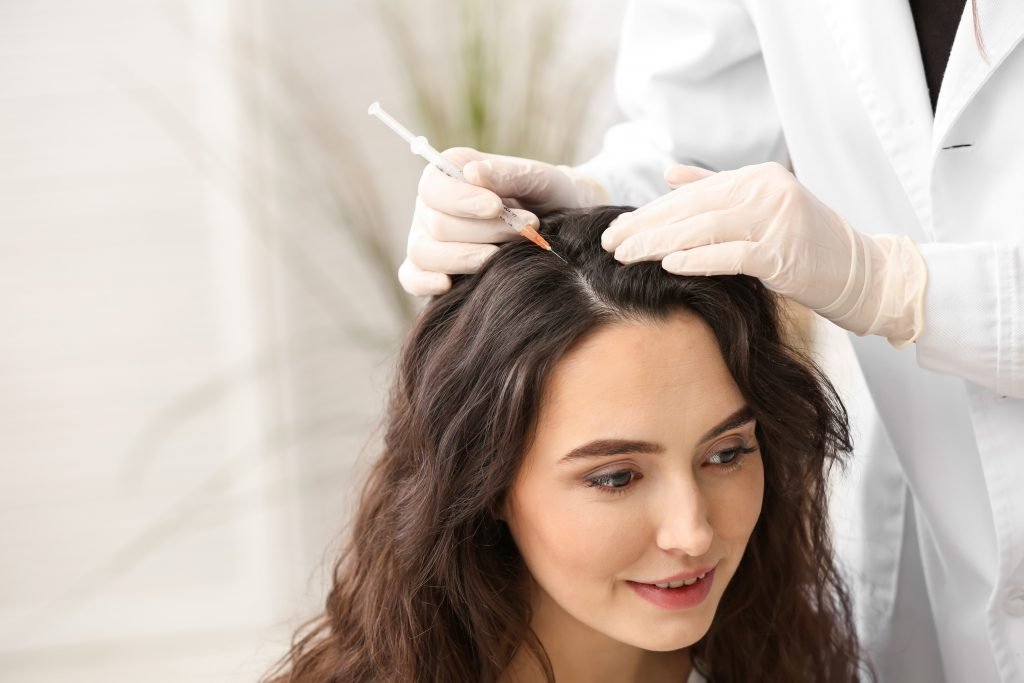
PRP application: The platelet-rich plasma is injected into selected areas of the scalp using small needles.
-
Aftercare: The patient receives instructions about scalp care and when to resume normal activities.
Treatment sessions are usually relatively short, although appointment length depends on the protocol and individual needs. Temporary tenderness, redness, swelling, or bruising can occur. Infection is an uncommon but possible complication, so the procedure should be performed by a qualified healthcare professional using sterile techniques.
How Many Sessions May Be Needed?
PRP is generally offered as a course of treatments rather than a one-time procedure. Some protocols begin with approximately three sessions spaced several weeks apart, but schedules differ according to the patient’s needs and the clinician’s approach.
Follow-up sessions may be recommended depending on the response. Hair growth is gradual, so any improvement may take several months to become noticeable. Some people experience increased density or thicker-looking hair, while others see little change.
Photographs taken under similar lighting and from consistent angles can help track progress. Before starting treatment, patients should ask how success will be assessed and when the treatment plan may be reviewed.
How to Know Whether PRP Is Right for Your Hair
A consultation can help determine whether PRP is appropriate for your particular hair and scalp concerns. The clinician may review your medical history, family history of hair loss, medications, recent illnesses, and hair care practices. The scalp may also be examined to identify thinning, breakage, inflammation, or signs of scarring.
Depending on the findings, blood tests or other investigations may be recommended. This is especially important when hair loss is sudden, severe, patchy, or associated with scalp discomfort.
PRP may be considered alongside other evidence-based treatments, such as topical minoxidil, when appropriate. The best approach depends on the diagnosis, possible side effects, medical history, and personal goals.
Conclusion
PRP hair treatment may be suitable for people with straight, wavy, curly, or coily hair. Natural hair texture is not usually the deciding factor; the cause of hair loss, scalp health, and presence of active follicles matter more. PRP may help some people with certain forms of pattern hair loss, but results are variable and treatment cannot guarantee regrowth.
A professional assessment can help identify the cause of thinning and determine whether PRP, another treatment, or a combination of approaches is appropriate. Understanding your hair’s natural characteristics and your specific scalp needs is the first step toward a realistic hair restoration plan.
Frequently Asked Questions
1. Is PRP suitable for all hair textures?
PRP may be considered for people with straight, wavy, curly, or coily hair. Suitability depends more on the cause of hair loss and the condition of the follicles than on hair texture.
2. Can PRP make naturally fine hair thicker?
Some people may notice improved hair density or thicker-looking strands after treatment. However, PRP cannot guarantee a change in natural strand thickness, and results vary.
3. Does curly hair respond differently to PRP?
There is not enough reliable evidence to conclude that curly hair consistently responds better or worse than straight hair. The underlying type of hair loss is generally more important.
4. Can PRP treat hair breakage?
PRP is intended to support certain types of follicle-related hair loss. It does not repair broken hair shafts, so breakage may require changes to hair care, styling, or treatment of an underlying scalp condition.
5. Is PRP helpful for thinning around the hairline?
It may help some people with suitable forms of hair loss, but results around the hairline are not guaranteed. Thinning caused by prolonged traction or permanent follicle damage may respond poorly.
6. How many PRP sessions are needed?
Some treatment plans start with approximately three sessions spaced several weeks apart. The appropriate schedule depends on the clinician’s protocol and the patient’s response.
7. Can PRP treat hair loss caused by nutritional deficiencies?
PRP does not correct nutritional deficiencies. If low iron or another deficiency is contributing to hair loss, the underlying problem should be assessed and treated appropriately.
8. How can I find out whether PRP is suitable for my hair?
A qualified healthcare professional can examine your scalp, assess the pattern of hair loss, review your medical history, and recommend suitable options. This assessment helps establish realistic expectations before treatment begins.